"Unfortunately, we will celebrate this day under drones, under artillery explosions and missiles. But we will definitely celebrate. We’ll grill kebabs." Few statements could better sum up the perverse sense of joy amid terror that millions of Ukrainians will experience today, their Day of Independence.
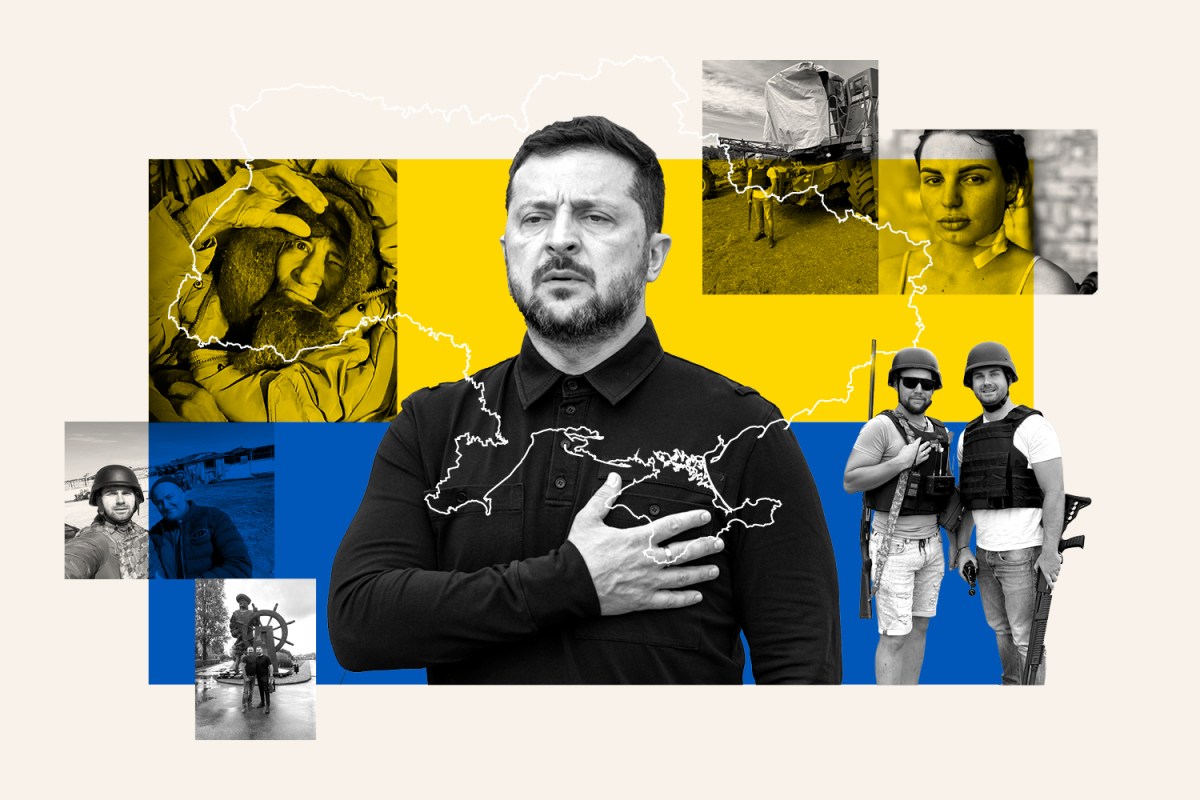
The man behind these words is Viktor Hordiienko, a farmer in the Beryslav district of Ukraine’s embattled Kherson region. His farm, and those of his friends, have been attacked relentlessly by Russian drones. One of them killed his father, Oleksandr, last year.
Yet this is all the more reason to mark Ukraine’s independence with a proper celebration, Hordiienko told Newsweek. "I believe this holiday has become much more valuable than it was five years ago, for me and every Ukrainian," he said. "Before the war, we did not really understand what independence was.
Now, we understand: freedom of speech, freedom of action, and free land. Words of independence are not empty to me." On August 24, 1991, modern Ukraine secured its freedom from the Soviet Union with the "Act of Declaration of Independence of Ukraine." Now, its people are locked in another existential struggle against the Russian Federation under Vladimir Putin. Nowhere is the struggle more apparent than in Kherson, a region divided by the Dnipro River.
Russian forces now occupy almost everything south and east of the Dnipro, known as the "left bank." Those living in the remaining 30 percent of territory north of the river—on the "right bank"—are technically free, but the challenges they face daily are unimaginable. Svitlana, a 52-year-old resident of Kherson city on the edge of the Dnipro, told Newsweek that everyday errands have become a mortal game of chance, with Russian drone squads perched on the opposite side of the river, just a few hundred yards away. "Every ordinary thing, going for a walk or a trip to get groceries, is a risk," she said.
"At any moment you can become a target for a drone. It doesn’t care who you are and what business you are on, every movement is dangerous." By noon on the day she spoke to Newsweek, Svitlana said at least six civilians had been wounded in drone strikes in Kherson city. The constant threat means even a simple trip to the shops leaves you feeling "like after a week of hard work." The human mind is nothing if not adaptable, though, and the ubiquity of the Russian threat has forced many Khersonians to undergo a profound psychological transformation.
Extract — continue reading at the source.