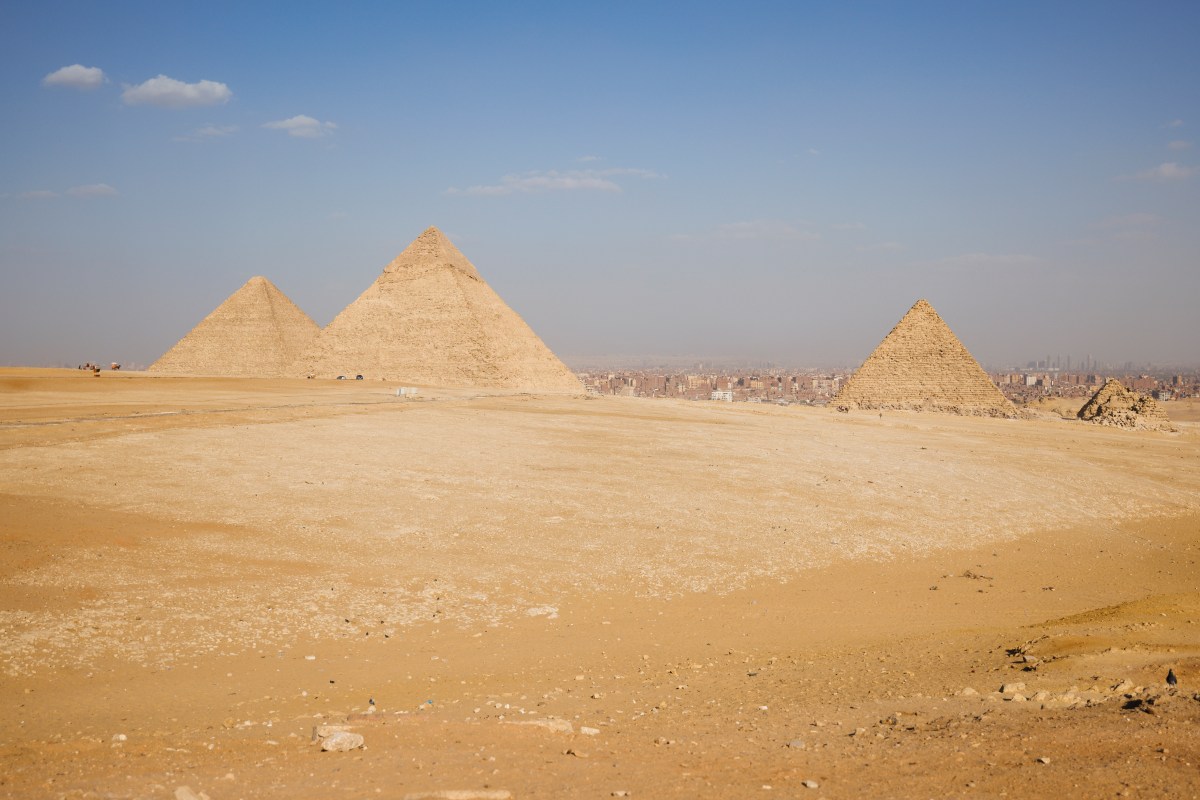
A scientific journal has retracted a study that claimed satellite radar could reveal hidden structures inside the Great Pyramid of Giza, finding “serious methodological flaws and statistical errors” that undermined its conclusions. The retraction matters because the paper provided a scientific foundation for increasingly extraordinary claims about what may lie beneath one of the world’s most famous archaeological sites. The 2022 paper by Italian researchers Filippo Biondi and Corrado Malanga was published in Remote Sensing, a peer-reviewed scientific journal that covers satellite imaging, radar and other technologies used to study Earth and the environment.
The researchers used a radar-based imaging technique called synthetic aperture radar Doppler tomography, which they said could analyze tiny changes in radar signals to create a picture of structures hidden inside the Pyramid of Khufu, named after the Egyptian pharaoh who ordered its construction as his royal tomb, also called the Great Pyramid of Giza. They argued that satellite data could be used to map previously unknown rooms, corridors and other features without physically entering the pyramid. Remote Sensing said it opened an investigation after a reader raised concerns about the study’s methodology and later retracted the article on August 10.
Biondi, Malanga and other researchers later said scans indicated vast shafts, chambers and tunnels beneath the nearby Pyramid of Khafre—claims widely described online as evidence of an “underground city.” The controversy drew international attention and interest from the YouTube creator known as MrBeast, who offered to help explore the pyramids after the claims went viral. Speculation has since expanded to include an alleged second Sphinx beneath the Giza Plateau, though no such discovery has been confirmed. Biondi and Malanga disagreed with the decision to retract their paper, according to the journal’s notice.
Retraction Watch, a nonprofit publication that reports on scientific retractions, research misconduct and related issues, said the researchers did not respond to multiple requests for comment. Newsweek contacted the authors via email on Monday for comment. The paper claimed to have identified 20 hidden features inside and beneath the Great Pyramid, including corridors, rooms and ramps.
The researchers also said their method detected the “Big Void,” a large cavity previously found using cosmic-ray scans. The researchers used satellite radar to study tiny movements in the pyramid caused by factors such as wind, earthquakes and activity around the site. They said those movements allowed them to create a detailed picture of structures hidden inside the pyramid.
The researchers said the method “allows us to see the pyramid as if it were transparent like a crystal,” while noting that “only an on-site investigation can confirm” the structures identified by the analysis. Public interest surged in March 2025, when the researchers and their collaborators applied the method to the Pyramid of Khafre and announced results at a news conference. They claimed to have identified five connected structures near its base and eight cylindrical shafts descending roughly 648 meters, surrounded by spiral pathways and leading toward two large cube-shaped structures.
Extract — continue reading at the source.