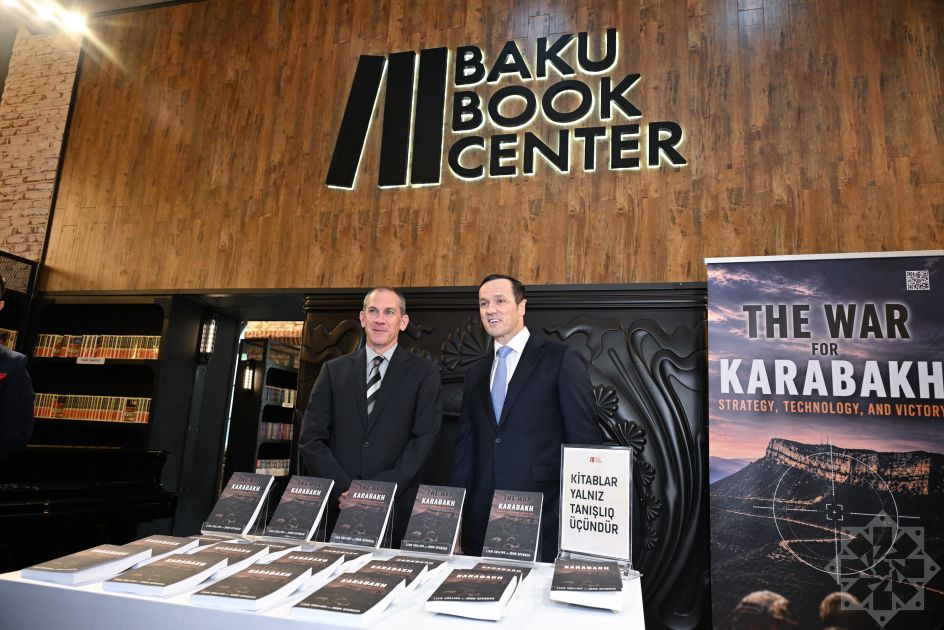
The battles for Hadrut and Shusha during Azerbaijan's 44-day Patriotic War demonstrate how special operations forces, mountain warfare, tactical manoeuvres and modern military technologies contributed to the country's victory, according to The War for Karabakh: Strategy, Technology, and Victory, a book by American military experts Liam Collins and John Spencer. The publication examines Azerbaijan's military operations in 2020, highlighting the combination of strategic planning, operational flexibility, ground forces and technological capabilities that shaped the course of the war. The Hadrut operation, examined in detail by Collins and Spencer in their military research, illustrates the importance of controlling elevated terrain and coordinating different military formations.
Hadrut's strategic position, surrounded by mountains, narrow roads and commanding heights, made its capture a significant operational objective. Azerbaijan organized a joint task force comprising special forces, commando units, mechanized infantry, motorized infantry, artillery, engineers and communications units. Azerbaijani special forces advanced through valleys and mountain routes, while supporting formations secured the flanks and provided firepower.
The research also highlights tactical deception, including the use of sound devices to reproduce gunfire across the town and influence the defenders' assessment of the attacking forces. UAV surveillance and precision strikes provided additional support for ground operations. The battle for Shusha represents another important case study in the book's broader examination of Azerbaijan's military strategy.
Located at an elevation of approximately 1,400 to 1,800 metres, the city occupied a strategically significant position among steep cliffs and mountainous terrain. Azerbaijani special operations forces approached through rugged forests and narrow mountain passes before conducting a difficult infiltration along the southeastern cliffs. According to Spencer's study of the battle, approximately 400 Azerbaijani special forces personnel, organized into four groups, used ropes and climbing equipment to scale the cliffs and reach positions behind the main defensive lines.
The subsequent fighting, conducted between November 6 and 9, involved close-quarter engagements, building-clearing operations and coordinated infantry operations supported by artillery and UAV reconnaissance. The Hadrut and Shusha operations illustrate several central themes explored in The War for Karabakh: Strategy, Technology, and Victory: the importance of trained personnel, detailed preparation, terrain awareness, tactical deception and coordination between military branches. Together, these battles demonstrate how Azerbaijan combined human capabilities, operational planning and modern technology to achieve its military objectives during the 44-day war.
They also provide important examples of the changing character of modern warfare and the strategic value of special operations forces. Here we are to serve you with news right now. It does not cost much, but worth your attention.
Extract — continue reading at the source.