Picture a country that has lost nearly one in six of its citizens — roughly 600,000 people —through emigration in just ten years. A country that has conducted only a single census since being ravaged by war in the 1990s, counting just over 3.5 million people in 2013. A country where young people aged 20 to 29 are leaving faster than any other age group and where demographers warn of a looming population collapse because the birth rate has trailed the mortality rate every year since 2009.
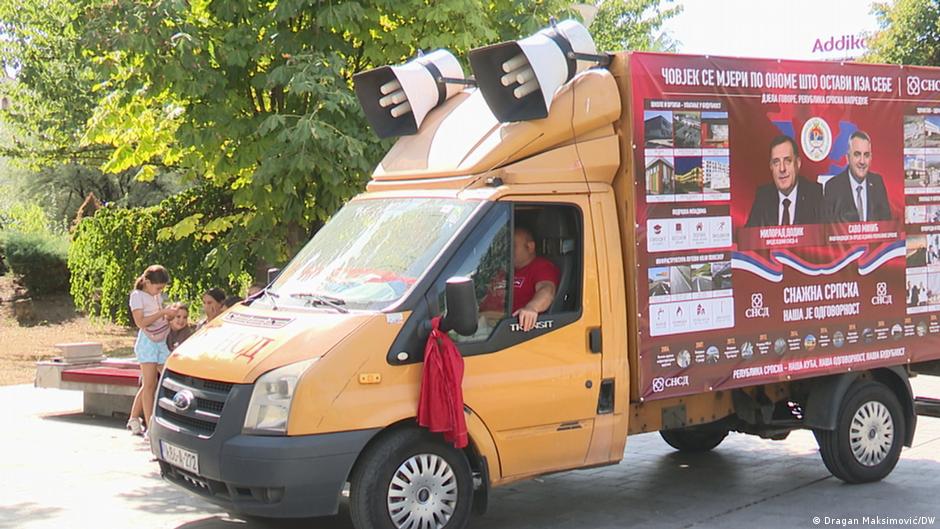
But when voters here go to the polls on October 4 to elect people to the most powerful positions at both state and entity levels, the focus of the election campaign will not be on how to stop the country hemorrhaging citizens. It will — once again and for the umpteenth time — be about who is Serb, who is Bosniak, who is Croat and who supposedly threatens whom. That fact alone says more about the state of Bosnian politics than any opinion poll could.
After the brutal 1992-95 Bosnian War, Bosnia and Herzegovina was left divided by the Dayton Peace Agreement — a compromise that stopped the killing but built ethnicity into the state's architecture as a permanent rather than a temporary fix. Three decades on, that architecture hasn't changed, and progress has stalled completely. The complicated constitution drafted at Dayton produced an equally complicated electoral system.
Bosnia is divided into two entities, the Serb-majority Republika Srpska and the Bosniak-Croat Federation of Bosnia and Herzegovina, and the Brcko District. It has a total of 14 governments and parliaments at state, entity and cantonal level — a lot for such a small country. On October 4, voters will elect a new presidency at state level.
The presidency in Bosnia comprises three people. Each of the three ethnic groups elects its own representative: a Serb chosen in Republika Srpska, and a Bosniak and a Croat chosen in the Federation of Bosnia and Herzegovina. On top of that, voters will be electing a new president in Republika Srpska and lawmakers for both the state-level and entity parliaments, while the Federation's president and the remaining parliamentary chambers are filled after the vote through ethnic quotas.
Bosnia today operates as a patchwork of parallel, ethnically defined power structures whose chief skill is blocking one another. And that isn't a design flaw, it's the design. "Many citizens will keep voting for parties that represent their own people, because political elites constantly manufacture a sense of threat and fear, turning elections into a referendum on national survival," political scientist Mladen Bubonjic told DW.
Extract — continue reading at the source.