This week, Botswana is marking 60 years of independence from Britain with Diamond Jubilee celebrations across the country. The anniversary underscores the scale of the country’s transformation. In 1966, the former Bechuanaland Protectorate was among the world’s poorest countries, with barely 12 kilometres of paved road, just 22 university graduates and about 100 secondary-school graduates.
Six decades later, Botswana is an upper-middle-income country with one of postcolonial Africa’s most striking development records. Between 1965 and 1980, Botswana’s economy grew by an average of 13.9 percent a year. By 2025, gross domestic product (GDP) per capita had reached about $7,800, higher than South Africa’s roughly $6,600, a striking reversal given South Africa’s position as one of the continent’s largest and most diversified economies.
But the significance of Botswana’s growth lies not only in its scale, but in what the country did with it. In 1994, it became the first country ever to graduate from the United Nations’ least-developed country category. The World Bank now classifies Botswana as an upper-middle-income economy, and the change is visible across the country.
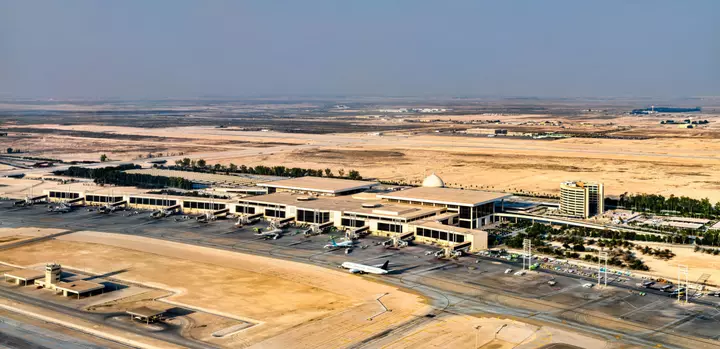
By 2024, its road network stretched almost 35,000 kilometres, 80.2 percent of the population had access to electricity and, according to the 2022 census, 66.5 percent of Batswana lived in urban areas, compared with just 9.1 percent in 1971. Public investment also dramatically expanded access to education. By 2022, Botswana had 192,151 secondary-school pupils, while by 2024 some 60,287 students were enrolled in tertiary institutions.
A country that entered independence with only 22 university graduates now educates tens of thousands of students at tertiary level. The gains extended beyond education. Botswana’s national poverty rate fell from 30.6 percent in 2002/03 to an estimated 14.5 percent by 2022.
Public healthcare expanded alongside this transformation. Today, 85 percent of Batswana live within five kilometres of a health facility and almost all births occur in health facilities. Botswana’s response to HIV is more remarkable still.
Extract — continue reading at the source.