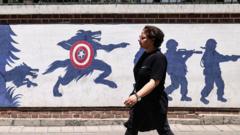
Bowen: US-Iran deal raises inescapable question of what the war was for Jeremy BowenInternational editorAFP via ImagesIranian civilians have been living under the threat of strikes for monthsThe memorandum of understanding signed by President Donald Trump and President Masoud Pezeshkian of Iran lays out the political, military and economic consequences of the ill-judged decision to attack Iran on 28 February. The human cost is already clear. Thousands have been killed, many of them civilians, in Iran and Lebanon.The US, and by extension Israel, have suffered a strategic defeat.
The regime in Tehran faced its worst nightmare: a joint military operation to cripple or destroy it by the US, the world's strongest power, and Israel, the Middle East's superpower. The regime has not just survived. It has been empowered.Its strategy of blocking the Strait of Hormuz, and with it one fifth of the world's supplies of oil and gas as well as other vital components in the global economy, has forced Trump to agree to a series of concessions that have infuriated and alarmed America's Iran hawks and the Israeli government.
The memorandum of understanding - or MOU - calls for an end to the war in Lebanon. Israel says that cannot happen. It wants a free hand in Lebanon, and that issue has the capacity to cause an even sharper rift between Israel and the US, and play into the hands of Iranian hardliners who oppose any deal with the Americans.In return for reopening the Strait, the MOU's language says the US will lift its counter blockade of Iranian ports, waive sanctions allowing Iran to earn billions of dollars from exporting oil and start the process of returning billions more to Iran by unfreezing assets that it held abroad.That is before they get down to the hard business of negotiating a nuclear deal.
It is the price of returning to the way they were on 27 February, the day before the US and Israel launched the war. On that day the Strait of Hormuz was open for shipping and American and Iranian negotiators were discussing a nuclear deal.The signing of the MOU means that the negotiators will go back to work and ships will be able to transit the Strait of Hormuz.Moment Trump signs Iran deal at Palace of VersaillesJoe Biden's Secretary of State, Antony Blinken, posted on X "the only 'achievement' of the ceasefire is the likely reopening of the Strait of Hormuz – which was open before the war started. And we will apparently pay Iran to do so."The question of what exactly the war was for is inescapable and will not go away.
It amounts to Trump's worst foreign policy blunder so far. It might also spell the end of Israeli Prime Minister Benjamin Netanyahu's long political career. He faces elections in October, and a reckoning from Israeli voters for his part in security failures, the worst in Israel's history, that meant its vaunted military and intelligence services failed to spot the Hamas plan to invade Israel from Gaza on 7 October 2023.
Netanyahu's hardline military policies and dismissal of diplomacy were designed at least in part to restore his reputation as Israel's Mr Security.Tehran was always aware of the potential power of closing the Strait of Hormuz. So was the US military, its diplomats and spies.But the former Supreme Leader of Iran, Ali Khamanei, a cautious, elderly man, chose not to take the risk of using the Strait as a weapon.After Israel killed him, and his closest advisers, in the first bombing sorties of the war, his successors believed, correctly, that they were in an existential struggle and did not hesitate to close the Strait.Weapons, money and ships: How is this Iran deal different from others?US-Iran deal leaves core sticking points unresolved - and a $300bn questionIran says deal shows it did not bow to 'threat or pressure' as Trump hits out at criticsThey have discovered the power of controlling a global economic chokehold. It is a far more usable weapon, and much cheaper, than the network of allies and proxies it spent decades and billions building in the Middle East.
Extract — continue reading at the source.