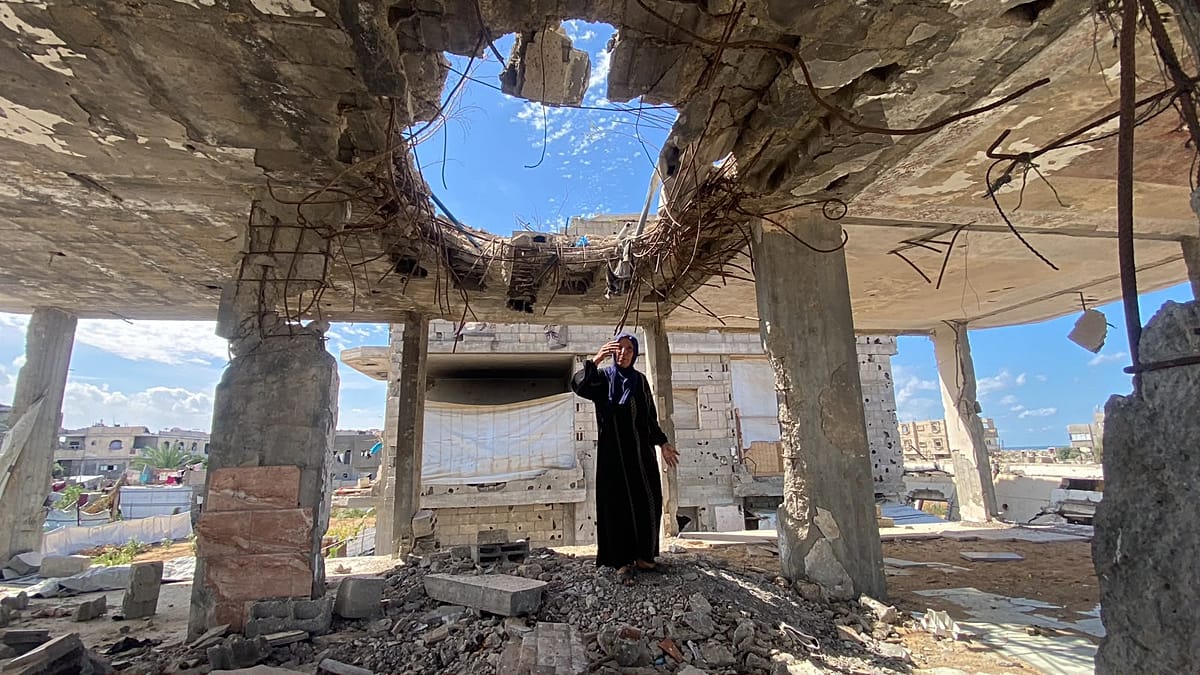
Buenaventura, Colombia – Lorena Hipis sits in her living room, gazing emptily into the kitchen. The harsh midday sun beats down on her. The walls have been shaved off one side of her house, and a gaping hole punctures what used to be the roof.
"The whole thing came crashing down," said Hipis, gesturing to the wreckage of a five-storey building next door. It collapsed during the 7.4-magnitude earthquake on Monday, destroying half of her home and flattening her mother's house nearby. Hipis lives in Buenaventura, a city of 432,000 on Colombia’s Pacific coast that suffered widespread destruction.
Though her city is home to the country's largest port, she fears it will be overlooked in the broader recovery effort. "The municipality, the state and the government haven't come here," she said on Thursday. In her daughter’s bedroom, metal rebar hangs from the ceiling, while jagged chunks of concrete and brick threaten to tumble to the floor at any moment.
Hipis fears that what remains of her roof will collapse under the weight of the debris from the neighbouring building. She said she is desperate for help to clear it: "The government is taking too long. And this is an urgent situation." Buenaventura is one of several cities and towns where residents fear a pattern of state neglect will affect how resources are distributed after the deadly earthquake.
An estimated 287 people were killed across the country, roughly 19 of whom died in Buenaventura. But locals worry that greater care will be paid to major provincial capitals like Pereira and Cali, as opposed to areas with higher levels of poverty, like their city.
Extract — continue reading at the source.