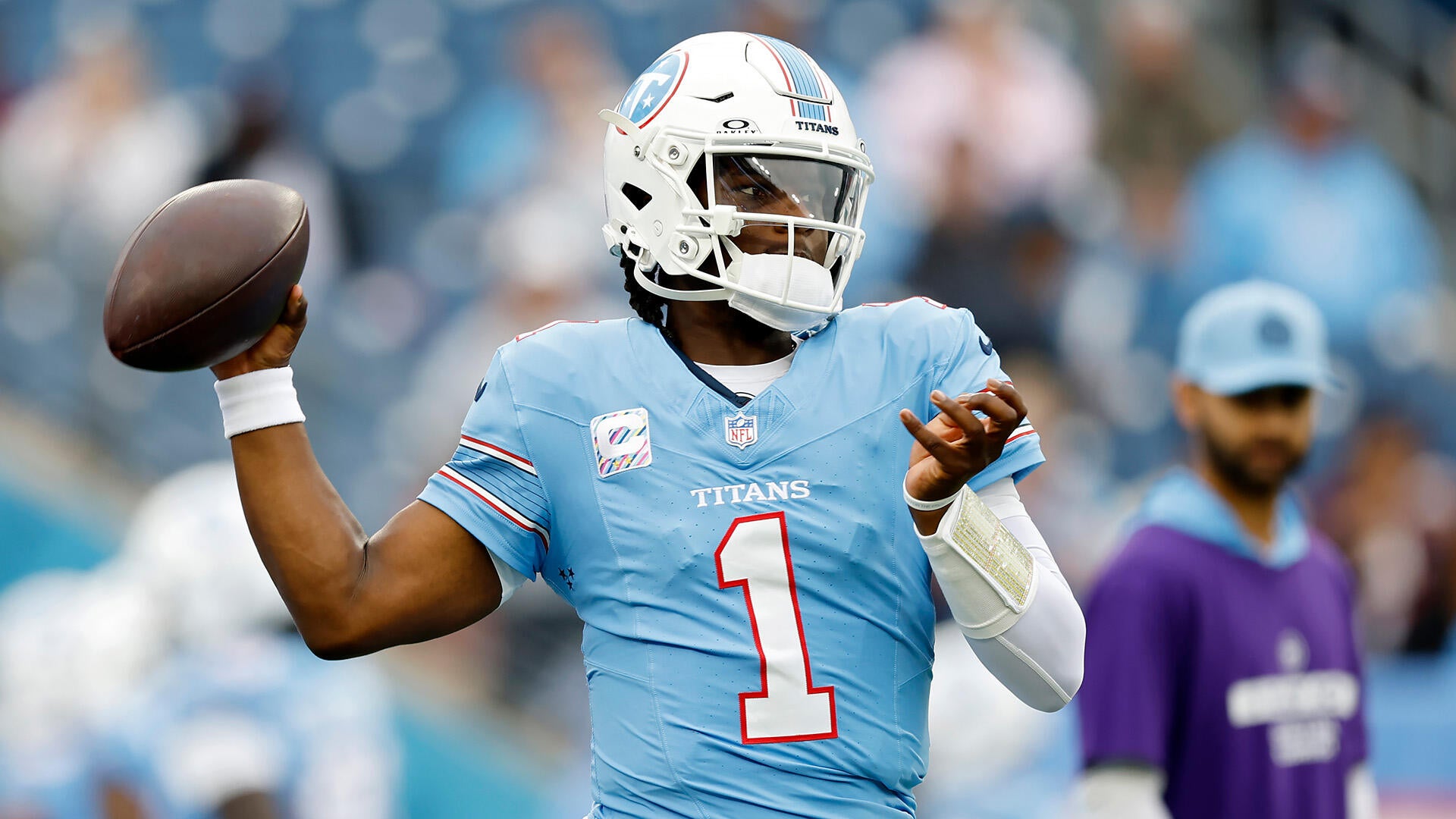
After Sunday's 26-3 loss to Houston dropped the Titans to 0-5, Robert Saleh made it clear that benching the second-year quarterback isn't on the table. Tennessee remains committed to the former No. 1 overall pick, even as the offense continues to stumble its way through the season. As CBS Sports' Jordan Dajani explained Monday, benching Ward wouldn't solve Tennessee's many problems.
It would only make it harder to determine whether he's the team's long-term answer. But there's a difference between believing in a young quarterback and seeing evidence he's getting better. Ward is 3-19 through 22 starts, and the numbers tell a story that goes well beyond wins and losses.
So what does history tell us about how the future might look? And if Ward and the Titans can't right the ship, would the organization think about drafting a(nother) quarterback with a(nother) top pick? To find an answer, I looked at first-round QBs since 2000, comparing their first 22 NFL starts with their next 22.
The results offer some hope, although there's a pretty big difference between improving and becoming the franchise quarterback Tennessee thought it drafted. Among 56 first-rounders who started at least 22 games in their first three seasons, Ward ranks tied for 51st in per dropback (-0.15) and 52nd in yards per attempt (5.8). His 38% offensive success rate ranks 49th.
Ward hasn't been reckless with the football. His 1.4% interception rate is among the lowest in the group. But his 2.6% touchdown rate ranks tied for 50th, and he rarely generates explosive completions.
Basically, he's avoiding interceptions without making enough plays to move the offense consistently. Five of the nine quarterbacks in the table were selected No. 1 overall, and seven were top-three picks, a reminder that even the most highly regarded prospects aren't guaranteed immediate NFL success. Josh Allen and Jared Goff both struggled early in their NFL careers before becoming high-level starters.
Extract — continue reading at the source.