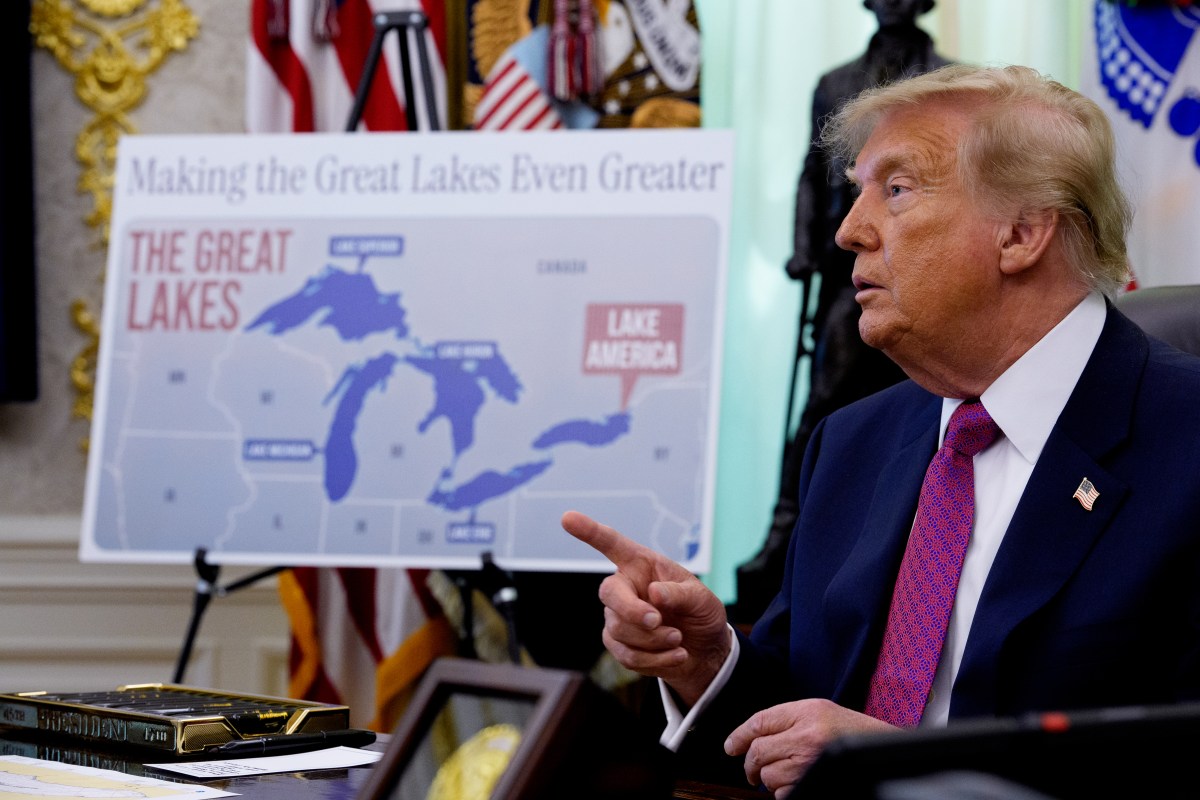
President Donald Trump's decision to rename Lake Ontario as "Lake America" has reignited questions about how much power a president has to reshape maps, geographic names and even long-standing international conventions. Trump signed an executive order on August 27 directing the federal government to rename Lake Ontario "Lake America," marking the latest in a series of efforts to change how prominent geographic features are labeled in official U.S. records. The order took effect immediately and instructs Interior Secretary Doug Burgum to update the Geographic Names Information System, the federal database used to standardize place names across government agencies.
While the change applies to federal usage, it does not require Canada, international organizations or private mapmakers to adopt the new name. The move comes nearly two years after Trump ordered the federal government to replace "Gulf of Mexico" with "Gulf of America" in official records, and Thursday's order was accompanied by remarks suggesting that even larger targets, including the Atlantic and Pacific oceans, could one day be considered. Newsweek reached out to the White House by email for comment.
Speaking after signing the Lake Ontario order, Trump joked that the United States now had a gulf and a lake, adding that perhaps the Atlantic Ocean, the Pacific Ocean or both could be renamed next. When it comes to renaming oceans, a president could likely direct federal agencies to use a different name in government documents, maps and databases, much as Trump did with the Gulf of America and Lake America designations. Board on Geographic Names exists to standardize names used by the federal government, and its decisions are intended to create consistency across agencies.
But renaming an ocean would be largely symbolic outside the United States because no country owns either the Atlantic or Pacific Ocean. Under international law, coastal nations exercise sovereignty over territorial waters extending roughly 12 nautical miles from shore and have resource rights within Exclusive Economic Zones that typically extend 200 nautical miles offshore. Beyond those areas lie vast stretches of international waters shared by the global community.
Even if Washington adopted a new name, foreign governments, international organizations, mapmakers and shipping operators would not be required to use it. Trump signed the executive order Thursday directing the federal government to treat Lake Ontario as "Lake America" and ordered Interior Secretary Doug Burgum to update the Geographic Names Information System accordingly. The move followed days of comments from the president amid an escalating trade dispute with Canada.
The president had previously suggested on social media that the United States was seriously considering changing the lake's name and later announced the decision in the Oval Office. Asked what message he was trying to send to Canada, Trump insisted there was "no message," while also criticizing the country's trade relationship with the United States. The change mirrors Trump's earlier effort to rename the Gulf of Mexico and reflects a broader willingness to use executive authority to reshape federal naming conventions.
Extract — continue reading at the source.