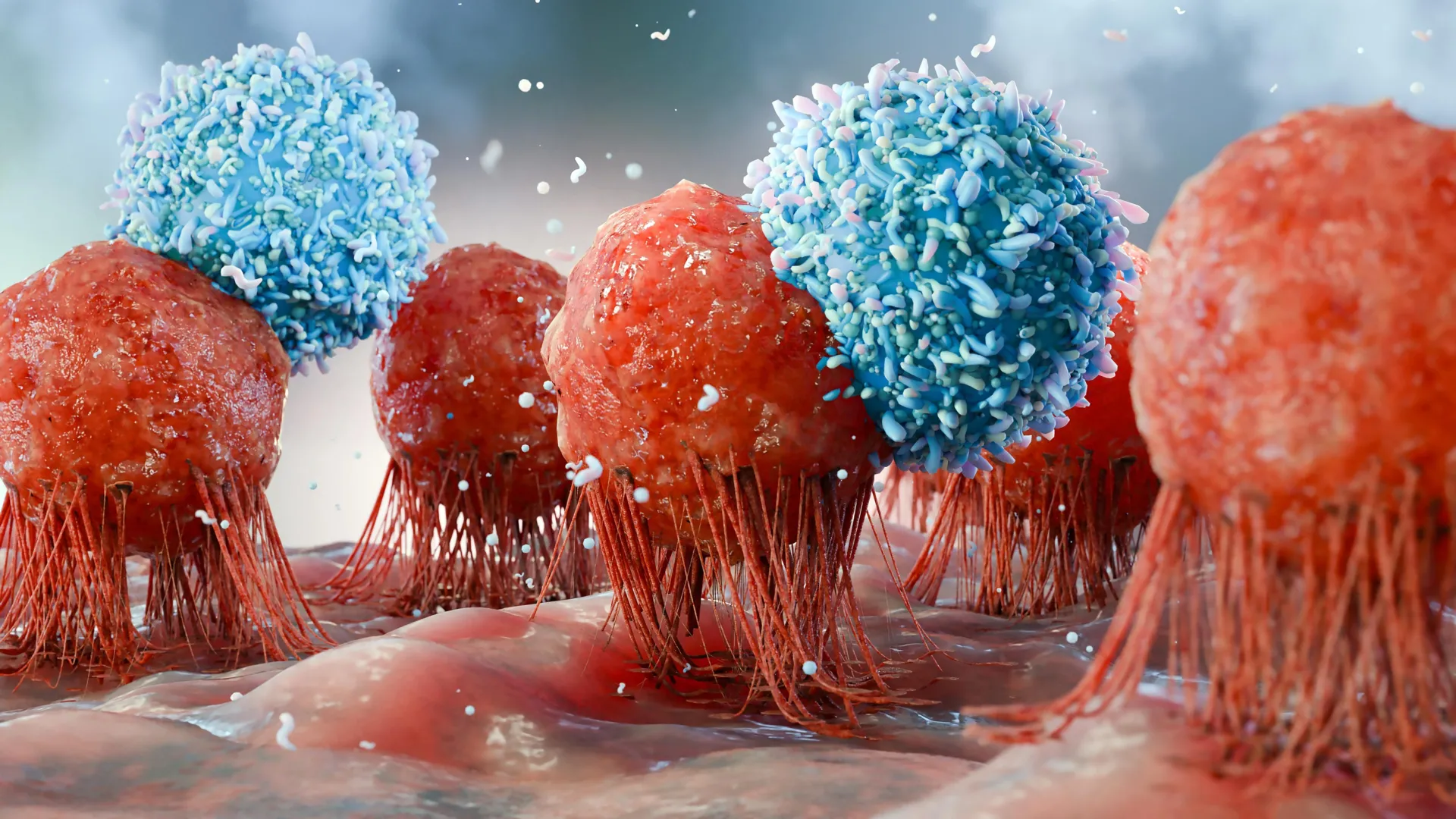
Cancer immunotherapy can unleash T cells, the immune system's specialized cancer killers, against tumors. But there is a major limitation: These cells can become worn down before the cancer is eliminated. This condition, known as T cell exhaustion, leaves the cells unable to maintain a strong attack or keep tumor growth under control.
That problem has been particularly important for checkpoint inhibitors, immunotherapy drugs designed to remove biological restraints that normally limit T cell activity. "A tragic part of T cell exhaustion is that the immunotherapy seems to be working for patients, and then it fades," says Santosha Vardhana, MD, PhD, a physician-scientist at Memorial Sloan Kettering Cancer Center (MSK) who treats people with lymphoma. "Many of them experience a brief wisp of promise only to have it taken away." Researchers in Dr.
Vardhana's laboratory have now identified a signaling molecule called MEK as an important driver of this exhaustion process. Based on animal studies published in Immunity, the findings suggest that blocking MEK might slow T cell exhaustion and potentially make immunotherapy more effective. "We're excited about applying this finding to enhance multiple forms of immunotherapy," Dr.
"FDA-approved MEK inhibitors are already available, so this approach could be tested in humans without much delay." How MEK Pushes T Cells Toward Exhaustion Scientists have only recently begun to understand the processes that cause T cells to become exhausted. Vardhana's laboratory identified an important piece of the puzzle: the cells' metabolism, meaning the chemical processes they use to turn nutrients into energy. When T cells are continuously exposed to tumor antigens (the cancer proteins the immune system sees as foreign), the mitochondria inside the cells can become overburdened.
Mitochondria are responsible for transforming nutrients into energy that cells can use. "There is a large metabolic demand being imposed as T cells encounter cancer cells and try to produce cancer-killing, or cytotoxic, proteins," Dr. "It turns out that the decision to make high levels of these proteins is regulated by MEK." If MEK becomes excessively active, it can eventually drive T cells into terminal exhaustion, a severely depleted state in which immunotherapy can no longer reactivate them.
"We realized T cell exhaustion isn't simply a loss of function -- it reflects an imbalance between what these cells are being asked to do and the energy they have available," says Tanmana Mitra, PhD, a student in the Vardhana lab and the study's first author. Surprisingly, the team discovered that exhausted T cells were not metabolically sluggish. They were actually highly active.
Extract — continue reading at the source.


