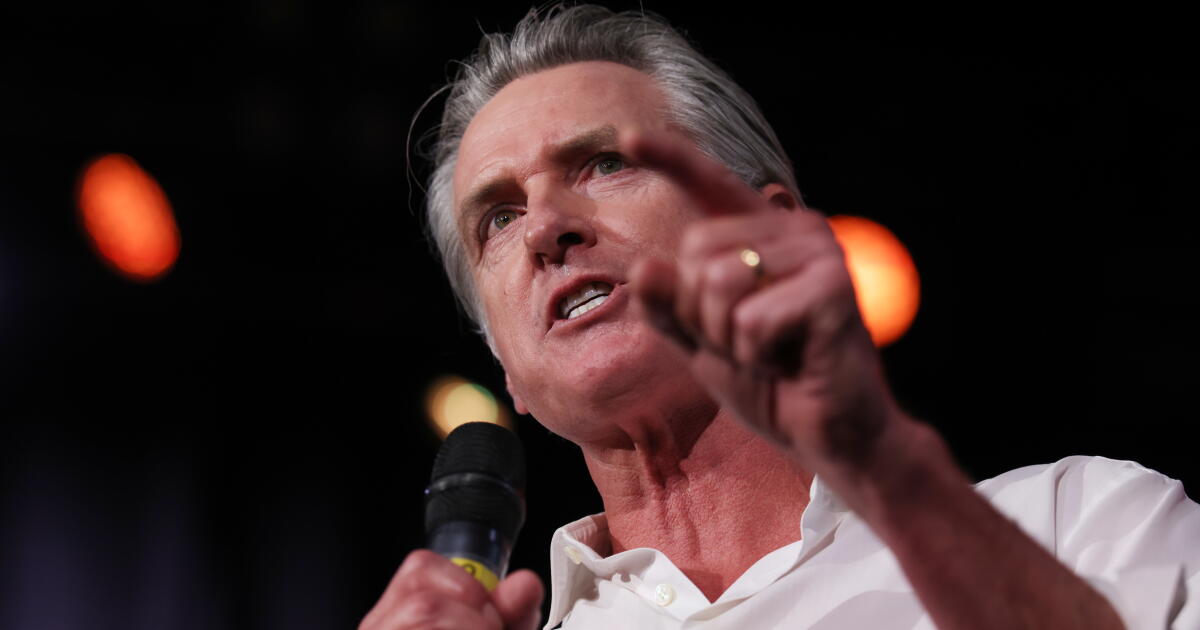
It’s especially difficult and fraught for a politician such as Gavin Newsom, who has Oval Office ambitions and everything to lose from a misstep. Playing it safe is playing it smart. On Thursday, Newsom took what can only be described as a courageous stand, a risky stand — commuting the death sentences of the 548 men and women condemned to die in California, and instead seeking to change their sentences to life without parole.
Many people will stop reading right now because honestly, do you care what happens to those on death row? They’ve raped, murdered, robbed, tortured — you name the heinous crime, one of them has done it. They are not the most sympathetic lot, and in truth many of us have ambivalent feelings on the death penalty.
It’s that ambivalence, that uncertainty, that makes Newsom’s move so interesting. We are in the most unlikely of moments — witnessing a self-inflicted test of political endurance from a savvy politician who didn’t need to go there. What happens in these strange days when a presidential hopeful takes an unnecessary risk simply because he believes it’s the right thing to do?
Newsom will be roasted by those claiming to be tough-on-crime types. They will predictably cry that he is circumventing the will of the people and disrespecting crime victims and juries. Some will say he cares more about criminals than victims.
Fox News is going to have a field day. Newsom has publicly pondered this decision for some time, calling it a “rocking chair” choice, one he’s likely to look back on someday to judge whether he lived up to his own ideals. He has said he is morally opposed to the state killing to prove killing is bad.
As he terms out of office, he had only a couple months left to take action on that belief before the power to end the largest death row in the Western hemisphere slips out of his hands. This, he said, was one of those moments for him. Stevenson is one of the people Newsom has talked to about the death penalty, and the founder of The Legacy Museum in Alabama, which traces the line from slavery to mass incarceration.
Extract — continue reading at the source.