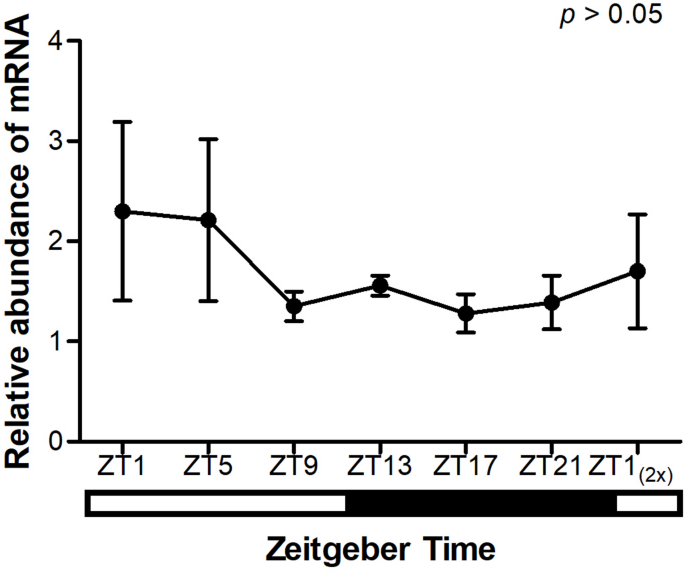
The expression of the gene denominated foraging (for) has been associated with locomotor activity and foraging behavior in several insect species. In the mosquito Aedes aegypti, however, the expression patterns of for orthologue (Aafor) and its role in the mosquito locomotor activity and foraging behavior are unknown. In this study, we quantified Aafor gene expression in adult female A. aegypti across different ages and physiological states.
We silenced Aafor expression using RNA interference (RNAi) via microinjection of a double-stranded RNA (dsAafor) and monitored females’ locomotor activity under controlled photoperiods. RNAi-treated females exhibited enhanced locomotor activity compared with control females at the morning peak of activity from the 4th to the 6th days post-microinjection and, at the evening peak throughout the entire observation period. Treatment with RNAi enhanced locomotor activity similar to the effect of a pharmacological cGMP-PKG activator (guanosine-3’-5’-cyclic monophosphate sodium salt; C10H11N5NaO7P) at the evening peak.
However, neither treatment altered circadian parameters or the free-running period of females’ locomotor activity. The results indicate that expression of Aafor is reduced after insemination, enhanced after blood-feeding, and suggest Aafor expression is negatively associated with the female’s locomotor activity. Nevertheless, expression changes do not modify circadian rhythms of locomotor activity.
The mosquito Aedes aegypti (Linnaeus, 1762) is a competent vector for numerous arboviruses that cause human diseases, such as dengue virus (DENV), Zika virus (ZIKV), and chikungunya virus (CHIKV). Following decades of studies on the biology of the vector and pathogens, strategies to control mosquito populations or make them refractory to virus dissemination have shown promising results1,2. However, arbovirus epidemics keep making thousands of victims every year, especially in tropical regions3, placing a burden on individual health and economic stability.
Since the A. aegypti mosquito is an important link in the arbovirus transmission chain, strategies to avoid transmission of these pathogens involve interfering with the vector’s biology, including aspects of its behavior. One of these aspects is the host-seeking behavior of mature females towards a blood-feeding to acquire nutrients, mature eggs and fulfil reproduction4. Since blood-feeding also complements individual nutrition5,6, host-seeking behavior can be understood as a specialized foraging behavior.
Besides obtaining the nutritional resources needed for their survival and reproduction, foraging also exposes animals to individual risks, like being predated or succumb to exhaustion7. This behavior results from the interaction of environmental conditions, physiological processes, and molecular mechanisms8,9. Therefore, studies on these molecular mechanisms are essential to understanding the endogenous features that define foraging behavior.
Extract — continue reading at the source.