In the mornings, 13-year-old Muneer Farie went to school, and in the afternoons he helped his father feed the livestock. He took his studies seriously, dreaming of becoming the first teacher in his family of farmers. As fighting approached his village in al-Wazeyah district in Taiz, Yemen, two weeks ago, Muneer’s focus started to drift from his lessons.
The classroom echoed with the distant sounds of explosions and gunfire. His home was suddenly on the frontline of renewed fighting between the Iran-aligned Houthis and the Saudi-backed Yemeni government. They arrived penniless and lacking even the most basic supplies.
Muneer and his family are some of the more than 130,000 people displaced by recent fighting in Yemen, which started in September when the Houthis launched a renewed military campaign and rapidly moved south-west, seizing control of towns along the Red Sea coast. The Houthis’ campaign interrupted years of relative calm that had prevailed over Yemen, with frontlines remaining broadly static since a UN-mediated ceasefire came into force in 2022. The Houthis are now battling government forces and a Saudi air campaign to seize strategic highlands and supply lines on the outskirts of Taiz.
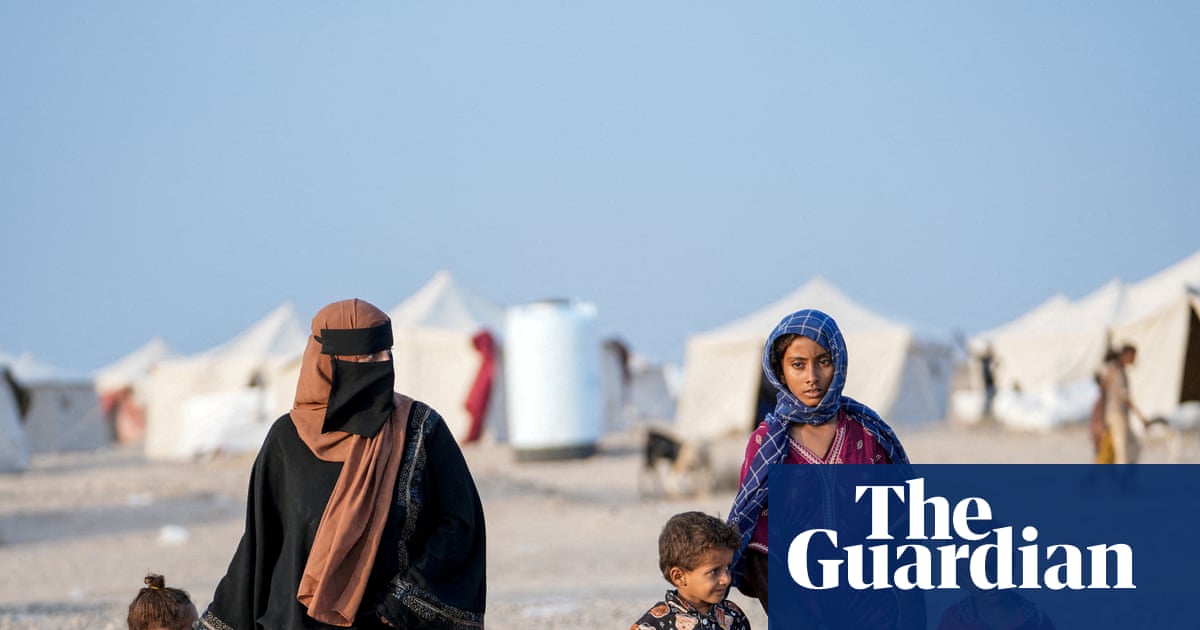
Civilians have been driven out of their homes by the fighting, fleeing airstrikes and missiles. Muneer and his brother, instead of studying, now sell socks and other cheap products in the markets outside his displacement camp. His classroom has been replaced by a small tent where he and his five siblings and parents crowd together in the humid night air.
He joins the more than 3.2 million children whose studies were interrupted by Yemen’s civil war prior to this month’s escalation. Farie hopes the camp will be only a temporary home and that he can soon return to his village, but he is not optimistic as new displaced people arrive every day. Life has also grown harder for those who have remained in their homes.
Abdulwasea Abdu, the principal of Musaab Ibn Umayr school in Taiz, tried to keep the doors of his school open for as long as possible to give children a sense of normality. But that normality was shattered two weeks ago when a missile fell nearby, exploding in sight of the students. Some children showed psychological trauma as a result of the intensity of the blasts,” Abdu said.
Extract — continue reading at the source.