Indo-Tibetan Border Police (ITBP) Director General Shatrujeet Kapur sounded alarm bells across India by confirming that Indian and Chinese troops had confronted each other at several locations along the de facto border in Arunachal Pradesh state, in India's northeast. "In the past few days, a situation arose where a face-off happened (with Chinese troops) at various locations in Arunachal and it still continues," he told reporters last month. "It may be difficult to counter China by conventional means because their PLA and BDR (Border Defense Regiment) have gone way ahead with investment and modernization," he said.
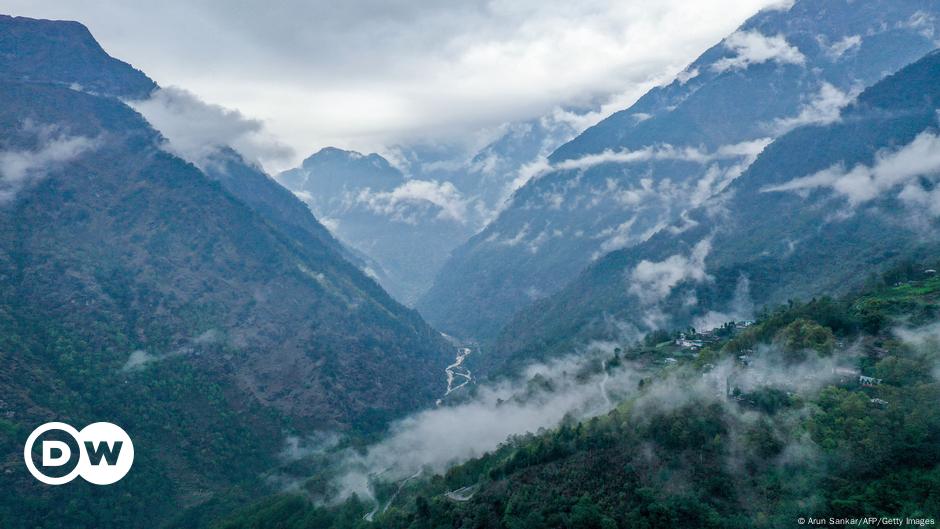
The disputed China-India border runs through a remote mountainous region. Throughout the decades, clashes along the Line of Actual Control (LAC), the de facto border, have repeatedly triggered security crises between the world's two most populous nations. Ties between Beijing and New Delhi are still affected by the deadly violence in 2020, when both countries accused each other of trying to seize territory.
In June that year, a clash in the Galwan River valley in eastern Ladakh killed 20 Indian soldiers and four Chinese troops, according to Indian sources. China later confirmed four of its soldiers died. Kapur's remarks have brought renewed attention to the Himalayan frontier.
Arunachal Pradesh Chief Minister Pema Khandu has acknowledged but also downplayed the border transgressions, saying such incidents were not new and the situation along the border was normal. Khandu acknowledged that the border was not properly demarcated and that China did not recognize the McMahon Line, drawn by the British Empire in 1914, which separates Arunachal Pradesh from Tibet. It was also not clear if the latest confrontations between the Chinese and Indian troops involved physical violence.
To view this video please enable JavaScript, and consider upgrading to a web browser that supports HTML5 video The opposition Congress party criticized Khandu's remarks, and accused the ruling BJP, led by India's Prime Minister Narendra Modi, of "rationalizing" Chinese actions instead of asserting India's position. "On this there has been a deafening silence from the PM and his establishment," Congress general secretary Jairam Ramesh said in a post on X, referring to the face-offs confirmed by the border police chief. Meanwhile, External Affairs Ministry spokesperson Randhir Jaiswal attributed the incidents to Chinese forces changing up their patrol routes.
"As we have noted in the past, the situation in the India-China border areas gets disturbed from time to time when Chinese forces diverge from established patrolling patterns," he said. Chinese Foreign Ministry spokesperson Guo Jiakun rejected the allegations, saying Chinese troops were conducting "normal patrols" and strictly abiding by bilateral agreements. The LAC largely separates Indian- and Chinese-controlled territory.
Extract — continue reading at the source.