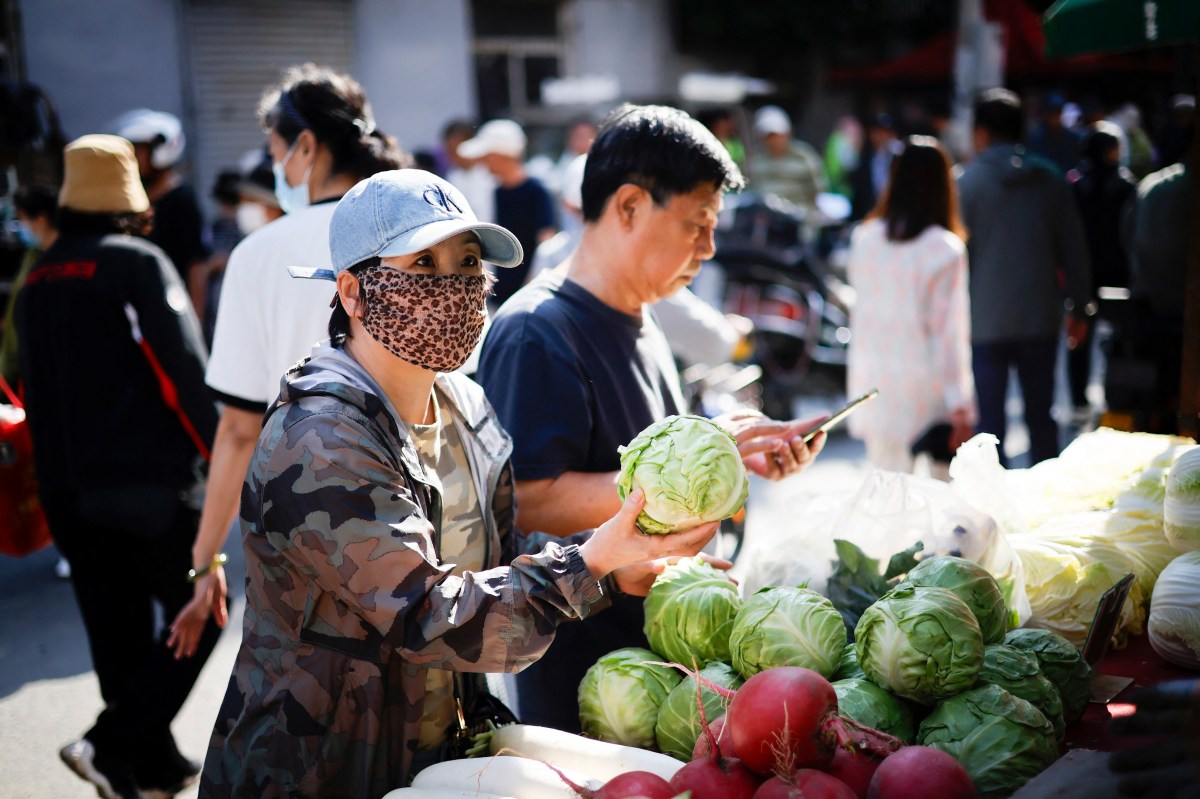
Chinese authorities have launched an investigation after a blogger posted a video claiming farmers were treating cabbages with formaldehyde, a carcinogenic chemical used to preserve lab specimens. "Local governments nationwide are organizing inspections of cabbages and other vegetables, with violators to face 'severe punishment,'" read a statement released Sunday by the State Council's Food Safety Commission, the Ministry of Agriculture and Rural Affairs and the State Administration for Market Regulation. The blogger, who goes by "Yulie Qige," uploaded a video Saturday showing workers in a cabbage field in Hebei province dipping produce into a solution he said was formaldehyde next to trucks before loading them.
A worker told Yulie Qige the cabbages would remain fresh for two to three days after the treatment, and that the shipment was bound for a farmers' market in Suqian, Jiangsu province, southeast of Hebei. "Just two or three days, that's it. And people will still be eating them for several more days after that," the blogger told viewers, calling it a "very common phenomenon." "These vegetables end up on ordinary people's dinner tables.
They have no conscience at all," he added. The post was picked up by Chinese news outlets and gained traction on social media, where some netizens lamented a lack of food safety regulation. "It's very likely been operating for eight to 10 years," one user said on Chinese social media platform Weibo.
"The saddest part is, what is the daily routine work of the market supervision department? Drinking tea and reading newspapers?" another user wrote. The government "immediately instructed local authorities to investigate and verify the allegations, handle the case strictly and swiftly in accordance with the law, trace the distribution of the cabbages involved, and prevent problematic products from entering the market," the government's joint statement said.
The video recalls a similar incident in Shandong province in 2012, when media reported that 2.5-liter jugs of formaldehyde were being sold for about a dollar each and that half a jug was sufficient to treat a 10-ton load of cabbages, according to Chinese daily newspaper Yicai. While food safety experts generally say China's regulatory system has become stronger, the country is no stranger to food scandals, which have often centered on cost-saving practices substituting ingredients with harmful adulterants. In January, French food giant Nestlé was forced to issue a global recall of some batches of baby formula after investigators found they contained cereulide, a toxin associated with Bacillus cereus.
The contamination was traced to ARA oil from a Chinese supplier. In 2024, a subsidiary of state-owned Sinograin was found to have for years been transporting edible oils in fuel tankers without cleaning them in between, a sign of lax monitoring by manufacturers and regulators alike. Food safety has been a priority for President Xi Jinping since he took office in 2013, yet longstanding practices and intermittent scandals have kept the public trust low, wrote Genevieve Donnellon-May, an analyst of resource conflict and environmental governance with Australian think tank the Lowy Institute, in a 2024 article.
Extract — continue reading at the source.