For decades, China has faced accusations from the United States and the European Union of stealing their technology. From robotics and advanced semiconductors to precision engineering and automotive parts, Chinese firms have recruited top engineers, allegedly spied on Western rivals and been linked to cyberattacks aimed at gaining access to valuable trade secrets. It is perhaps ironic, then, that China is now taking steps to prevent its own high-end technologies and talent from escaping abroad.
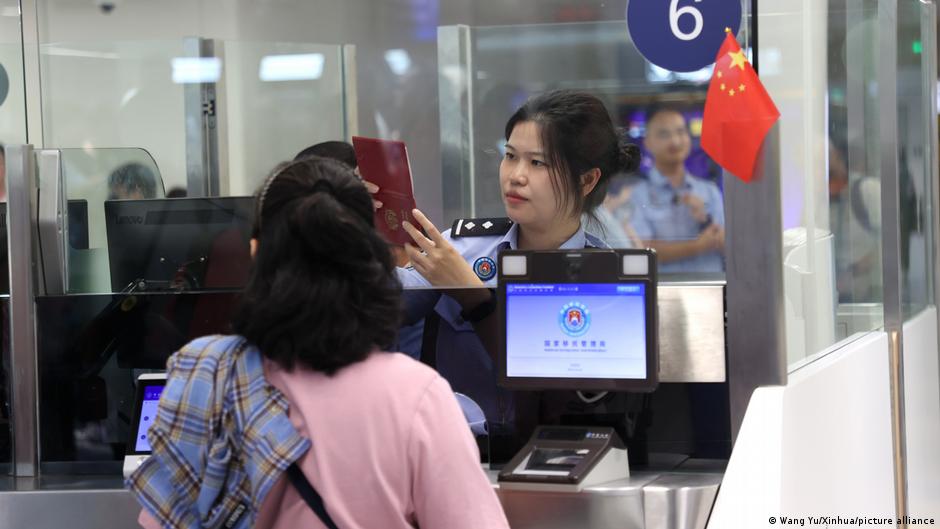
To view this video please enable JavaScript, and consider upgrading to a web browser that supports HTML5 video Last week, new entry-exit rules took effect, giving Chinese authorities the power to stop engineers, founders and other specialists from leaving the country if their expertise in batteries, rare earths or artificial intelligence (AI) is judged a threat to "industrial and technological security." Recently, China has also tightened outbound-investment rules, cracked down on Chinese nationals holding their wealth offshore and restricted the posting of technical staff overseas. Henry Gao, a law professor at Singapore Management University (SMU), believes that, taken together, the curbs "offer a rare glimpse into the true state of China's economy." "These measures suggest that Beijing is deeply concerned about economic weakness and substantial capital outflows," Gao told DW, adding that authorities are also determined to stop "entrepreneurs and skilled personnel from leaving the country." The strain on China's economy is increasingly hard to hide. While demand for exports remains strong — especially for high-tech goods — the country's property crash has severely weakened domestic consumption.
Bank lending fell to a record low over the summer, and new car sales in August dropped nearly a quarter year-on-year. The same anxiety now extends to people and money leaving. The most prominent recent example is Manus, an AI startup created by two Chinese nationals in Beijing.
Last year, the company moved its headquarters to Singapore, partly to avoid US investment curbs and expand into global markets. When Facebook owner Meta tried to acquire Manus last December for $2 billion (€1.74 billion), Beijing blocked the move and barred the firm's two founders from leaving the country. Just this month, Chinese social media has been awash with rumors that Huawei founder and CEO Ren Zhengfei and his daughter, CFO Meng Wanzhou, may have left the country.
The claims were picked up by Taiwanese and Indian media outlets but have not been confirmed by the tech giant and Chinese authorities. At least one family member has since appeared in public in Beijing. Bloomberg Intelligence estimated that some $1 trillion in Chinese wealth had exited the country last year — the largest amount of "hot money" leaving since 2006, when records began.
Beijing has not tightened its annual $50,000 foreign-exchange quota that households may take out of the country. What has tightened, says Alicia Garcia-Herrero, chief economist for Asia-Pacific at French investment bank Natixis, are the unofficial routes the wealthy used around that cap. "They haven't changed the $50,000 quota.
Extract — continue reading at the source.