sözaltı news World
World
EN AZ
CJP protest: The youth movement India's Modi didn't see coming

CJP protest: The youth movement India's Modi didn't see coming

bbc.co.uk 25.07.2026 17:26 23 baxış
The CJP protest began with exam paper leaks. It became India's biggest student movement in years - why?

CJP protest: The youth movement India's Modi didn't see coming . Why have thousands taken to the streets? India's cockroach protest explained Updated 25 July 2026It began with a fear familiar to millions of young Indians: if the examinations that determine their future cannot be trusted, what can?Weeks later, on Monday, tens of thousands of young men and women tried to march on India's parliament.

Police responded with tear gas and baton charges. Thousands more have returned to the streets in the days since.The Cockroach Janta Party (CJP), a youth-led movement born out of anger over repeated examination paper leaks, quickly became India's biggest student mobilisation in years. It demanded education reforms and the resignation of Education Minister Dharmendra Pradhan.

Hours after Pradhan resigned on Saturday following weeks of protests over exam paper leaks and testing irregularities, the CJP called off its agitation, saying the government had accepted its demands. At its centre was activist Sonam Wangchuk, who lost 11kg (24lb) during a 26-day hunger strike in support of the movement before ending his fast on Thursday. The obvious question is whether this is simply another student protest - or the beginning of something larger.History offers reasons for both caution and optimism.Student movements have periodically transformed Indian politics.

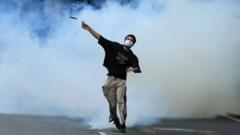
The Nav Nirman agitation in Gujarat helped trigger veteran socialist leader Jayaprakash Narayan's movement against former prime minister Indira Gandhi in the 1970s. Others have erupted dramatically before fading away. a tear gas canister back at police during a CJP march in DelhiWhat makes the CJP unusual, however, is not simply its scale but the nature and breadth of its grievance.Unlike many of the biggest protests against Prime Minister Narendra Modi's government over the past decade - whether over citizenship, farm laws or other contentious policies - this movement is not fundamentally about ideology. Nor is it rooted in the interests of a single community or social group.Instead, it questions whether the state can still guarantee fairness in the examination system that millions of young Indians see as their principal route to social mobility."The exam and education system cuts across caste, class and gender to quite a large degree," Yamini Aiyar, Senior Visiting Fellow at Brown University, told the BBC.

"The core constituency coming to these protests doesn't represent a singular interest group."That breadth is also what makes the movement politically distinctive.Why are thousands protesting for education reform in India?Published23 JulyThe hunger-striking engineer demanding education reforms in IndiaPublished20 July"This movement centres on administrative failure," Rahul Verma, a fellow at the Centre for Policy Research, a Delhi-based think tank, told the BBC. "The state's inability to conduct examinations fairly and prevent paper leaks makes it a very different kind of political challenge to the BJP."That difference, he argues, changes the politics. Unlike earlier protests rooted in ideology or policy, this one questions the BJP's ability to govern.

"They must recalibrate their strategy," Verma says.Many of those protesting, he adds, are not natural opponents of the BJP. They are "aspirational young Indians and their parents who see these exams as a path to upward mobility". Because the grievance is about governance rather than ideology, he argues, the BJP cannot easily rally its supporters or deploy the political counter-narratives that helped it confront earlier protest movements. protester rests in her mother's lap at Jantar Mantar, a day after thousands marched on parliament over exam paper leaks in DelhiMonday's demonstrations appeared to reinforce that assessment.

Extract — continue reading at the source.

Read full story