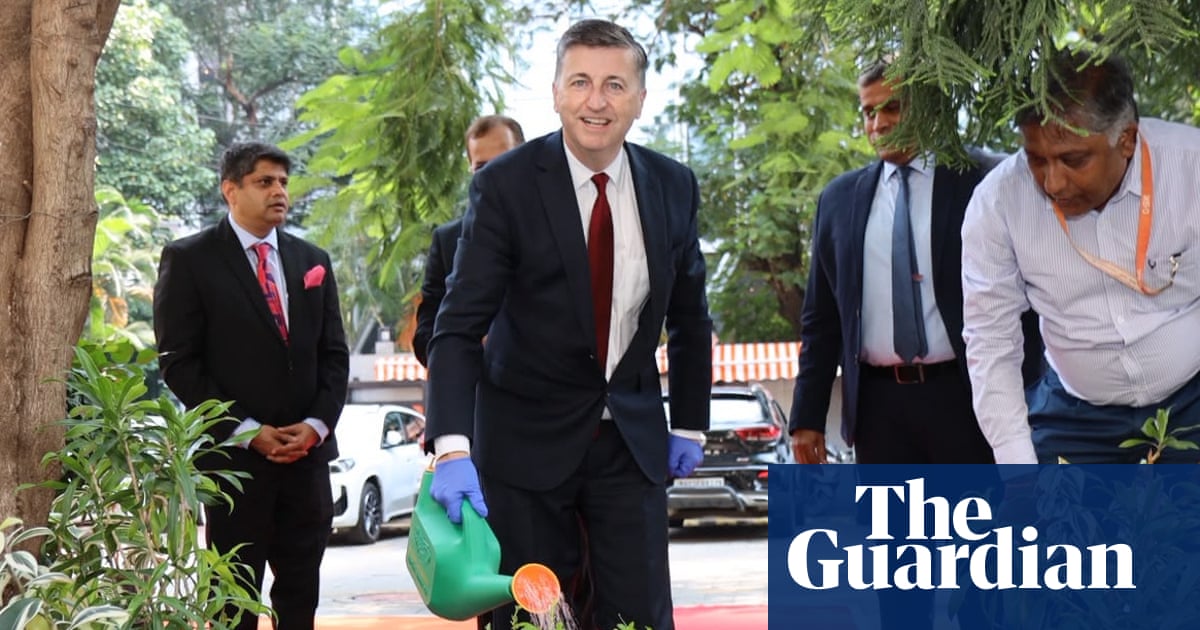
Britain will benefit from much closer trading relations with the EU even if that means giving up its ability to negotiate free trade agreements, the Scotland secretary has said. Douglas Alexander helped negotiate deals with India and the US when he was a trade minister under Keir Starmer. But he has told the Guardian he thinks joint trading arrangements with the EU – whether under a customs union or full membership – would be a bigger economic prize, not least because the EU has now negotiated its own similar deal with India.
When Starmer was prime minister, ministers would argue against rejoining the EU because it would mean having to abandon trade agreements with other countries. Alexander’s comments show how much Starmer’s successor, Andy Burnham, who called this week for a “serious dialogue” on the UK’s relations with the EU, including possible re-entry, has shifted the government’s position. Speaking to the Guardian from a trade delegation to India, Alexander welcomed the progress made since the Indian agreement came into force earlier this year, since when the price of scotch whisky in India has fallen by 10-15%.
But he said the economic benefits of trading agreements with the EU would be greater. Our largest trading partner is and will remain the European Union in the years to come. We trade almost twice the amount with the European Union that we do with the United States, the largest single-country trading partner.” He said: “It’s no secret that I was not a supporter of leaving the European Union, and I called out early as trade minister what I described as the ‘post-imperial delusions’ of the Brexiteers.
Back in 2016, they promised a world of Britain as a buccaneering free trade nation in a world where barriers were coming down. Sadly, what we’ve witnessed in the year since is a more protectionist, more regionalised world in which barriers have been going up. If you compare that with estimates of the structural damage to the UK economy from Brexit, you get a sense of just how important Europe remains to our future trade and prosperity.
He made it clear he did not support any particular method of achieving closer relations with the EU. The ministers spent much of their time in meetings with Indian officials as they attempt to iron out what they say have been “teething problems” with the early implementation, especially for smaller businesses. One hurdle to delivering that is the UK’s desire to discuss the protectionist “Made in Europe” policy, which British manufacturers fear will shut them out of a key market.
EU leaders say they are willing to discuss British entry into that scheme, though they are also pushing for the UK to impose tariffs on Chinese electric vehicles, without which they fear the UK will become a back door into the European market. Reynolds told the Guardian this week he would not impose tariffs simply because of pressure from Brussels.
Extract — continue reading at the source.