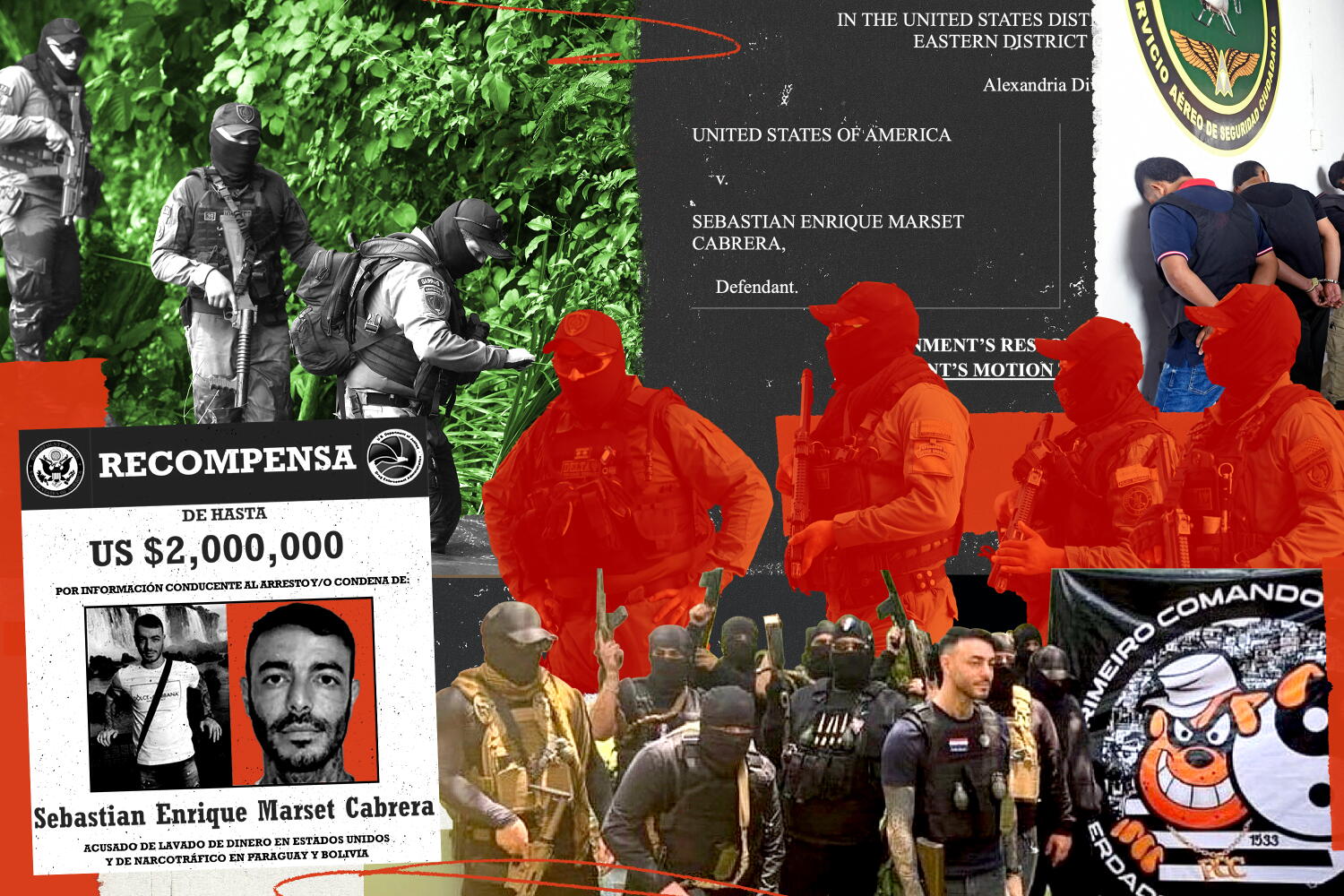
Prior to his capture this year, Sebastian Marset was reputed to be one of the world’s most prolific drug traffickers, allegedly sending mountains of cocaine — 10 tons or more per shipment — from South America to Europe. A native of Uruguay, where authorities say he proclaimed himself “King of the South” and led a criminal network dubbed “Primer Cartel Uruguayo,” or the first Uruguayan cartel, Marset, 35, has been described in some media reports as his country’s version of Pablo Escobar. But unlike the infamous Colombian kingpin, who flooded American cities with cocaine in the 1970s and ‘80s, there is little evidence to show Marset ever moved any product to the United States.
And yet for six months, Marset has been jailed in Alexandria, Va., facing a list of federal charges that has grown longer since his arrival. Initially indicted only for alleged money laundering, he has since been accused by federal prosecutors of conspiring to smuggle cocaine on the high seas and narco-terrorism. The case, Marset’s lawyers and some legal experts say, reflects the degree to which the Trump administration has stretched the purview of the Department of Justice when fighting its war on drugs.
Beyond blowing up dozens of boats suspected of carrying cocaine — a campaign critics denounce as both cruel and ineffective at staunching the flow of drugs — the White House has taken to labeling cartels as terrorist organizations and pushed countries to hand over suspected traffickers without going through the standard extradition process. Marset’s prosecution offers a new twist, with the U.S. attorney’s office in the Eastern District of Virginia pursuing charges against him despite few indications his alleged criminal activities had any impact on Americans. Marset’s lawyers have pointed out in court filings that he is not “alleged to have ever sent even a gram of cocaine to the United States,” arguing there is no jurisdiction to prosecute him in Virginia.
Even the charge that he laundered money through the U.S. financial system, his lawyers say, is flimsy, hanging on a single transaction — out of more than 200 identified by prosecutors — that the feds say was routed through a bank server in Richmond, Va. In a phone call with The Times from jail, his first interview since his arrest, Marset fumed about the case. He claims they stormed his residence with guns blazing, firing indiscriminately into the room where he lay sleeping with his partner and their children.
He was jailed for a time in Dubai, but managed to secure his release and vanish just as authorities resumed their manhunt for him. To build his trafficking network, U.S. prosecutors charge that Marset partnered with the Primeiro Comando da Capital, Brazil’s largest criminal organization, and the Clan del Golfo, a paramilitary group that controls cocaine production and smuggling routes in Colombia. Both were recently designated by the Trump administration as foreign terrorist organizations.
He amassed a fortune, much of it held in cryptocurrency, U.S. court records show, and lived a life of luxury while on the run, sometimes hiding in plain sight. Lanky, with sleeves of tattoos that extend to his neck and wrists, he cuts a striking figure. He allegedly used his illicit wealth to fulfill his dreams of playing professional soccer, buying himself a spot in the starting lineup for teams he bankrolled.
Extract — continue reading at the source.