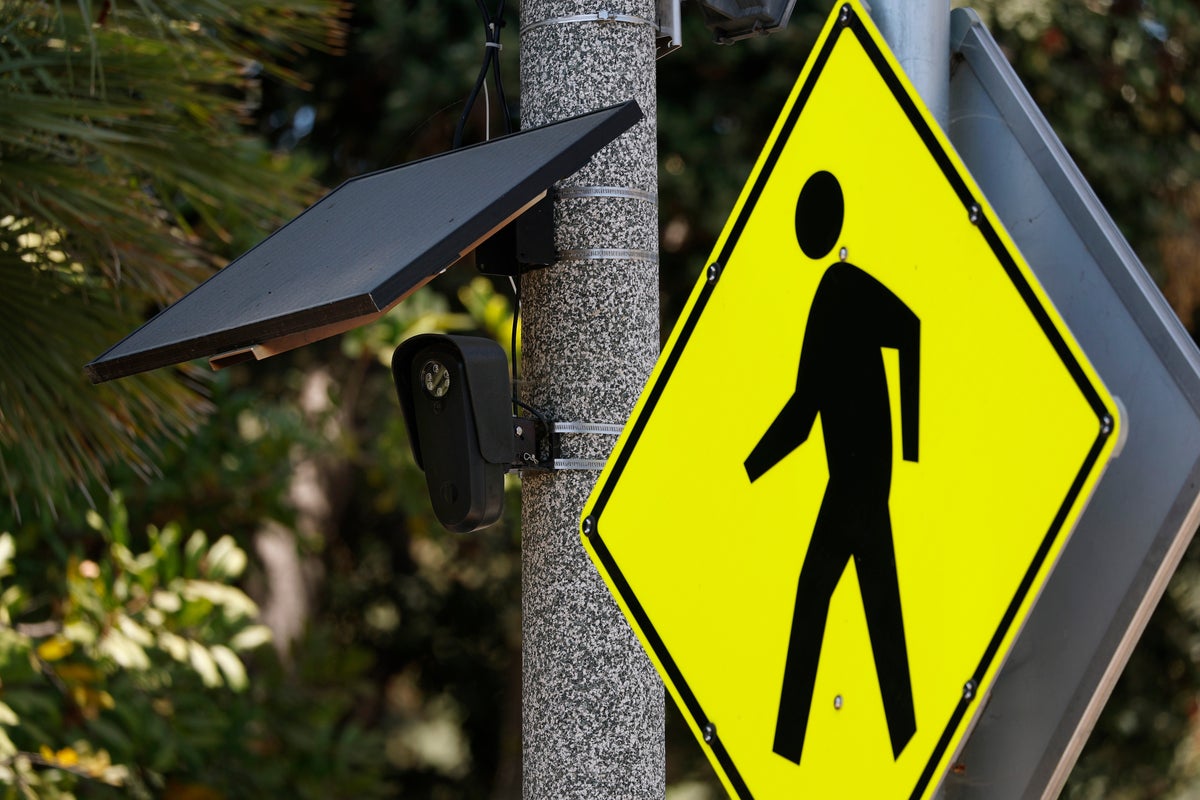
Flock cameras have been shut down by officials in several states this month following privacy concerns about the automated license-plate reading technology. Flock, an Atlanta-based tech company, has been the center of controversy over its cameras that had been praised for helping police find missing people and suspected criminals. But now, those being surveilled are worried about their right to privacy because of the reported misuse of the technology.
Early this month, The Washington Post reported that at least 50 law enforcement officers were charged with or accused of misusing Flock cameras and other surveillance systems, including to stalk women. In August alone, local officials in four states decided to pull the plug on Flock cameras in their cities, at least temporarily. The Independent has reached out to Flock for comment, but its media team said it was currently “taking a break” from responding to requests.
The town council in Narragansett, Rhode Island, voted unanimously to cancel its contract with Flock on August 3, according to local outlet WPRI, which reported on the community’s reaction to the cameras. Narragansett Police Chief Kyle Rekas defended Flock as a “valuable tool.” The city council in Ord, Nebraska, also voted to remove Flock cameras on August 3. They’ve been completely unplugged and covered,” Hood County Constable John D.
Shirley wrote in the post. That kind of permanent, warrantless tracking doesn’t belong in a free society. By unplugging and covering them, we’re making it clear: privacy isn’t optional, and mass surveillance isn’t how we do things here,” he wrote.
The Burnet County Sheriff’s Office also announced on August 3 that all Flock cameras in the community have been removed. Sheriff Boyd will evaluate any future use of these types of investigative tools.” Officials in Palm Bay, Florida, announced on August 7 that the city council ordered an investigation into the installation of Flock cameras following concerns about their placement and construction. City Manager Matthew Morton determined that the cameras may not have been properly permitted or installed by Flock, so he and Palm Bay Police Chief Jeff Spears agreed to the immediate suspension of the surveillance system while the probe is carried out.
This summer alone, 18 cities canceled contracts, including Los Angeles; six cities rejected contracts and five cities deactivated the cameras, including Syracuse, New York. But this is just a small amount compared to the nearly 132,000 license-plate readers DeFlock has tracked in the U.S. Amid backlash, Flock announced several updates to safeguard privacy, including changing the default automated license-plate reader data retention period from 30 days to seven days.
Extract — continue reading at the source.