Emerging unexpectedly as a genre film from what seemed a folk-flavored study of storytelling tradition, this plodding oddity will be a hard sell to audiences. Stories are nested within stories to steadily diminishing returns in “Company,” a perversely ponderous exercise in hide-the-genre that takes more than an hour to reveal what its game really is. Gathering little tension ahead of a ludicrous twist — one that puts proceedings in a new light while adding no great urgency to them — Casey Affleck’s second feature as writer-director feels altogether less assured than his 2019 debut, the somberly effective post-apocalyptic drama “Light of My Life.” This time staying behind the camera entirely, and handing a demanding lead role to his teenage son Atticus, Affleck again brings an earnest seriousness of purpose to this staggered tale of a mysterious stranger drifting into a household and holding it eerily rapt, repeated across three different eras.
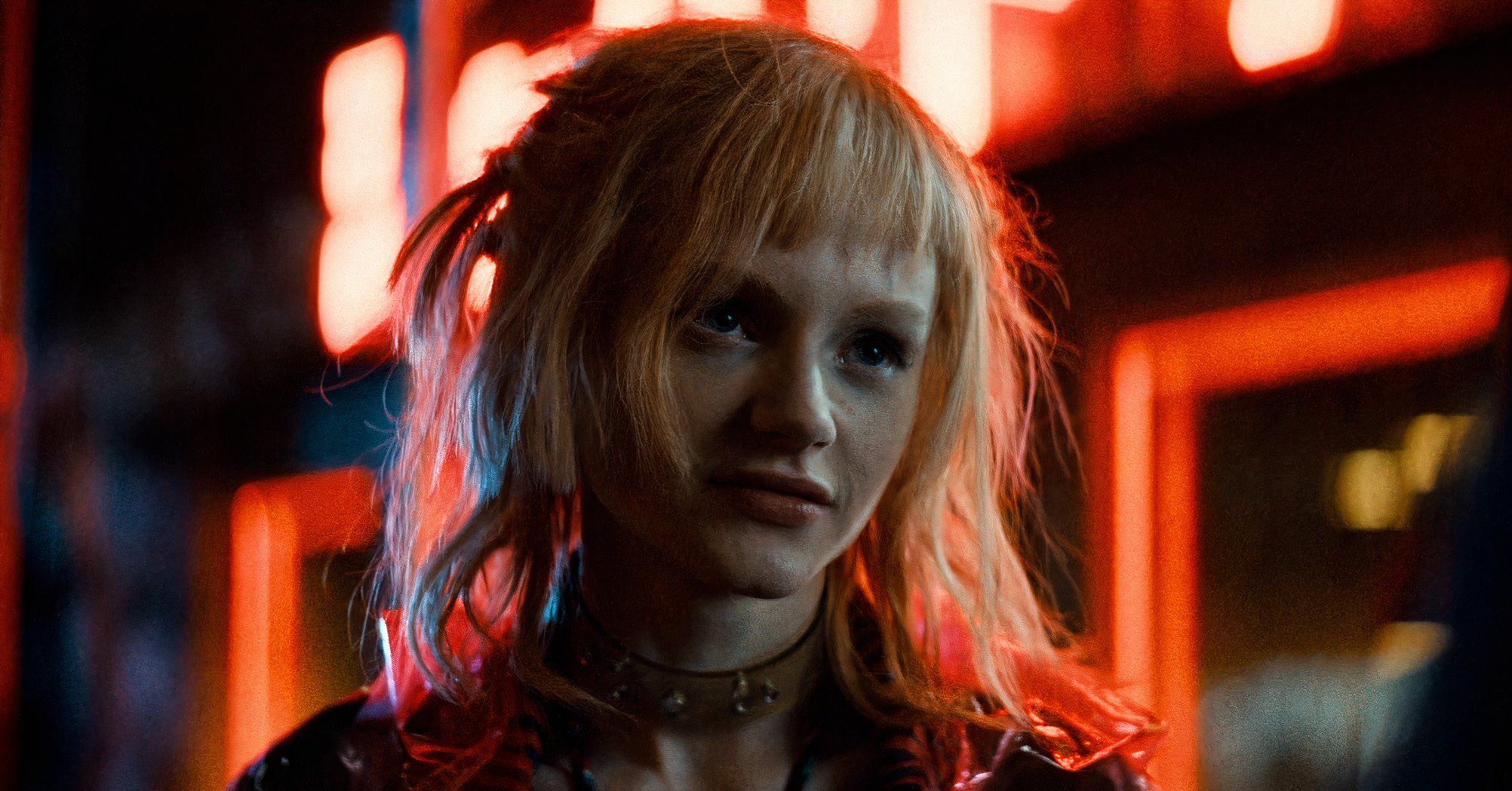
But for all the echoey narrative tripling here, the payoff is distinctly muted. How does one pitch to audiences a film where its grabbiest story hook is also its most carefully guarded secret? Minus the surprise factor that certainly caught Venice journalists off guard, viewers going in with some idea of what’s coming will be even more perplexed by the coy obfuscation and molasses pacing of the film’s first two-thirds, which mostly present as the kind of melancholically revisionist period Western one might expect from the star of “The Assassination of Jesse James by the Coward Robert Ford” and “The World to Come.” (And indeed his co-scripter Ron Hansen, writer of the former film’s source novel and the latter film’s screenplay.) It begins in the year 1975, as Evelyn (Emily Alyn Lind), a quietly self-possessed, soberly dressed young woman, arrives on the doorstep of a well-to-do suburban home, in the midst of an almighty downpour. (Bob Dylan’s “Shelter From the Storm” is the opening soundtrack cue; it turns out to be lyrically on the nose in multiple ways.) Not recognizing the name Evelyn asks for, the man who answers the door says she has the wrong address, but invites her in to dry off; they’re having a Christmas party, and several of the guests are intrigued by the reserved, well-spoken stranger, who offers to regale them with a story.
In the recursive manner of the old “it was a dark and stormy night” chestnut, Evelyn’s story soon teases viewers (and listeners) with some déjà vu: Set in 1953, it tells of elderly rural widower Tom (a maximally grizzled Nick Nolte), who finds an enigmatic young woman, Alice (Caylee Cowan) collapsed in the snow near his cabin in the Colorado mountains, and brings her inside to warm up. In return for his hospitality, she offers to tell him a story — about Rebecca (Adelaide Clemens) and Emmett (Scoot McNairy), a hardscrabble Colorado farming couple in 1903, who find young drifter Caleb (Atticus Affleck) unconscious in the snow, and carry him home to recover. This tedious roundelay of story introductions mercifully ends here, as the turn-of-the-century tale becomes the film’s primary focus, though fear not: Its principals still have plenty of stories to tell.
Rebecca, a patient salt-of-the-earth type, is compelled by the surly, coldly withholding Caleb, and invites him to stay on as a hired hand. Emmett, wary from the start, would rather see the back of him, and his suspicions grow when word spreads of a series of brutal murders in the area. At this point, it’s impossible to discuss the film without any mention of its true identity, so potential viewers wishing to preserve the unspoiled viewing experience would be advised to stop reading here.
In all three timelines, a slightly unsettling stranger — clad in severe monochrome tailoring — is let into an unsuspecting home, and by the time bloody violence enters the equation, the clues check out: This is, like “Sinners,” a period heartland vampire movie that uses the mythic conventions of that genre to say something or other about the American spirit of community, or lack thereof. Caleb, at least, has a bit of attitude, and what tension “Company” generates largely rests on his still, pale-eyed, tacitly judgmental presence. In an extended verbal confrontation between him and neighboring farmer Kleinschmidt (a caustic, quick-on-the-draw Ben Mendelsohn, by several notches the ensemble’s MVP), Affleck and Hansen’s dourly lyrical dialogue finally crackles with something like foreboding.
As Caleb, the younger Affleck — who resembles, in features and affect, the love child of Timothée Chalamet and Troye Sivan — occasionally lets his inexperience show, though there’s genuine mystery in his willowy insolence; only when he’s on screen does “Company” have a welcome whisper of danger to it. Elsewhere, it simply plays as a protracted shaggy-dog tease with no sense of humor, and an inflated sense of its own poetry. Affleck continues to demonstrate promising filmmaking chops: He can conjure starkly mournful atmosphere aplenty, and the film is handsome in an appropriately ascetic, chambray-textured way.
Extract — continue reading at the source.