Much of what we know about how a brain makes decisions comes from studying monkeys watching dots. In a task known as a random-dot-motion task, a cloud of flickering specks drifts weakly in one direction while the subject tries to determine whether—and in which direction— it’s moving. The task has shown that in the primate neocortex, neurons gather visual evidence over time, with their firing rates climbing until they cross a threshold, when the animal commits to a decision.
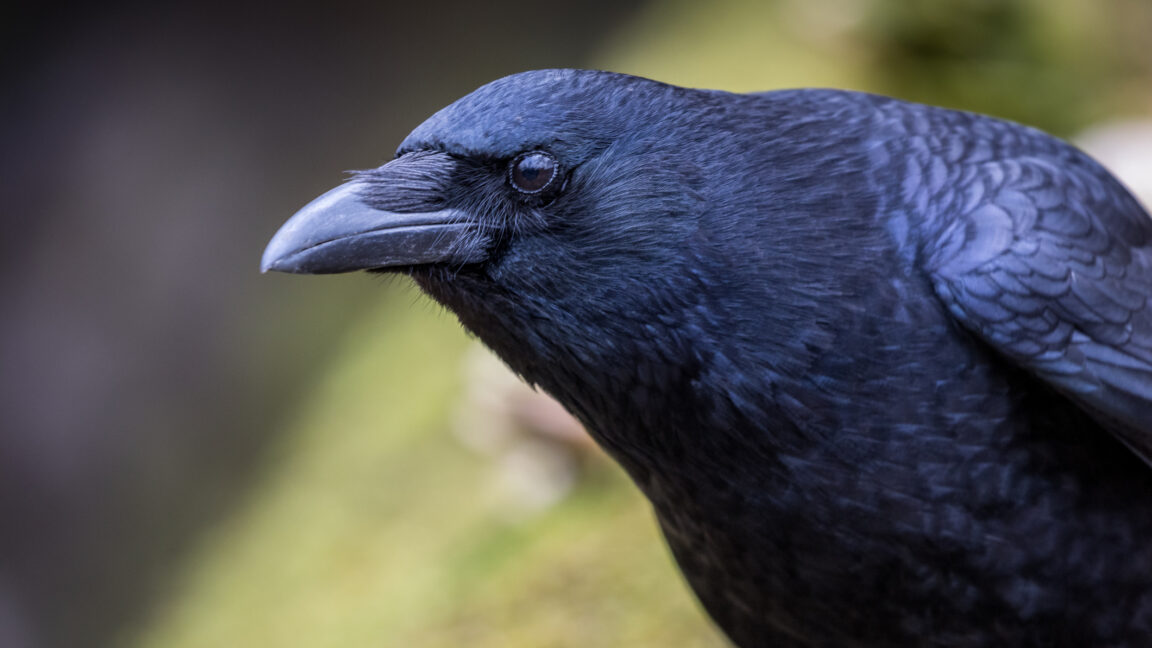
But avian brains don’t have a neocortex, so it wasn’t obvious how they made similar decisions. The crows solved the task the same way primates do, using the same mathematical logic despite having a very different brain structure. And they did it two times faster.
Nieder and Schmidbauer put two hand-raised crows in front of a touch-sensitive monitor showing a cloud of white dots on black, with some fraction of them drifting coherently left or right or up or down. The birds’ job was to report the overall direction by pecking one of the targets that flanked the display. Correct answers earned them a mealworm.
They also included a zero percent condition, in which there was no correct answer.
Extract — continue reading at the source.