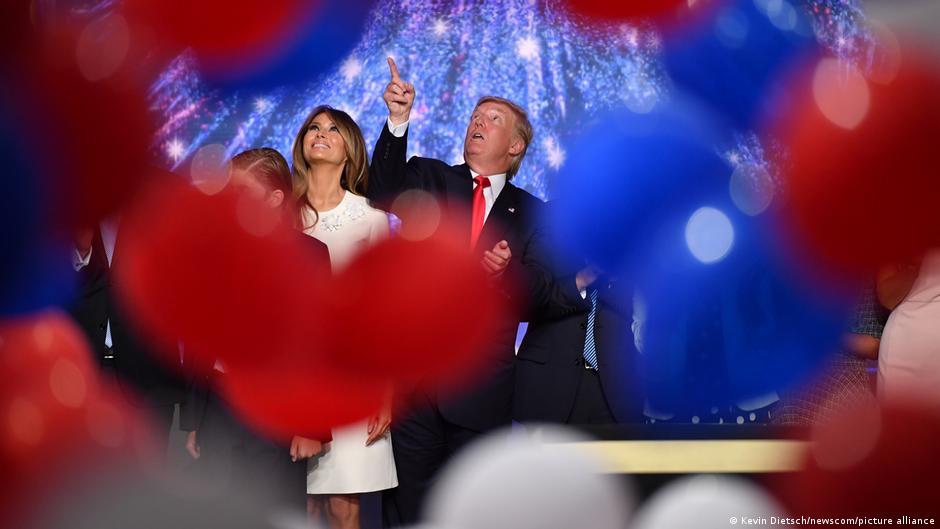
In the midterm elections on Nov. 3, US President Donald Trump will not be on the ballot. Nevertheless, his party is putting him at the center of a major convention two months before the election. On Wednesday and Thursday, Republicans are gathering at the American Airlines Center in Dallas, which can hold around 20,000 spectators, for the "Republican Midterm Convention." In the United States, this sort of large party conventions are normally only held before presidential elections.
Democrats experimented with similar gatherings in the 1970s and early 1980s, but for Republicans, the format is a first. In Texas, they want to mobilize Trump supporters for Republican candidates. Republicans are heading into the campaign with an unpopular president.
According to a recent /Ipsos poll, Donald Trump had an approval rating of just 33%. On top of that, Democrats are currently much more energized. Nearly half of their supporters say they are especially enthusiastic about the midterm elections, compared with just 31% of Republicans.
Even so, the convention is entirely centered around Trump. The president will appear on both nights, putting him even more prominently in the spotlight than the Republican candidates who will actually be on the ballot for the Senate and House of Representatives in November. But for some of those candidates in particular, being seen as close with Trump poses a risk.
A survey of more than 70 Republican candidates and lawmakers by Politico found considerable reluctance toward the convention. Numerous candidates in competitive districts appear to shy away from being too closely associated with the president. The fact that some candidates are even avoiding their own party's convention altogether highlights the Trump dilemma.
On the one hand, he could mobilize the MAGA base. On the other, his presence could also alienate moderate voters and even boost the opposition. Despite the president's weak poll numbers, the convention's choreography initially focuses on a positive record of his time in office so far.
Extract — continue reading at the source.