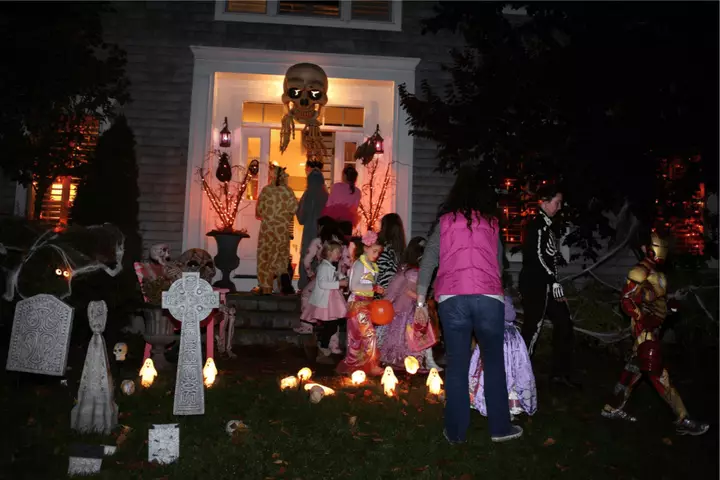
Halloween celebrations are getting a bonus this year—an extra hour in the night. When daylight saving time ends at 2 a.m. on November 1, clocks in most parts of the country will roll back to 1 a.m., effectively adding an extra hour to the night. But what does that mean for Americans?
Clocks across 48 states will turn back one hour, and on the night of Halloween, often marked with trick-or-treating and late-night partying, an extra hour of fun may be welcome for many. Whether people get an extra hour in the bar on Halloween night can vary hugely thanks to differing state liquor laws. Some state laws explicitly state whether alcohol sales can continue when the clock rolls back to 1 a.m., while others require service to end according to the normal permitted period.
For example, in New York, a spokesperson for the state's alcohol regulator told Newsweek on background that daylight saving time does not change legal closing hours. When clocks fall back on November 1, establishments permitted to serve alcohol until 2 a.m. may remain open through the repeated 1 a.m. hour. Elsewhere though, regulators can require alcohol service to end according to the normal permitted period or otherwise prevent venues from using the clock change as an automatic extension.
A bar’s particular license and local rules can matter too, as well as individual bars decisions. In theory, the clock change will provide an extra hour in bed. Because the clocks repeat the hour between 1 a.m. and 2 a.m., someone who goes to bed and wakes at their usual clock times has an opportunity for an additional hour of sleep.
But getting an extra hour on the clock does not necessarily mean everyone will sleep for an additional hour, particularly as the time change itself can disrupt the body's internal clock. John Saito, sleep physician and spokesperson from the American Academy of Sleep Medicine (AASM), told Newsweek that many people may notice a negative impact on their energy levels, mood and ability to fall asleep and wake up. Time changes can disrupt sleep because of the body’s natural internal clock, known as the circadian rhythm.
Exposure to sunlight, especially in the morning, plays an important role in keeping that clock aligned with the day-night cycle,” Saito said. These effects can be especially challenging for children and teens, or people who are already not getting enough sleep or have an underlying sleep disorder.” Saito also shared tips for adjusting to the time change. Get at least seven hours of sleep per night before and after the time change,” he said.
Extract — continue reading at the source.