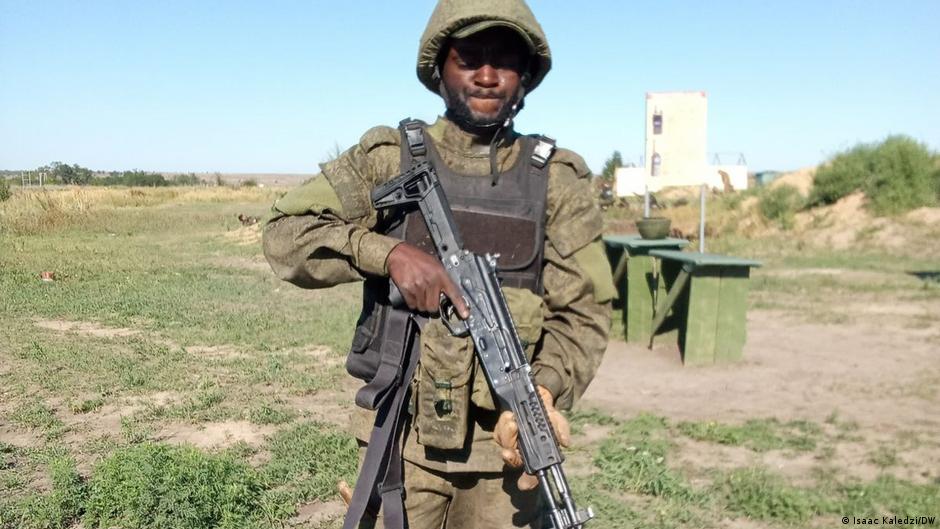
Cameroon has emerged as one of the leading sources of African recruits for the Russian military, with young men lured by false promises of jobs and fast-tracked Russian citizenship, only to find themselves on the front lines of the war in Ukraine. Ukrainian officials say that nearly 3,000 citizens from various African countries are known to have fought — or were still fighting — for Russia as of May this year; Cameroon, Ghana, Egypt, Kenya and Uganda were identified as major source countries. In April, the Cameroonian government confirmed that Russia had reported the deaths of 16 Cameroonian nationals, seven of whom died in military action in Ukraine.
The actual death toll is likely higher, according to DW correspondent Dorcas Ekupe, reporting from Bamenda in northwestern Cameroon. "When you look at other publications and see what is happening — even seeing families who are grieving their loved ones — the number is really much higher than what the government had earlier said," Ekupe told DW's AfricaLink program. She described two forces causing this worrying phenomenon: economic desperation and deliberate deception.
Many recruits, she said, travel to Russia believing they have secured jobs in construction or as security guards, or that they are participating in study programs. "Once in Russia, they then end up on the battlefield," Ekupe said. To view this video please enable JavaScript, and consider upgrading to a web browser that supports HTML5 video Russia's perceived appeal meanwhile is also being amplified by highly structured influence campaigns: Banjo Herman, a lecturer and political analyst at the University of Bamenda, pointed to the key role of the the Russian paramilitary Wagner Group as well as its successor, the Africa Corps, as Moscow's primary instrument for expanding its presence and reputation across Africa.
He also cited Russian government programs such as the "African Initiative" and "Alabuga," which present themselves as cultural or educational exchange schemes but have been linked to military recruitment. "On the surface, sometimes it looks like cultural outreach," Banjo said. "Sometimes Cameroonians are lured thinking it is for work, not necessarily knowing what is beneath the surface," adding that offers of Russian nationality within six months are also a particularly powerful draw.
France has previously described the African Initiative as a front administered by Russian intelligence services, designed to spread propaganda. Banjo stresses, however, that the economic situation of the recruits is typically the main motivator. "Imagine that you are a carpenter in Cameroon who cannot even earn 100,000 CFA francs (€150; $175) a month, but somebody is promising you 3 million CFA francs to come and work," he explains.
"It is very attractive." Meanwhile, he also highlighted the fact that not all Cameroonians in Russia are the victims of deception: Some have lived there for years, were absorbed into the military over time, and are, by all accounts, doing reasonably well. Yet the promise of financial reward combined with the prospect of gaining Russian citizenship explains why even people aware of the risks continue to accept recruitment offers to fight in Ukraine, he believes. Ekupe corroborated this, noting a prevailing attitude of fatalism among some youth: "Sometimes people say, 'If I die, I die,'" and agree to join Russian forces.
Extract — continue reading at the source.