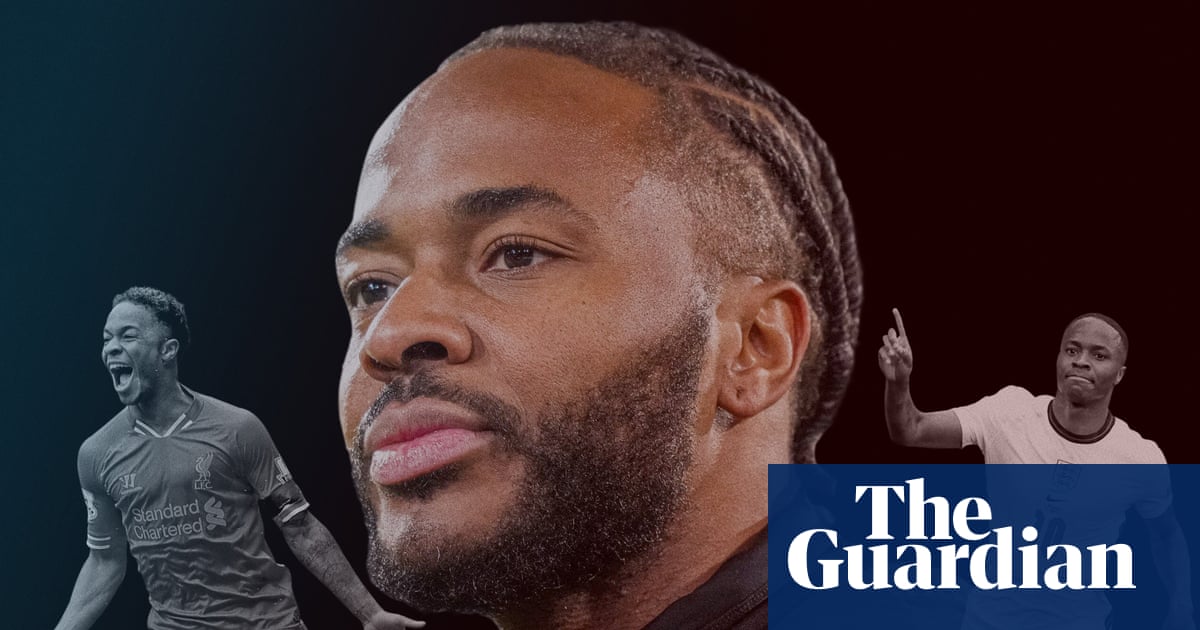
In another world, where careers broke in different directions, Raheem Sterling would be in this England squad now, playing for the manager, Thomas Tuchel, who made him the No 1 target of the new Chelsea era after the Todd Boehly-Clearlake Capital takeover. He is 16 months younger than Harry Kane, who continues to break records as England’s captain and hit a personal high of 73 goals last season. Sterling, meanwhile, is without a club and awaiting sentencing after pleading guilty at Basingstoke magistrates court to dangerous driving and possession of nitrous oxide after an incident that witnesses feared might kill someone.
How have their careers diverged so starkly? Why is Kane thriving while Sterling lives through such a sad and public decline? Multiple sources, who asked not to be named to protect relationships, paint a complicated picture of Sterling.
One describes him as a “lost soul”. Another believes he has been “hopelessly misguided” in his life and career. To understand his fall, it is pertinent to remember the magnitude of his rise.
Those who saw Sterling’s ascent – from the boy helping his mum on cleaning jobs in Stonebridge to the outrageously gifted footballer in Queens Park Rangers’ academy, to Liverpool’s first team at 17 – recall a player who seemed perfectly calibrated for success. From the first time I saw him, I thought he had the ingredients to become an international prospect.” Sterling was quickly training with Liverpool’s first team, where players were stunned that this slight teen possessed a natural strength beyond many adults. He was rarely seen in the gym, yet held his own against Martin Skrtel, Mamadou Sakho and Kolo Touré, who towered over him.
Sterling’s resilience was tested when he rejected a £100,000-a-week contract and became engulfed in a public storm. It marked a turning point in how he was perceived: from England’s brightest prospect to arrogant young footballer – fair or not. Sterling gave an interview to the BBC insisting he was not a “money-grabbing 20-year-old”.
Liverpool-supporting pundits turned on him. Matters worsened when his then-agent, Aidy Ward, told the Evening Standard that Sterling wouldn’t sign a new deal even if they offered close to £1m per week. Liverpool sold him to Manchester City for an initial £44m that summer.
Extract — continue reading at the source.