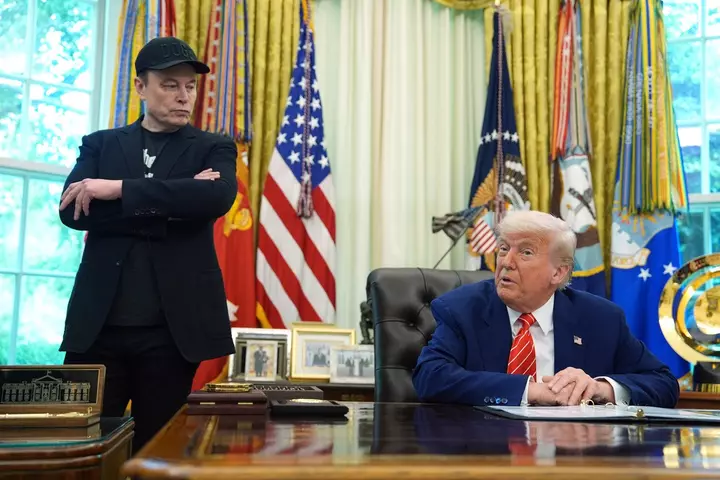
As the war between the United States and Iran drags on into a new phase of escalation, the presidents of both countries are increasingly feeling the backlash. President Donald Trump faces a growing chorus of anti-war sentiment, with some of the loudest voices emerging from factions within his own MAGA movement. And there's little sign that peace or victory can be achieved by the time the mid-term elections arrive in November.
In Tehran, reformist Iranian President Masoud Pezeshkian faces an even more complex set of issues. His continued defense of diplomacy with the U.S. seeks to bridge the divide between an increasingly hawkish government and an economically aggrieved public. Yet influential hard-line voices are calling for his downfall.
Both men have much at stake. And their fates carry profound implications for the course of their respective nations, locked in the first open war of a decades-long rivalry. Since the beginning of the war launched jointly with Israel against Iran on February 28, Trump has repeatedly shifted his messaging on U.S. objectives and has deliberately avoided setting any timelines.
But there's one date that the U.S. leader cannot overcome: November 3. Even if Trump has said he "does not care" about the mid-term elections, many of his supporters invested in the Republican Party's future do, and several signs indicate a major loss ahead. Democrats have improved their vote share in every special election won since the beginning of the conflict, snagging victories in Arkansas, Florida, Minnesota, New Hampshire, Pennsylvania and Texas.
As Democrats seek to build momentum, Republicans are less enthusiastic about the coming mid-term elections by a factor of 12-13 percent, according to polls conducted last week by the University of Massachusetts and -Ipsos. Some of the frustration within the right-wing camp has manifested in the form of prominent pro-MAGA figures turning against Trump over the president's failure to live up to his promise of no new wars. They include conservative pundits Tucker Carlson, Megyn Kelly and Candace Owens, as well as former Republican lawmakers Marjorie Taylor-Greene and Thomas Massie.
Beyond foreign policy, however, many on both sides of the aisle consider affordability to be a top-line issue, and Republican and Democratic constituencies alike feel the direct impact of the Iran war in higher gas prices and costs of living. Around 56 percent of people in the U.S. oppose the conflict, while just around 36 percent support it, according to the latest Silver Bulletin data. Another recent poll conducted by the Financial Times and Focaldata shows even fewer, just a third of the population, approve of Trump's performance.
Extract — continue reading at the source.