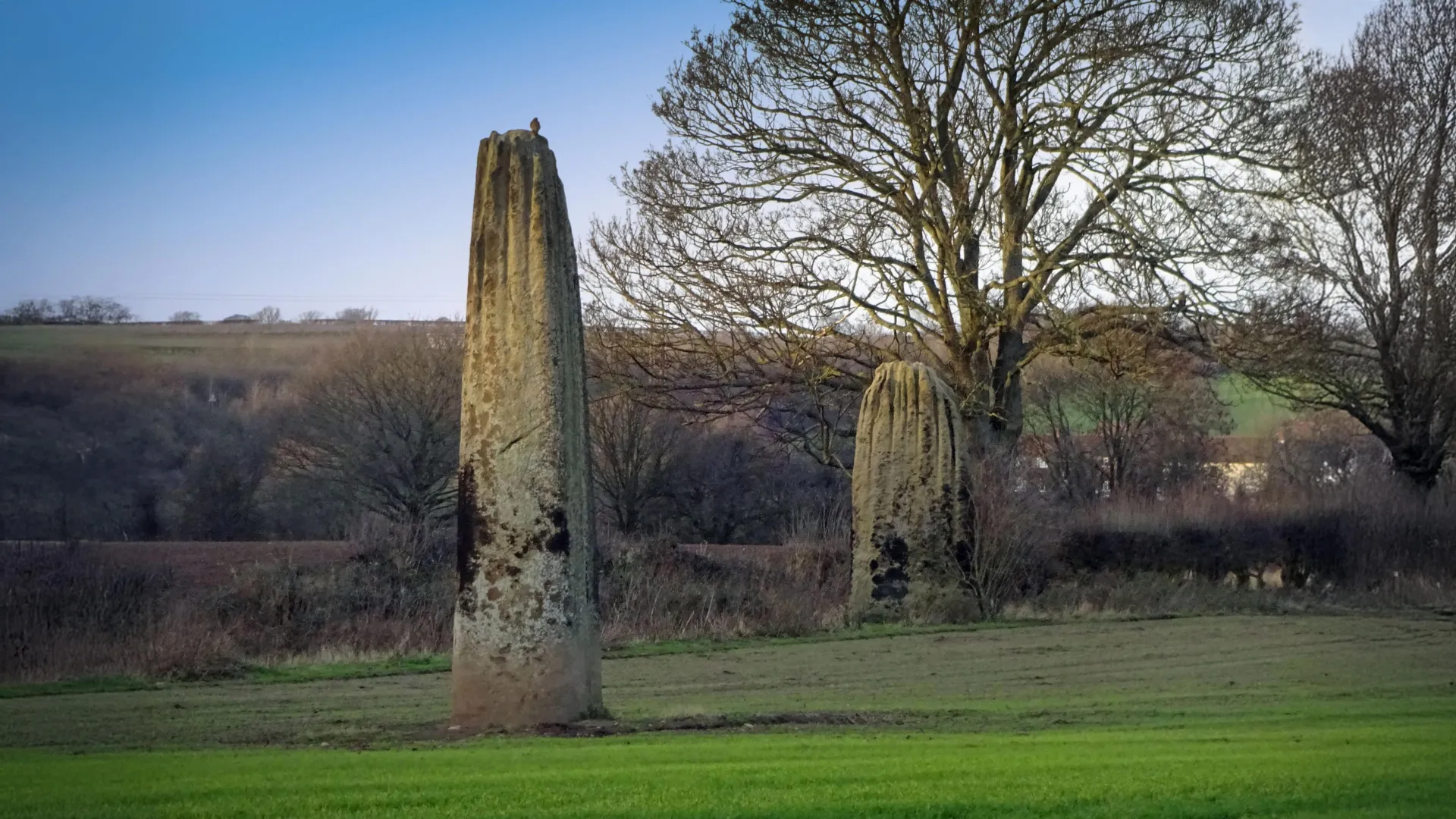
Ancient builders hauled enormous 25-tonne (55,000-pound) stones across at least 18 kilometers (11 miles) to create Britain's tallest surviving prehistoric stone row, according to new research into the iconic Devil's Arrows. The study, led by Curtin University in collaboration with the University of York, UK, is the first to pinpoint the geological source of the towering stones. Researchers traced them to Brimham Rocks, a rugged area in North Yorkshire.
Located near Boroughbridge in northern England, the Devil's Arrows rise as high as seven meters (23 feet). They form an unusual stone alignment in a lowland landscape, and despite their striking size, scientists had not been able to determine where the stones originally came from. Researchers believe the stones were transported and raised during the Late Neolithic or Early Bronze Age, possibly around 2000 BC.
A Distant Source for Britain's Giant Stones Lead author Dr. Anthony Clarke, from the Timescales of Mineral Systems Group within Curtin's School of Earth and Planetary Sciences, said the discovery challenges previous ideas about the decisions prehistoric people made when constructing major monuments. "Our research shows these stones weren't simply taken from the nearest available source -- they were deliberately chosen from a challenging landscape 18 kilometers away," Dr.
"Plumpton Rocks, which is closer to the Devil's Arrows, had previously been identified as the probable source of the stones. Our findings instead point to Brimham Rocks, showing that prehistoric builders transported these enormous stones significantly further than thought. "Each stone weighs more than 25 tonnes, so moving them would have required incredible planning, coordination and engineering skill.
"This tells us prehistoric people placed real importance on the landscape itself. It wasn't just about convenience -- the location the stones came from likely held meaning for them." The findings suggest that the builders were not simply choosing the easiest or closest source of stone. Instead, the landscape around Brimham Rocks may have carried cultural, symbolic, or spiritual significance.
Jim Leary from the University of York said the discovery changes how researchers can interpret prehistoric monument building. "These results show that ancient communities were making deliberate and meaningful choices about where their stones came from," Dr. "It highlights the importance of landscape and shared belief systems, as well as the remarkable effort involved in transporting and raising stones of this size." Mineral Fingerprints Reveal the Stones' Origin To determine where the stones came from, the researchers used a new low-impact sampling technique.
Extract — continue reading at the source.


