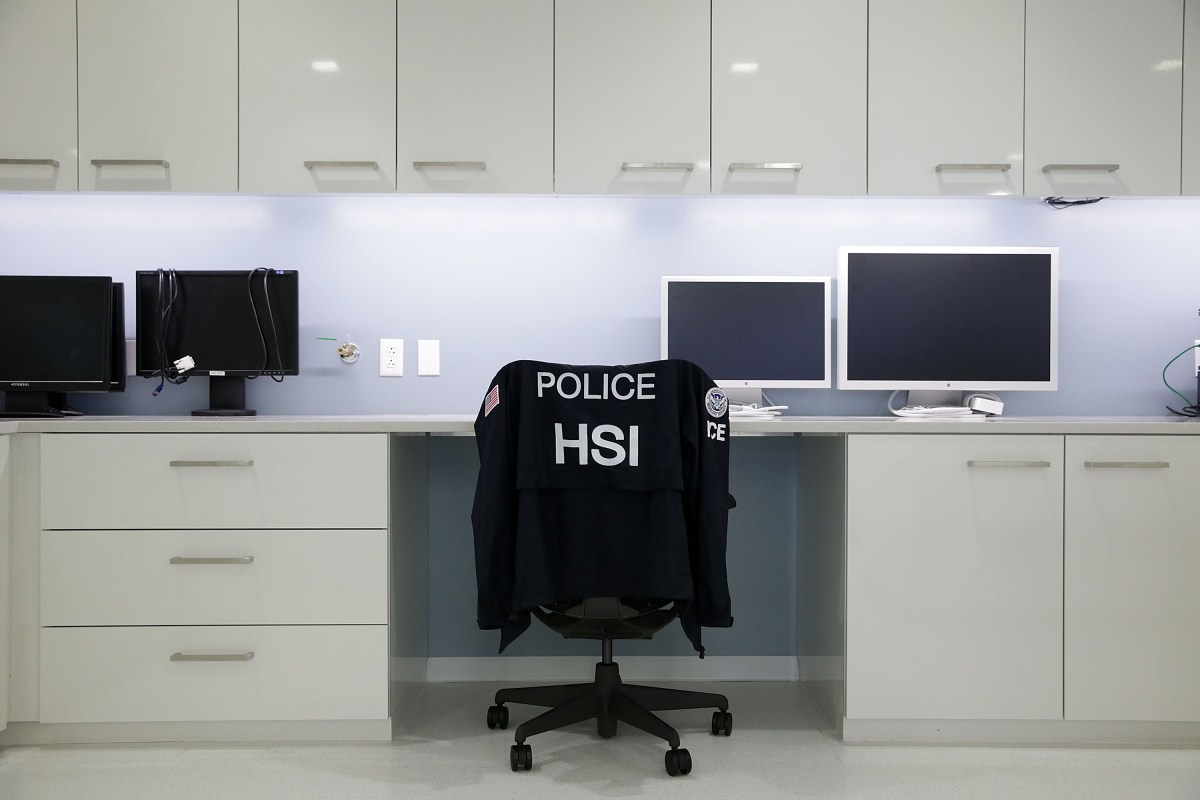
ICE's Homeland Security Investigations division saw fentanyl investigations, seizures and agent hours plummet in fiscal 2025 as the agency shifted resources toward the Trump administration's immigration enforcement strategy, according to a Department of Homeland Security (DHS) inspector general report. The audit, released August 20 by the DHS Office of Inspector General, concluded that HSI technologies, intelligence and information-sharing practices "did not effectively enable it to counter fentanyl entering the United States." The watchdog warned that failing to address those issues could contribute to greater availability of illicit fentanyl and additional overdose deaths. "HSI prioritized immigration enforcement over fentanyl-related criminal investigations," the report said.
DHS disputed that HSI's anti-fentanyl mission has been weakened, with an agency spokesperson telling Newsweek that "ICE-HSI is working closely with the Department to track metrics and execute goals to assess how well ICE-HSI is combating fentanyl." The findings come months after President Donald Trump issued an executive order designating illicit fentanyl and its precursor chemicals as weapons of mass destruction, directing federal agencies to expand efforts against trafficking networks. The Trump administration has marshaled personnel and resources from across the federal government, including ICE's Enforcement and Removal Operations and HSI divisions, Customs and Border Protection (CBP), Border Patrol, the Drug Enforcement Administration (DEA), the FBI and the U.S. Marshals Service, to support its mass deportation strategy.
The effort is aimed at delivering on Trump's pledge to carry out the largest deportation campaign in U.S. history, but it has also raised concerns about whether diverting agents and resources toward immigration enforcement has affected some agencies' ability to carry out other public-safety missions. HSI's fentanyl investigations fell 24 percent between fiscal years 2024 and 2025, while agents spent more than 250,000 fewer hours on fentanyl cases, a decline of roughly 31 percent. Fentanyl seizures dropped 39 percent, even as immigration enforcement hours surged by more than 1.7 million, an increase of over 800 percent, according to the report.
The watchdog also identified operational and management problems that it said weakened HSI's ability to investigate fentanyl trafficking. Among them was the agency's troubled RAVEn data analytics platform. Auditors found that HSI spent more than $150 million developing the system, which was intended to help agents and analysts identify leads and connect investigative information.
But many users interviewed during the audit said the tools failed to meet operational needs, describing technical limitations that slowed investigations and required work to be performed manually. The report said agents and analysts in six of the 11 field offices interviewed had largely abandoned use of the platform's analytical tools because they did not assist investigations. HSI has since begun decommissioning some of the tools and transitioning to a new contractor-supported analytics system.
Auditors also found that delays in obtaining investigative funds hampered some fentanyl cases. Agents in eight of the 11 offices interviewed reported problems securing money needed to purchase information or evidence during investigations. In one case, agents waited more than two months to receive funding connected to an active investigation.
Extract — continue reading at the source.