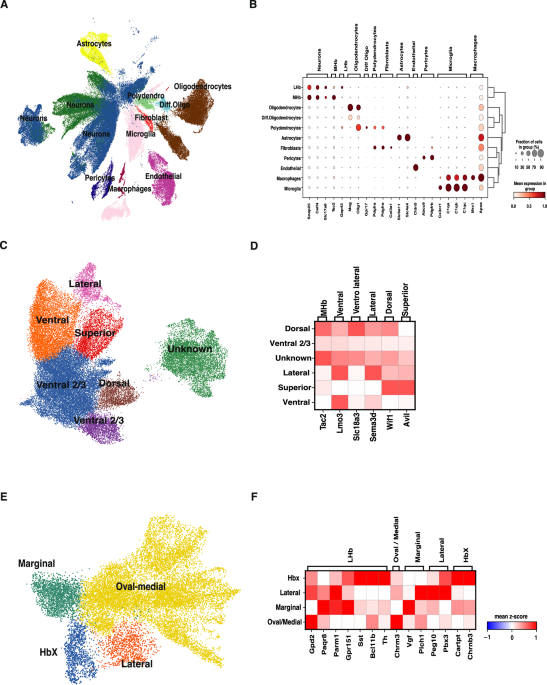
Major depressive disorder (MDD) is characterized by substantial heterogeneity, which hinders attempts to associate distinct symptoms with specific neural mechanisms. The lateral habenula (LHb) is a key brain region involved in negative affect and reward processing, but the molecular changes in the LHb that lead to mood disorders remain unclear. Here, we combined chronic social defeat stress (CSDS), behavioural phenotyping, and single-cell RNA sequencing to examine cell-type and subregion-specific transcriptional changes in the mouse habenula.
Mice were classified into behavioural phenotypes reflecting social avoidance, anhedonia, passive coping, resilience, or susceptibility. We identified nine major habenular cell classes and found distinct phenotype-associated transcriptional signatures across both neurons and glia. Distinct transcriptional signatures were observed in LHb neurons of susceptible animals and in oligodendrocytes of resilient animals.
Subregional analysis revealed that the oval-medial LHb accounted for most stress-related transcriptional changes, while the HbX subregion displayed a unique molecular signature associated with passive coping behaviour. These findings highlight the cellular heterogeneity of stress responses within the habenula and will pave the way for identifying potential targets for precision psychiatry approaches in depression. The heterogeneity of major depressive disorder (MDD), arises from distinct neurobiological mechanisms and poses significant challenges for treatment [1,2,3,4,5].
Current drug treatments are often systemic and fail to target specific brain regions implicated in particular symptoms. Precision psychiatry is a promising approach for addressing this complexity through the identification and treatment of clinical subgroups that exhibit distinct neurobiological abnormalities [6,7,8,9]. By combining individual behavioural analysis along with molecular profiling, we can pinpoint cell-type and circuit-specific changes associated with MDD.
This approach could reveal new drug targets for highly effective and precise treatments. The habenula (Hb), a small epithalamic nucleus, has emerged as a critical brain region in the regulation of negative affect and aversion [10, 11]. The Hb connects the limbic forebrain to the midbrain monoamine centers, such as the dorsal raphe nucleus (DRN) and the ventral tegmental area (VTA), both of which are involved in depressive-like behaviours following chronic stress [12,13,14,15,16].
Anatomically, the Hb is composed of three distinct subnuclei: the medial habenula (MHb), lateral habenula (LHb), and perihabenula (PHb) - each containing distinct types of neurons [13, 17,18,19]. The LHb plays a significant role in encoding negative reward prediction errors, punishment signals, and reward omission, with LHb hyperactivity suppressing reward-seeking behaviour [20,21,22,23]. Habenular, particularly lateral habenular, hyperactivity has been strongly linked to mood disorders [13, 16, 24] and has made the Hb a target of interest for ketamine administration and deep-brain stimulation [25, 26].
Extract — continue reading at the source.