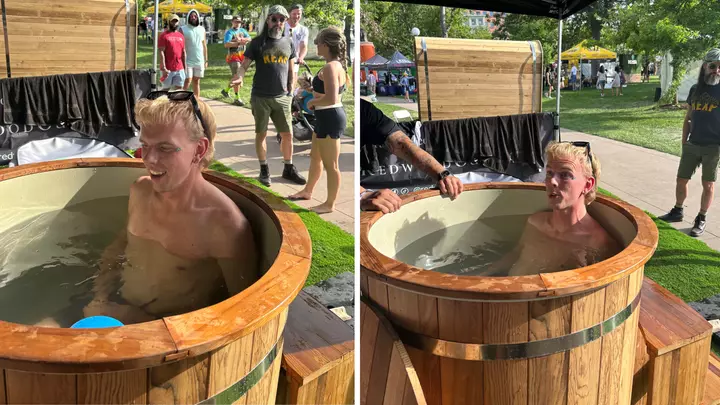
Outside Run's Community Engagement Editor, David Gleisner, takes the plunge. ( The first 30 seconds are always the worst. My entire body is telling me to get out. My breathing speeds up, my shoulders creep toward my ears, and suddenly all I can think about is how unnecessary it seems to be immersed in very cold water.
Cold plunges are everywhere—alongside saunas at gyms, spas, hotels, and resorts built around moving between hot and cold. Spend enough time on social media, and you’ll see fitness influencers touting contrast hydrotherapy. It can seem like a few minutes in icy water followed by a few minutes in a hot tub is all that stands between a tough long run and better recovery.
As a longtime runner, I’m interested in recovery, but skeptical of wellness trends that promise to make it faster or better. I’ve tried plenty of things that made me feel better without necessarily making me run better. So I decided to test contrast therapy more consistently.
I kept my running relatively normal rather than designing my training around the experiment. Since I wasn’t training for a race, I averaged about 35 miles a week. I used contrast therapy primarily after harder efforts—long runs, speed workouts, and runs that left my legs particularly fatigued.
Two to three times a week, I did three rounds of ten to 15 minutes of heat followed by two minutes in cold water, keeping the protocol consistent throughout the month. I tracked how sore and fatigued my legs felt immediately afterward, the following morning, and on my next run. On comparable runs, I also watched my pace and heart rate.
I wasn’t expecting those numbers to prove whether contrast therapy worked, but they gave me something to compare with how recovered I felt. The research on contrast therapy is less definitive than its popularity might suggest. Evidence suggests contrast therapy can reduce muscle soreness and perceived fatigue after strenuous exercise, but whether feeling better translates to improved performance the next day is less clear.
Extract — continue reading at the source.