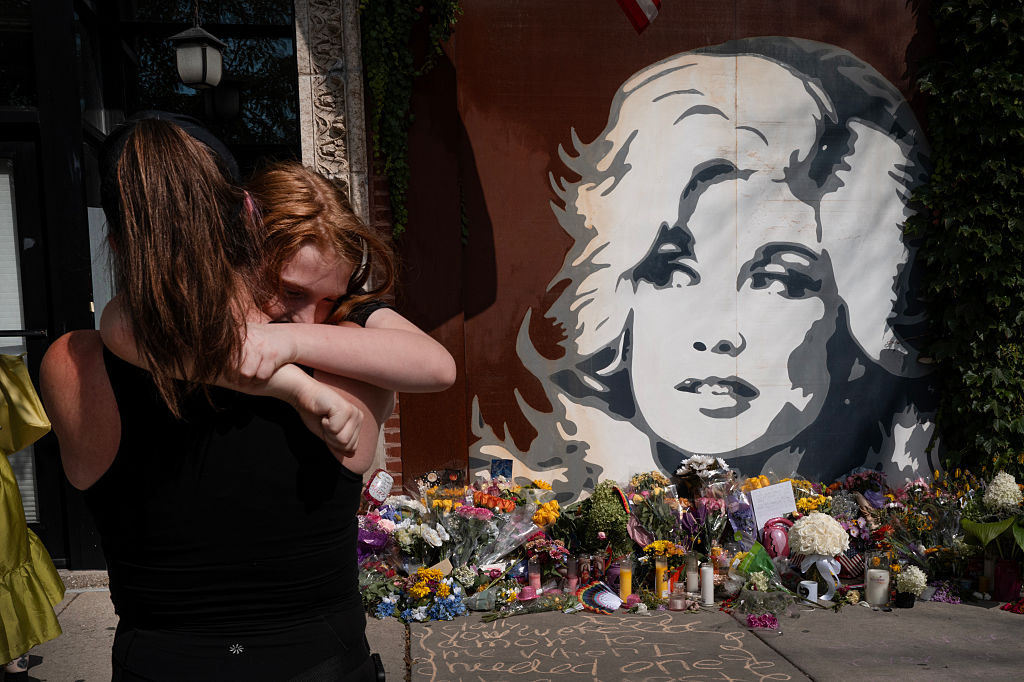
Recently, the world has collectively mourned the unexpected losses of several well-known public figures, from Dolly Parton and Gloria Steinem to Bob Mackie and Tim Curry. Their deaths have hit fans, followers, and industry colleagues hard, and their tributes are going viral online. Although these celebrities primarily appear to us on screen or on stage, many people feel as though they know them personally because of the meaningful impact they’ve had on their lives.
These are known as parasocial relationships or “nonreciprocal social-emotional connections” with public figures and celebrities, per the journal of Current Opinion in Psychology. When a public figure or celebrity dies, we grieve collectively. According to Gina Moffa, grief therapist and author of the book, Moving on Doesn’t Mean Letting Go, this happens when a large group of people mourns at the same time.
And it isn’t limited to the passing of public figures and celebrities. Many people also experienced shared loss after 9/11, Sandy Hook, COVID-19, and the Nepal floods. In this current cultural moment, we’re seeing collective grief intersect with a psychological phenomenon called parasocial grief.
According to psychotherapist and NYU adjunct professor Olivia Verhulst, this can occur when there’s a one-sided sense of familiarity with a public figure after they die. In comparison with individual grief, shared bereavement is more diffuse. Therefore, when celebrities or public figures die, it’s now common practice to post online and engage in comments sections with other grievers.
In this way, the comment sections become public memorials. After Steinem’s passing, people expressed their gratitude and heartbreak by leaving flowers and cards outside her home. When Parton died, fans held up their iPhones with the flashlight on during Harry Styles concert at Madison Square Garden while her song, “I Will Always Love You,” played.
Both of these in-person tributes circulated on social media and were widely shared. Verhulst argues that the most significant difference in mutual sorrow is its “being witnessed” and it can offer more validation than individualized grief. Shared bereavement isn’t a new idea; it dates back for centuries.
Extract — continue reading at the source.