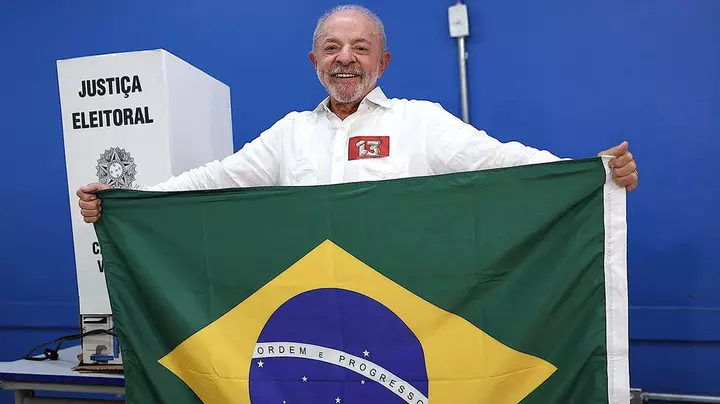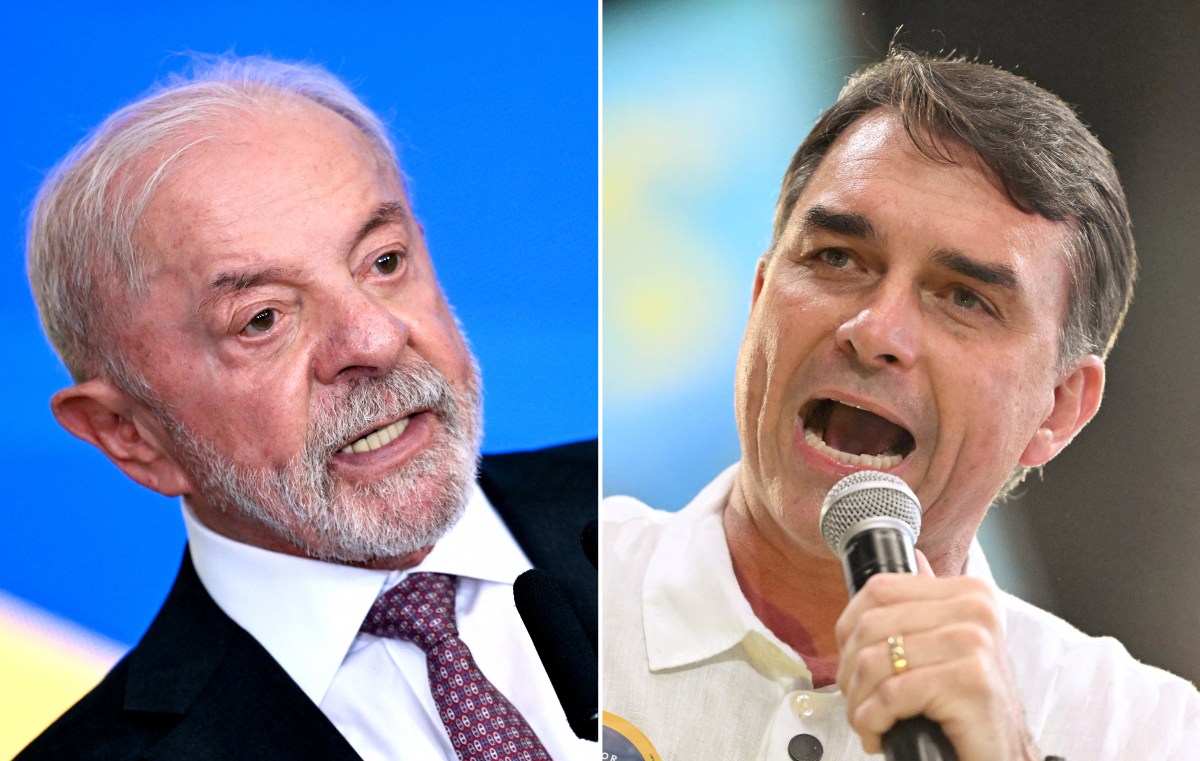
Brazilians head to the polls Sunday in an election that has turned into the most consequential test yet of President Donald Trump's push to remake Latin America in his image. President Luiz Inácio Lula da Silva, 80, is seeking a fourth term against Senator Flávio Bolsonaro, the eldest son of former President Jair Bolsonaro, a Trump ally serving a 27-year prison sentence for plotting a coup after his 2022 defeat. Polls show Lula ahead in the first round and the two men statistically tied in a likely October 25 runoff.
The stakes stretch well beyond Brasília. Over the past year, the Trump administration has hit Brazil with tariffs, sanctioned a Supreme Court justice, designated the country's two largest gangs as terrorist organizations and revoked the visa of Brazil's ambassador in Washington. A Bolsonaro victory would hand Trump the largest prize yet in a region where right-leaning allies have been winning one election after another.
"Brazil's election is hugely consequential for Trump's Latin America strategy," Benjamin Gedan, a Latin America expert at Johns Hopkins University, told Newsweek. "Trump likes to brag that his endorsement helped elect the president of Honduras, population 11 million. Brazil, population 214 million, is the real prize." The administration's approach, which many have dubbed the "Donroe Doctrine" in a nod to the 19th-century Monroe Doctrine, treats the Western Hemisphere as a U.S. sphere of influence.
Its priorities include fighting cartels, curbing migration, securing critical minerals and pushing back on China's economic footprint in the region. Few foreign political families orbit Trump as closely as the Bolsonaros. Jair Bolsonaro, once called the "Trump of the Tropics," modeled his rise on Trump's bravado, questioned Brazil's electronic voting system and refused to clearly concede in 2022.
Days after Lula's inauguration, his supporters stormed Brazil's Congress, Supreme Court and presidential palace in scenes that drew comparisons to the January 6, 2021, riot at the U.S. When Brazil's Supreme Court moved to try the former president, Washington stepped in. In July 2025, Trump ordered 50 percent tariffs on Brazilian goods, citing what he called a witch hunt against Bolsonaro, and the Treasury Department sanctioned Justice Alexandre de Moraes, who oversaw the case.
"I want to emphasize this, this is really unprecedented, that a U.S. government would sanction an independent Supreme Court justice in a democracy for trying someone who attempted a coup," Christopher Sabatini, a senior fellow for Latin America at Chatham House, told Newsweek. "I don't think we can emphasize that enough." His third son, Eduardo Bolsonaro, relocated to the United States and lobbied the administration for those measures. Flávio, tapped by his jailed father as the movement's standard-bearer in December, has made his own pilgrimages, including a CPAC appearance in Texas where he pitched Brazil's mineral wealth to the American right.
Extract — continue reading at the source.