Nepal authorities have said they are “confident” that dozens of workers in Nepal’s Rasuwagadhi hydropower plant are still alive, more than a week after deadly flash floods left them trapped in an underground chamber. Authorities said that at least 639 workers were still missing from hydropower plants built along Nepal’s Bhote Koshi and Triushuli rivers. Most of the projects were destroyed when a surge of water, debris and mud came coursing down the river valley last week, triggered by the collapse of a melting glacier on the border between Nepal and China-controlled Tibet.
The deadly flash floods reached up to 100mph (160km/h), according to scientists, and travelled more than 60 miles down the river valley, wiping away whole villages, bridges, and hydropower dams. At least 1,252 people have been confirmed dead from the floods. More than 4,200 remain missing.
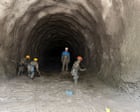
According to a preliminary estimate by the UN Development Programme, the disaster created at least 2.2m tonnes of debris, including parts of buildings, rocks and sediment. Large boulders and flood waters deluged the hydropower tunnels, blocking off the entrances, and some were buried deep in mud. Rescue efforts have increasingly centred on these tunnels, where authorities believe workers may have survived for more than a week due to air pockets.
So far, more than 270 people have been rescued from the hydropower projects. Speaking on Wednesday, officials said they believed 46 people were still alive in an underground room in Rasuwagadhi hydropower plant, and efforts were ongoing to locate them using excavators and other heavy equipment. Durga Gurung, 60, said his brother Jhappad Bhujel was among those trapped in a hydropower tunnel.
So many days have passed that we have reached a point where it feels like all we can do is hope for a miracle.” “Our relatives are sitting inside a dark tunnel,” he added. Two sites – the Rasuwagadhi hydroelectric project and the Upper Trishuli 3A facility – where about 90 people are missing, offered the strongest prospect of finding survivors because of the presence of air inside the tunnels, Shahi said. The Rasuwagadhi hydroelectric project is located in Rasuwa district, about three miles away from the border with Tibet, which was one of the areas of Nepal hardest hit by the floods, and remains almost inaccessible except by helicopter.
We are going in again.” At the Upper Trishuli 3A facility, another project hit by the floods, it took rescue workers almost six days to find the tunnels because of the thick mud. The authorities believe about 30 to 40 people may still be alive in the tunnel. We are trying to break into the tunnel now,” said the Nepali army spokesperson Raja Ram Basnet on Wednesday.
Extract — continue reading at the source.