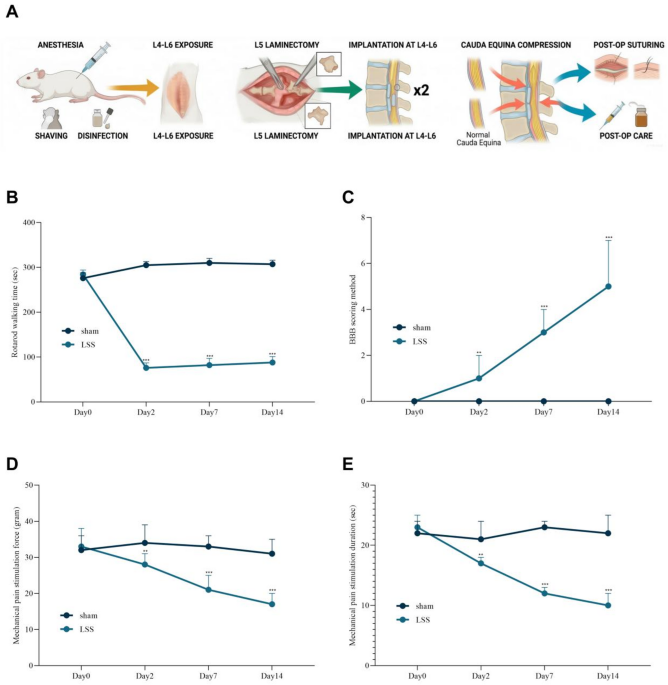
Lumbar spinal stenosis is a prevalent degenerative disease globally. The hallmark symptom is neurogenic intermittent claudication, characterized by lower extremity pain during walking that is relieved by resting.Although mechanical constriction initiates the primary pathology, the precise molecular orchestration underlying this transient, rest-induced symptomatic resolution has not yet been fully characterized. We established a cauda equina compression model in Sprague-Dawley rats using epidural silicone implants.
Multiple groups were designed to evaluate behavioral, histological, and molecular changes across the acute and chronic compression phases, as well as designated post-decompression recovery windows. Chronic compression induced functional impairment, structural injury, oxidative stress, and neuroinflammation. At 2 h after surgical decompression, Nrf2 showed increased nuclear localization together with early upregulation of Ho-1, Nqo1, and Gclc.
Under continued compression, SFN improved selected functional and molecular injury indices, whereas ML385 treatment was associated with worsened neurological, inflammatory, and apoptotic outcomes. Nrf2/HO-1 signaling may contribute to the early antioxidant response following surgical decompression and may represent a potential pharmacological target for compression-associated cauda equina injury. Lumbar spinal stenosis (LSS) is a common degenerative spinal disorder in the aging population.
Patients typically experience walking dysfunction and a declining quality of life due to severe lower back and radicular pain. The defining clinical presentation is neurogenic intermittent claudication (NIC), wherein ambulation provokes progressive lower extremity pain and weakness that subside upon resting or postural modification. Current interventions often rely on surgical decompression, which carries surgical risks and financial burden, while conservative strategies lack precise molecular targets.
Therefore, investigating the molecular underpinnings of this rest-induced relief possesses significant translational value. While traditional models emphasize sustained mechanical compression, evidence suggests that localized venous stasis within the cauda equina is a critical pathogenic driver of NIC1,2,3,4. Dynamically, walking exacerbates epidural venous compression, impairing outflow and increasing intraspinal pressure.
This blunts cauda equina perfusion and provokes ischemic pain. Conversely, postural rest facilitates venous drainage and expands the functional dimensions of the spinal canal, thereby alleviating microvascular ischemia and promoting sensory and motor recovery. This intermittency conceptually mirrors a cyclic ischemia-reperfusion (I/R) injury rather than continuous compression.
Extract — continue reading at the source.


