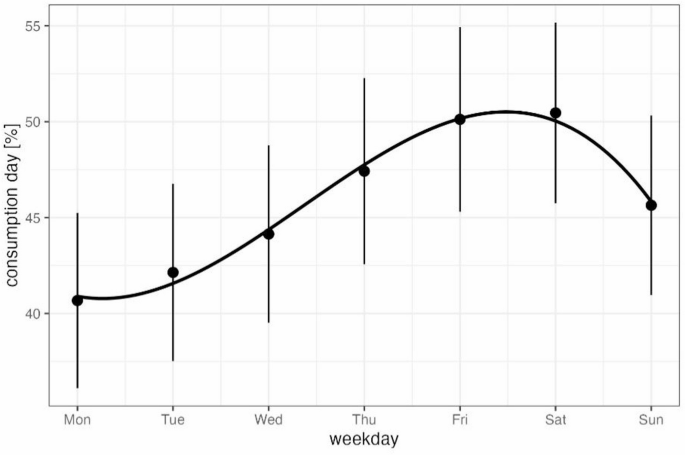
Globally, cannabis ranks third in psychoactive substance prevalence after nicotine and alcohol, with heavy use linked to psychosis, anxiety, and depression. However, real-time data on how legal reforms influence consumption remain scarce. This Ecological Momentary Assessment (EMA) study analyzed daily cannabis use patterns before and after Germany’s recreational cannabis decriminalization in April 2024 in 49 individuals (34.7% women, age 33.8 ± 11 years).
Following the legal reform, a selective increase in consumed amounts among younger individuals (β = 0.01, 95%CI = 0.00–0.02, z = 3.05) was observed. Further, consumed amounts increased in outdoor (β = 0.19, 95%CI = 0.04–0.34, z = 2.51) but decreased in public settings (β = -0.46, 95%CI = -0.66 - -0.25, z = -4.36), and consumption was more likely to occur on holidays (β = 3.91, 95%CI = 1.68–9.08, z = 3.17).
Extract — continue reading at the source.