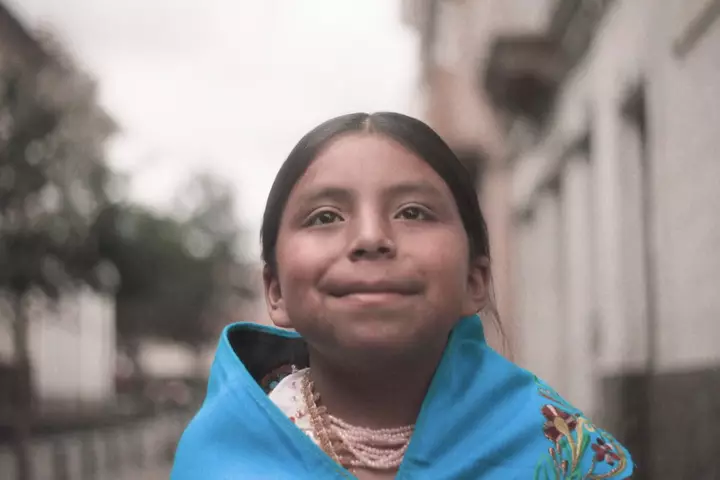
Director Christian Rojas discusses his debut feature, which follows an Indigenous girl from the Andes struggling with her gender identity in a conservative community Paris-based MMM Film Sales has acquired international rights to Ecuadorian filmmaker Christian Rojas’ debut feature “Princess” (“Ñusta”) ahead of its world premiere at the Tallinn Black Nights Film Festival (PÖFF). Kallpa dreams of participating but faces a reality: She was born in a boy’s body. The story explores her search for identity and her gender transition, which are deeply intertwined with her Indigenous roots, her community, and the Andean worldview.
The film’s “sensory, singular approach to storytelling floored us from the first frames,” says Matthias Angoulvant of MMM Film Sales. A bold, deeply moving queer debut, it embodies the daring cinema we champion at MMM.” “Princess” is produced by Ecuador’s Epopeya and Oso Rojo Films in co-production with Agua Florida (Peru); Hain Cine (Argentina); Woo Films (Mexico); and Chao Pescao (Bolivia). What makes the difference is that the MMM team understands its gaze and, drawing on their experience, knows how to move it through the international market without stripping away its sensitivity.
For a debut feature, having that kind of support matters as much as the visibility itself. This year the festival turns 30: It was born in 1997, the same year in which ‘Ñusta’ is set. That coincidence holds a very special meaning for us.
That a film shot in the Austro, in Ecuador’s southern Andes, is having its world premiere in Estonia, on the other side of the world, feels both deeply beautiful and paradoxical.” Palacios noted that international interest in Indigenous stories has been growing for years, “and we welcome it. What we hope is that it keeps opening up to how diverse Indigenous peoples and their stories truly are, each with its own language, territory and struggles, and with voices that haven’t always had a space. The film was also built through dialogue and a bond with the community that welcomed us.
For me, the value of cinema lies precisely in that possibility of approaching other realities with sensitivity, respect and openness, recognizing that there is no single way to tell a story, or to live one.” Indeed, director Rojas stressed the great diversity of Indigenous societies in Ecuador: “It’s important to point out that this film is not about one particular community. In Ecuador there are more than 18 Indigenous peoples and 14 Indigenous nationalities, and they are very diverse. Indigeneity is not one single thing; it is heterogeneous, and this film takes place in the Andes but not in any specific community.
The most beautiful thing was feeling how they received the story, with so much affection, generosity and openness.” Rojas recalled how, after sharing the story with the community, one of the responses was: “These stories happen, but we don’t talk about them.” “So they decided to give their support. Their involvement went far beyond being in front of the camera: they also got involved behind it and were an active part of building the film as members of the crew,” he added. That fills me with immense gratitude.
Extract — continue reading at the source.