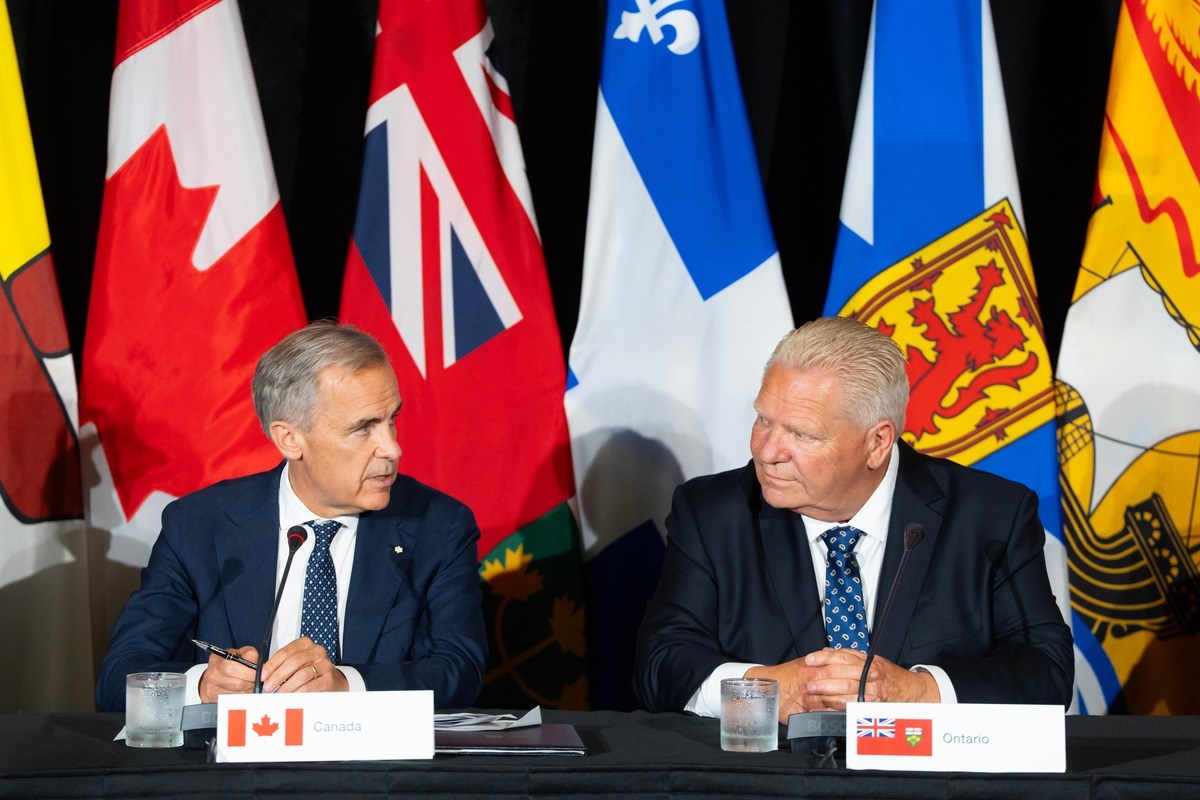
Ontario Premier Doug Ford has called for eight U.S. states to be hit with "additional retaliatory tariffs," amid a breakdown in trade talks between the U.S. and Canada late Friday. Imports from Alabama, Arkansas, Florida, Iowa, Missouri, Montana, Texas and Wisconsin should be targeted because they are "politically significant states to the current administration's base of support," Ford said in a letter penned to Canadian Prime Minister Mark Carney. The letter was widely shared over the weekend but dated August 17, several days before negotiations fell apart and Carney said the two North American neighbors were now in a trade "war." Carney said late Friday he had decided to suspend trade negotiations with the U.S. and pulled the country's negotiators back to Ottawa after the U.S. proposed "unfair" last-minute changes.
The U.S. then imposed a new 50 percent tariff on many Canadian goods, which the U.S. trade representative's office said would impact close to $20 billion in Canadian imports. Carney called the new levy a "miscalculation." More than 75 percent of Canadian goods exports go south to the U.S., while Canada is the second-largest U.S. goods export market, behind Mexico. Both economies are deeply enmeshed, and the U.S. leans heavily on Canada for its energy and critical mineral supplies.
Canada, meanwhile, has historically imported U.S. motor and auto parts, heavy machinery and electrical equipment. But Canada's government said it started expanding to new markets in 2025, its imports from the U.S. as well as the goods it exports just south of the border dropping for the first time in a decade if the coronavirus period is discounted. President Donald Trump has repeatedly referred to Canada as the U.S.'s 51st state, angering Canadians and whipping up a wave of anti-U.
S. sentiment that swept Carney to power last year. In the early hours of Sunday, Trump said Canada "wants the benefits of being a State, without being one!!!" and claimed Canada had put "massive" tariffs on U.S. farmers for years. "America has changed," Carney said in a statement confirming the end of trade negotiations on Friday.
"We will not return to our old relationship." "We never started this fight, but I can assure you, we're going win this fight," Ford told reporters on Saturday. "We're going to use every single tool we have here in Ontario, and hopefully, the rest of the premiers feel the same way," he added. Carney's office said on Saturday the prime minister had met with Canada's premiers to discuss the "dollar for dollar counter-tariffs" to come into force in September.
The Canadian leader said Ottawa would be enacting retaliatory measures "reluctantly," because "some U.S. companies and some U.S. states are innocent bystanders in a dispute that they did not want." Republican Senator for Maine, Susan Collins, said the turbulent trade talks between the U.S. and Canada were putting businesses in the state in danger, and the U.S. tariffs would increase costs for ordinary families. Vermont Democrat Peter Welch said the 50 percent tariffs on Canadian imports were "a slap in the face to businesses and farmers in Vermont and northern border states across America." U.S. and Canadian officials had expressed optimism about a trade deal late in the week, and Dominic LeBlanc, the Canadian minister responsible for trade relations with the U.S., said on Thursday an agreement was "very close." U.S. Trade Representative Jamieson Greer's office said in a statement posted on X on Friday that Canada had refused to ink a deal agreed earlier in the week and "upended the careful balance reached in the past days" by making "new demands." Canada would have received "the best treatment of any major exporter to our market," the statement added.
Extract — continue reading at the source.