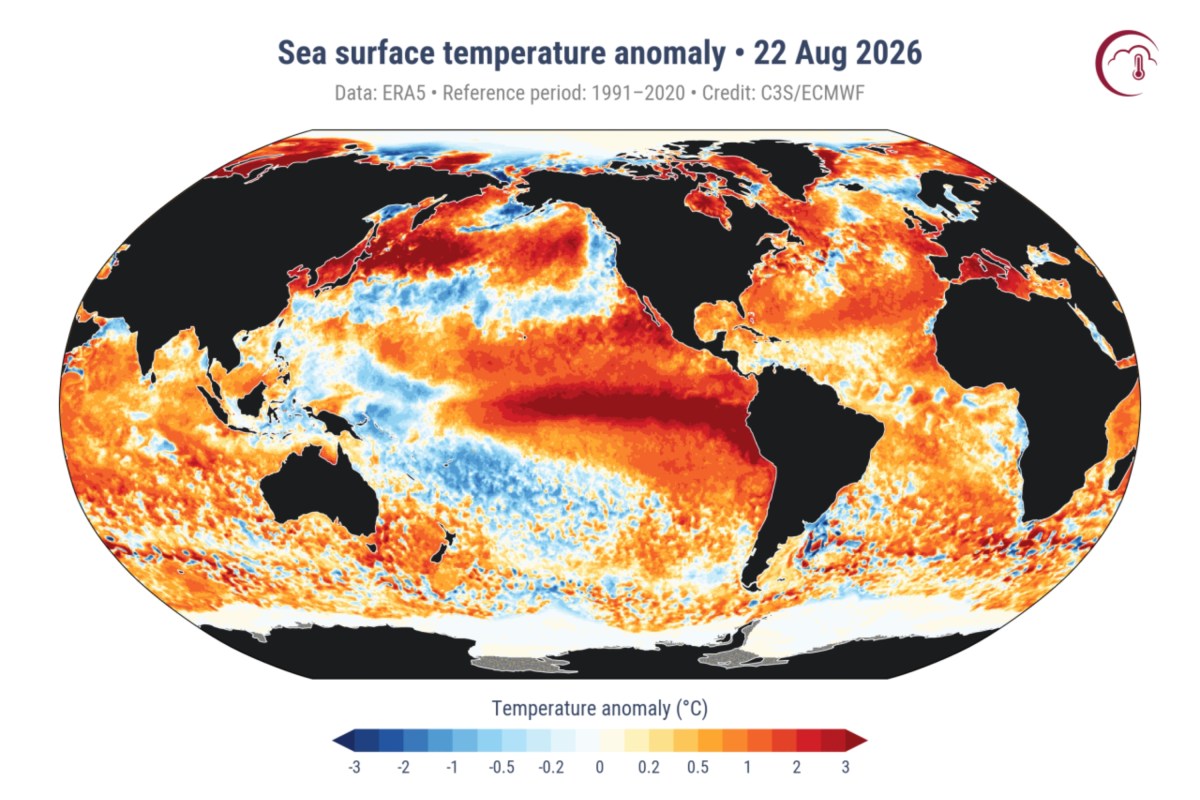
The world’s oceans have reached their highest average surface temperature on record, as El Niño continues to strengthen and could reach historic levels. The average sea-surface temperature across the oceans reached 21.1 degrees Celsius, or about 70 degrees Fahrenheit, on Saturday, according to the European Union’s Copernicus Climate Change Service. That narrowly exceeded the previous daily record of 21.09 C, reached in March 2024.
It is also very warm across the Atlantic basin, which helps get to that global record as well.” Copernicus previously reported that ocean temperatures outside the polar regions had remained between 0.35 C and 0.73 C above the long-term average during the past three years. In June, temperatures were already at record levels for that point in the calendar, coinciding with the development of El Niño in the equatorial Pacific, it said. The highest daily average temperature recorded across the world’s oceans outside the polar regions is 21.1 C, or approximately 70 F, reached on August 22, 2026.
The measurement edged above the 21.09 C. The previous August record was 20.98 C, set in 2023, Copernicus said. El Niño is adding heat to the system, but it is doing so on top of decades of human-driven warming,” said Samantha Burgess, strategic lead for climate at the European Centre for Medium-Range Weather Forecasts.
The consequences are already visible: the number of marine heatwave days globally has more than tripled since the early 1990s, putting increasing pressure on marine ecosystems and the communities that depend on them.” DaSilva said the next two positions in the record are held by 2024 and 2023. El Niño was present in late 2023 and continued into the beginning of 2024 before conditions shifted toward La Niña, he said. During El Niño, waters in the central and eastern equatorial Pacific become warmer than normal, trade winds weaken and tropical rainfall patterns shift eastward.
Those changes can alter weather and climate patterns around the world, according to the National Oceanic and Atmospheric Administration (NOAA). NOAA’s Climate Prediction Center said on August 13 that El Niño was strengthening, and that there was a greater than 90 percent chance of a very strong event during the Northern Hemisphere fall and winter into 2027. It also said that during the October-December 2026 season, there is a 69 percent chance of a historic event that would exceed the strength of previous El Niño events dating back to 1950.
DaSilva said another ocean record could follow when the usual seasonal peak returns. It was in March at the end of an El Niño.” Contact Newsweek editors on this story: John Fitzpatrick and Gray R.
Extract — continue reading at the source.