It was an endlessly parodied cliche that any queer film released during a certain period would be about one thing and one thing only: Aids. In 1993, Philadelphia showed a wider audience a mostly clean and palatable version of the crisis, and won Oscars for doing so, and for a time, when gay men weren’t acting as sassy friends to women in need, they were coughing up blood in lonely hospital beds. The inevitable and understandable pushback, allowing for a wider breadth of stories, brought us more “queer joy” and “chosen family” but it also allowed some to forget just what a time of unimaginable annihilation it was.
It also reframed the period as an onslaught of Aids movies when the majority of them existed on the outskirts still, films such as Buddies, Longtime Companion and Jeffrey seen by mostly queer arthouse audiences. If anything, I’d argue that something so relatively recent and horrifying has been rather under-explored on screen especially in comparison with other, even fresher tragedies (Aids has killed more than 44 million people worldwide compared with just more than 7 million for Covid). A movie like Elsinore – direct, robust, unafraid of sentiment, eager to please a wide audience – might be seen by some as “just another Aids movie” (it’s already being unfairly criticised as such) but it remains an outlier even now as so many more LGBTQ+ stories are made.
It’s right for us to focus on the increasingly restrictive terrors of the now and hope for a brighter, gayer world in the future but it’s also vital to remember the nightmares of the past and to honour those who fought their way through it. It’s the story of one of those men, Ian Charleson, the Scottish actor who gained prominence in the Oscar-winning 1981 drama Chariots of Fire. It was followed by a role in another best-picture winner, Gandhi, but the career he expected, and deserved, didn’t follow and in the film we meet him in 1989 as he is up for a hokey thriller, using the words of Hamlet in his audition.
Chariots of Fire haunts him (“All anyone can remember is the theme,” he complains, a reference to how forgettably stodgy that film actually is) as does his queerness and everything that comes with it. He’s out to those who know him, both on and off the scene, but doesn’t want to taint his career at a time when he barely has one. He’s ridiculed by Derek Jarman, frenemy and one-time collaborator, who accuses him of selling out for the heteros.
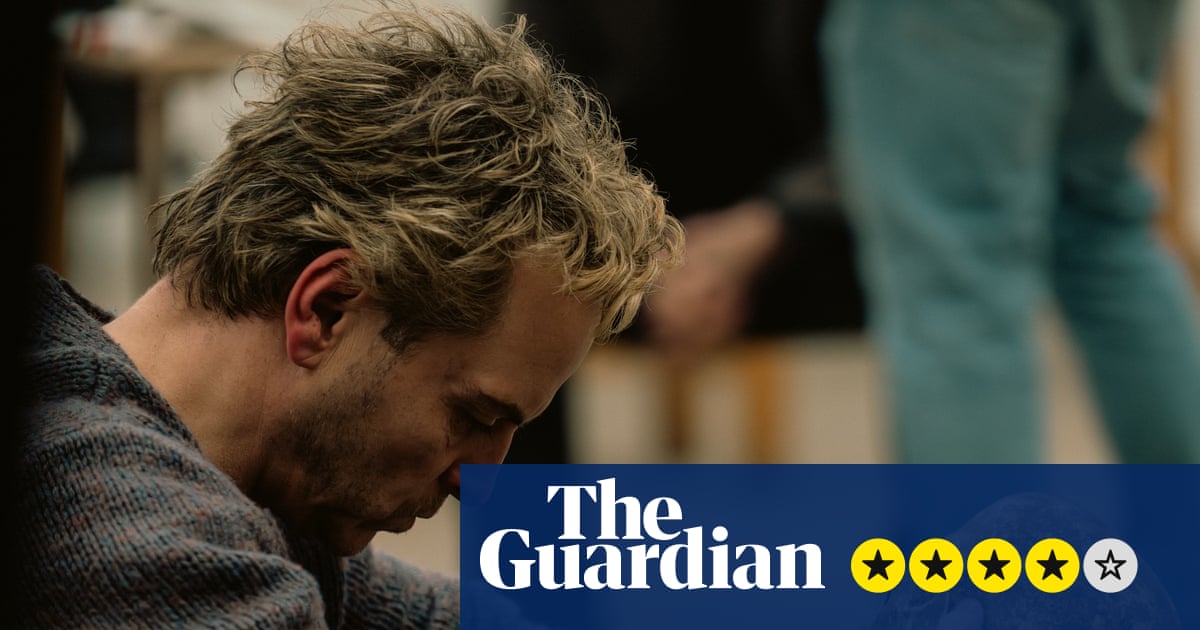
Charleson is played by Andrew Scott, an actor who came out just as his career was taking off ( before he appeared in feel-good Pride), in what will likely go down as his most remarkable on-screen performance. I had been previously destroyed by what he managed to achieve in Andrew Haigh’s haunting and haunted drama All of Us Strangers, those sad eyes filled with the specific whirl of shame and regret that only queer people of a certain age really know. His eyes still contain oceans of tears about ready to burst, but here he’s the more gregarious version of an ageing gay man, the bon vivant who draws attention when he enters a Soho gay bar.
We see him casually talk to those he has bumped into about their health and whether they have entered the “polka dot stage” of Aids (referring to the lesions that can crop up as it progresses) before we see him ritually checking his own naked body. Charleson was diagnosed with HIV three years before the film starts (one of the many formulaic ‘Aids movie’ scenes we don’t get shown) and after a check-up with his unhelpful doctor (who washes his hands twice during the appointment), we see him head to a cruising spot, not for sex, but for more helpful advice from his community. A dreaded lesion soon appears, right on his face where he can’t hide it, just as a miraculous job opportunity lands on his lap via his casting director best friend (a warm and wonderful Billie Piper).
Extract — continue reading at the source.

.jpg)


