If we go back several centuries and look at the history of the ancient East, what we encounter is not only empires, wars and battles for territory. There is another, more enduring history of this geography, which is a history created by language, words and literature. Until just a century ago, there were three lingua francas across the vast geography of the Muslim East: Arabic, Persian and Azerbaijani.
While Arabic was an important medium of the religious and scholarly world, and Persian was one of the principal means of communication in the broader literary and administrative-cultural space, the Azerbaijani language also gained significant literary and cultural influence, particularly in the South Caucasus, Azerbaijan, Anatolia, Iraq and various regions of Iran. There is a striking feature in the history of the Azerbaijani language. The influence of this language cannot be explained solely by the campaigns of rulers and the movements of armies.
One of the greatest weapons of Azerbaijani was its poets. Nasimi, Fuzuli, Khatai and other great masters of the word transformed the Azerbaijani language from merely a means of everyday communication into a literary language capable of expressing profound philosophical and poetic ideas. Their works carried the language across borders and into the literary memory of different peoples and geographies.
In this regard, Nasimi's place is particularly significant. He is one of the most prominent 14th- and 15th-century masters of Sufi poetry and a major early figure in Azerbaijani literature. A recent example of how Nasimi's name is being kept alive in Azerbaijan today is President Ilham Aliyev's recent visit to the “Nasimi Gardens” complex in Shamakhi.
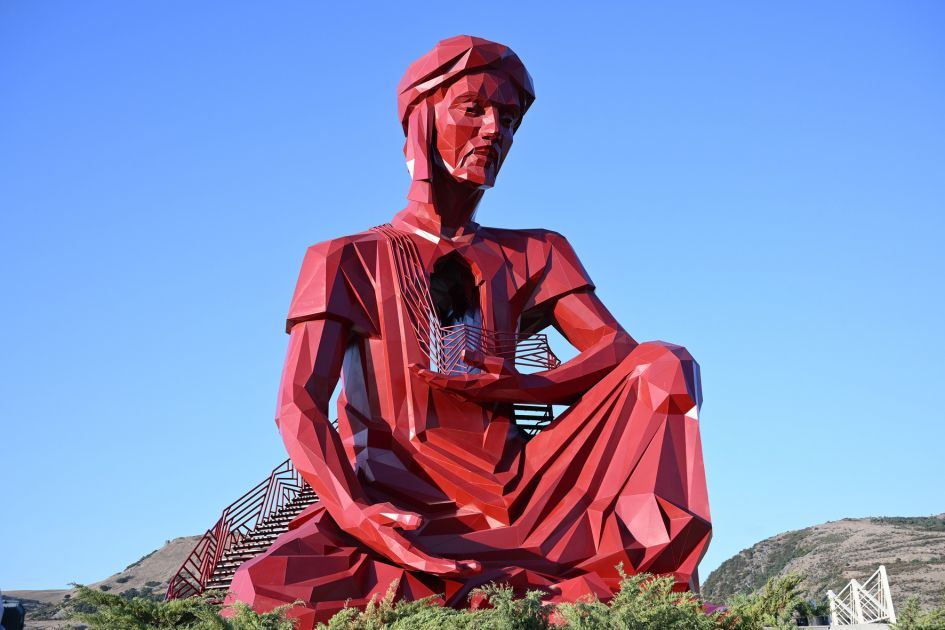
The complex features a 21-meter-high monument installation of Nasimi created in a modern style. Visible from various points of Shamakhi, this work makes Nasimi's name part of the city's modern landscape. This is not simply a matter of a statue.
Here, a physical and symbolic connection is being created between the great poet of the Middle Ages and modern Azerbaijan. Azerbaijan did not begin remembering Nasimi today. The preservation and promotion of his legacy have been continuing at the state and societal levels for decades.
Extract — continue reading at the source.