Nuclear energy was supposed to be our salvation, humanity’s chance to retool technology first conceived as a weapon of mass destruction into an engine of limitless prosperity. But even as the industry touted nuclear fission as an economic game-changer (never mind the astronomical startup costs), a safety paragon (never mind the spills at Chornobyl, Three Mile Island and Fukushima) and harmless fodder for an American comedy institution (never mind that glowing rod on Homer’s back or the three-eyed fish), there was no getting around the matter of what to do with all the toxic waste (never mind nuclear’s claimed green credentials). The stagnant state of that dirty business brought Casey Carter, the director of the new avant-garde documentary called To Use a Mountain, back to his interview with a Washington state farmer who was part of a class-action lawsuit against the government over the release of radioactive material from the Hanford nuclear reservation – site of the world’s first full-scale plutonium production reactor.
The farmer’s words still echo, despite ultimately being cut to fit the film’s 90-minute runtime. It’s just a pretty good idea.’” To Use a Mountain could exist as a coda to Christopher Nolan’s Oppenheimer, showing how the Manhattan Project physicist’s fears about nuclear technology’s vast potential for devastation proved more justified than even he could have imagined. In particular, the film trains its lens on the passage of the 1982 Nuclear Waste Policy Act – which, among other things, placed six rural communities across the US in a derby of sorts to become the permanent site for more than 90,000 tons of high-level nuclear waste.
The plan was for the waste to remain isolated for 10,000 years, and that humans would still be around to celebrate the Reagan-era edict as a triumph. But the affected communities are more inclined to believe there may be no one left to parcel out due credit once the waste leaches into groundwater, pollutes the air and contaminates the food chain. Ultimately, Nevada’s Yucca Mountain, about a two-hour drive from Las Vegas, was selected as the nuclear burial site, but after decades of scheming and development, legal challenges and obstruction from activists and prominent politicians such as Senate majority leader Harry Reid, the Yucca Mountain project was halted – leaving the US with no permanent repository for its nuclear waste. (In the meantime, the federal government pays utility companies tens of billions of dollars to hold on to their spent fuel until a place for it opens up.) Carter’s documentary unspools like an art installation, steeped in mood and texture, as it urges viewers to reckon with the anxious state of play.
Gone are the voice-of-God narrator, the talking-head experts and even basic chyrons; the subjects who appear on camera aren’t named until the film’s end credits. Instead, To Use a Mountain papier-maches reams of Department of Energy (DoE) surveys, analyses and internal memos on to contemporary footage of decaying storage sites and interviews with community members who speak to the personal and environmental damage those false starts have wrought. A sound bath that samples from salmon-rich rivers and one-room church worship only serves to further underscore the stakes.
It’s a prevailing sense of doom established in shaky handheld shots that search the sky for danger, then paid off in archival footage of Oppenheimer’s bomb going off beneath desolate US landscapes before giving way to Hiroshima and Nagasaki. The Department of Energy was looking at them through this purely utilitarian lens, just kinda scanning the American landscape and trying to figure out which place was disposable enough.” Not surprisingly, the Department of Energy disposal list quickly homed in on sparsely populated rural communities that mining and farming industries had left behind. In some cases, those communities were largely made up of marginalized Black and brown people whose claims to the land date back generations.
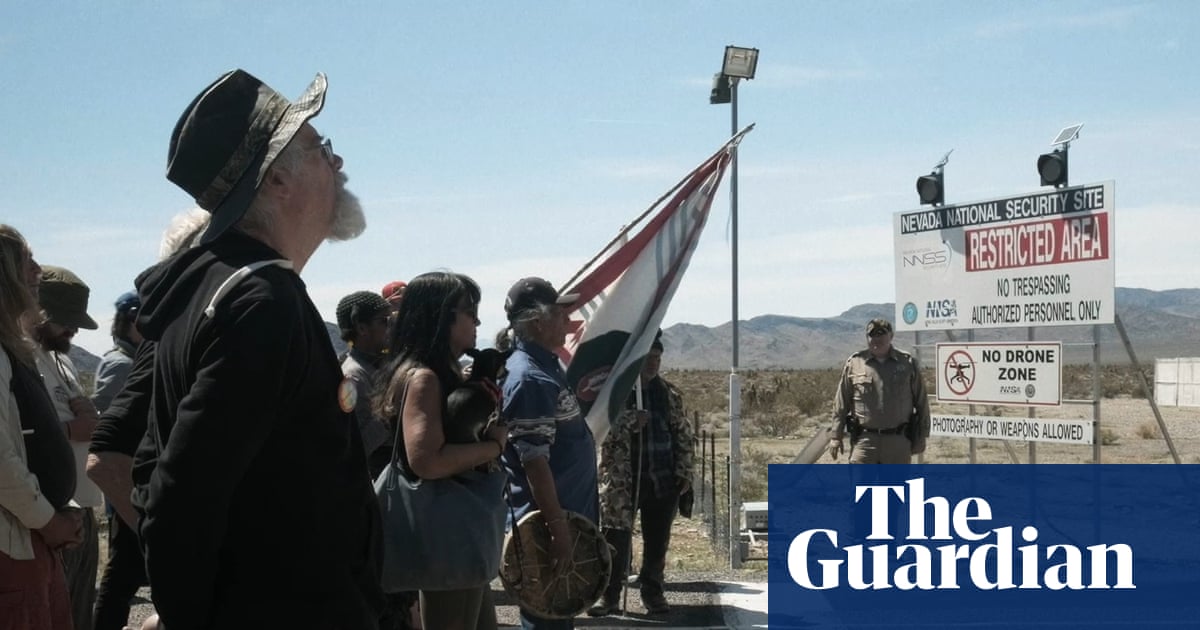
Advocates against the Yucca Mountain site argue that its designation as a DoE nuclear disposal ground disregards a US government treaty obligation to the Western Shoshone tribe. The area’s history of seismic activity is another reason to be wary of Yucca’s structural integrity over the ensuing millennia. With impressionistic flourish, the film traces the arc of the resistance.
Extract — continue reading at the source.