Equatorial Guinea has tackled malaria with a successful strategy on Bioko Island MALABO, Equatorial Guinea -- With its torrential rains, tropical forests and omnipresent humidity, Equatorial Guinea provides the perfect conditions for mosquitoes to breed. For centuries, mosquito-borne diseases, in particular malaria, have dictated the fate of residents of this central African nation, impacting how they lived, worked and died. But Bioko island, off mainland Equatorial Guinea, has managed to sharply reduce malaria infections and deaths.
Bioko, roughly half the size of Rhode Island, has used familiar tools: indoor spraying, mosquito nets and keeping control of the larvae population. Its success, however, has depended on something less easily replicated: two decades of painstaking data collection, sustained funding and workers going door to door to win residents’ trust. Now the tiny, oil-rich country wants to bring that approach to its mainland and eliminate malaria altogether.
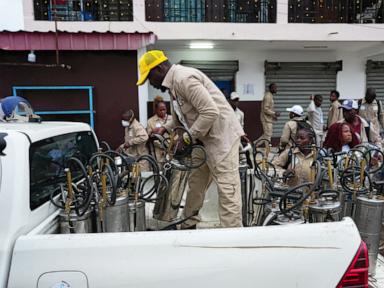
But the expansion of Bioko's strategy presents formidable challenges, from porous international borders to the sheer scale of the territory. In Malabo, Bioko’s biggest city, a team of men and women equipped with insecticide sprayers squeezed between low-rise cement buildings on a recent morning, as heavy rain drummed on aluminum roofs. Despite technological advances, such as new vaccines for children, the fight against malaria in Africa has stalled, making it unlikely the continent can achieve its goal of eliminating the disease by 2030.
Only two countries in sub-Saharan Africa have been certified malaria free by the World Health Organization: Mauritius and Cabo Verde, both of them island nations. Africa CDC experts say one key element of Bioko's strategy is meticulously collecting data about the population and where people live. Data teams look at the timings of when houses were sprayed and which ones reported cases of malaria, then analyze how best to prevent future infections.
The core of the program depends on people who patiently go from door to door and explain the strategy to residents, trying to convince them to get their houses sprayed. Benjamin Esono, a university student who works part time as a sprayer, said that the key to success was empathy. Sometimes it takes several attempts.
One of those who let the sprayers in despite the early hour and pouring rain was Elena Ntongono, who works as a security guard. As she hastily changed from her pajamas, she explained that she had malaria multiple times, most recently seven months ago. That was a big problem because she is the main breadwinner in the family.
Extract — continue reading at the source.


