Since 2018, Abiy Ahmedhas been the most powerful man in Ethiopian politics, governing the country during some of its most trying days in recent history. From the Tigray war to a feeble but lasting peace with neighboring Eritrea, Abiy has actively shaped and reshaped Ethiopia's role in Africa and indeed the world. Soon, he might even get to consolidate more power and influence in his office, as Ethiopia's political system might fundamentally change in the future.
Following weeks-long consultations, there are indications that the offices of prime minister and president could potentially be merged. This would mean that the largely ceremonial presidency could thus become the center of political power in the country. While details about the precise re-designing of the system remain unclear, local reports say that the consultations indeed resulted in a positive recommendation to create a stronger presidency.
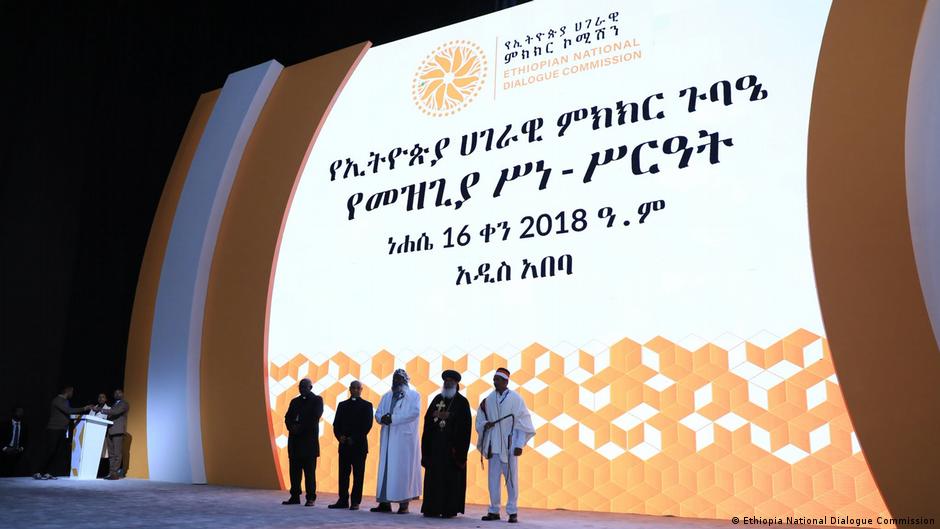
For Abiy, that would likely be a remarkable prospect. During a drawn-out national dialogue with around 4,000 delegates in Addis Ababa in recent weeks, participants discussed some of the country's key political conflict, including: the overall structure of the state, ongoing ethnic tensions, the rule of law and human rights — as well as the role of the prime minister. Abiy did not take part in these meetings but could benefit significantly from their endorsement of a presidential system.
One key element for any constitutional reform to be pushed through parliament is already in place: Abiy won June's parliamentary elections with a massive majority, which could help him and his party with advocating for a presidency with broader executive powers. Supporters of a stronger presidency see it as a way of bringing Ethiopia's ethnically and regionally fragmented society closer together. A president representing the country as a whole could help strengthen a national political identity.
Befeqadu Hailu, an Ethiopian civil rights activist and political commentator, told DW that this might be a strength of the proposed new system, and that a president directly elected by the public would have a stronger mandate to govern. Hailu believes that in future elections, a presidential candidate would have to convince "more than one ethnic group and more than one religious group" to win an election, which could help strengthen democratic processes. At the same time, he issued a warning that "[p]residential systems are more prone descending into dictatorship." But the key question is not who would become presiden but rather what powers this office would have — as well as who would be tasked with holding the president to account.
Ethiopia already has a powerful executive branch and since taking office in 2018, Abiy has consolidated more and more political power. The creation of the Prosperity Party in 2019 under his leadership out of a number of coalition partners has already considerably reshaped the country's political system, significantly limiting the role of the opposition. Abiy already controls the military and security apparatus, with little less power left to grab under a new system.
Extract — continue reading at the source.