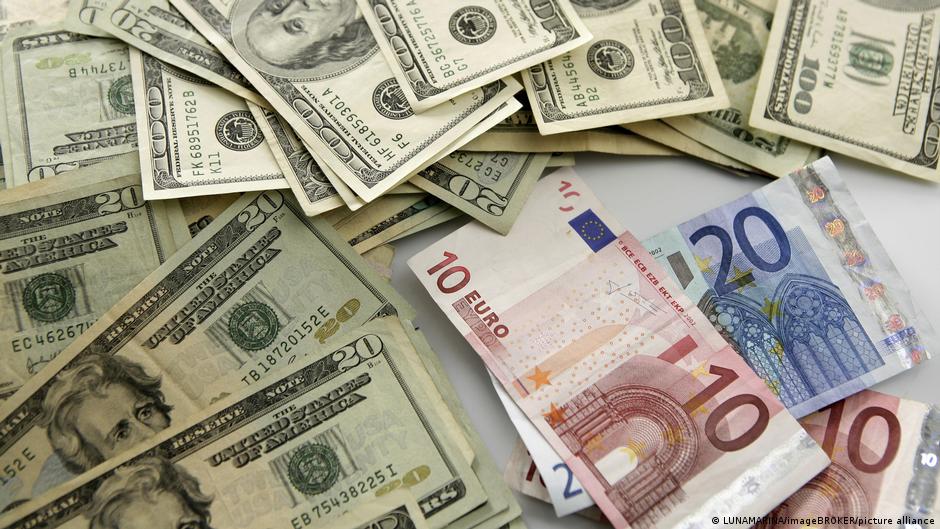
The euro hit a 17-month low against the dollar in early trading on Monday, as concerns over eurozone debt, particularly in France, compounded existing investor concerns over global government bond yields and rising oil prices. The euro has been sliding against the dollar for much of 2026, down around 5% since the start of the year. It reached $1.12 on Monday, the lowest level since early in 2025.
Ricardo Amaro, lead eurozone economist with Oxford Economics, told DW that the general slide can be attributed to a repricing of investor expectations regarding US Federal Reserve policy in terms of higher interest rates in the face of rising global bond yields. However, he said the latest sell-off was prompted in particular by concerns over France, where "investors positioned for higher fiscal risk." The sell-off in French debt gathered pace last week as doubts grow over its long-term viability. French 10-year government bonds — the cost France must pay to borrow money within 10 years of the debt being issued — rose to a 5% yield before easing slightly.
France has long had underlying fiscal problems. Since President Emmanuel Macron came to office in May 2017, public spending has climbed while he has brought in deep tax cuts. As a result, the country's national debt has increased by well over €1 trillion ($1.12 trillion).
France's debt-to-GDP ratio now stands at almost 118%. It consistently posts unbalanced budgets. Its annual budget deficit is now regularly more than 5%, above the 3.4% rate when Macron came to office.
For many investors, wider concerns over low eurozone growth levels and surging energy prices have contributed to a renewed focus on France, with many retreating to perceived safer options, such as German government debt. The difference between French and German government 10-year debt yields reached their highest level since the eurozone debt crisis last week, a closely-watched measure of EU financial stability. The resulting pressure on the euro and on other government bond markets, including Italy's, means there are calls for the European Central Bank (ECB) to take action to prevent concern over France turning into panic.
Deutsche Bank's Jim Reid said in a note on Monday that at one point last week, the spread between German and French bonds had become so wide that a "mini-panic" was at hand. "The big question is whether this is the start of a new euro sovereign crisis or whether markets have already overshot," he said. Ricardo Amaro said the situation presents a challenge for the ECB because it needs to act without making things worse.
Extract — continue reading at the source.