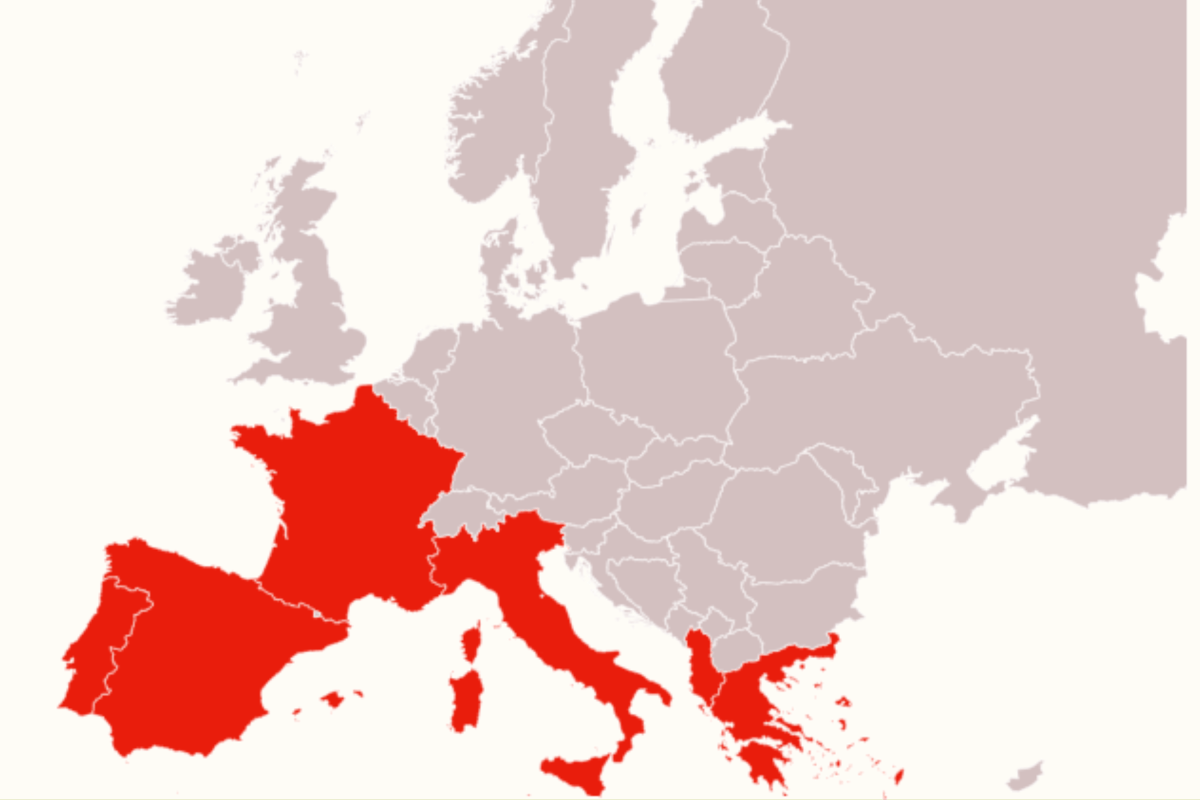
Amid a wave of diverse local grievances, protests have erupted across Southern and Western Europe this week, sweeping through France, Albania, Italy, Portugal, Spain, and Greece. Demonstrations against living costs and school conditions have rocked France since late September, with many turning violent. Meanwhile, Albania has entered its fifth day of anti-government riots and protests over general economic conditions have taken place in Milan and in several cities in Portugal.
Spanish protests targeted housing affordability and the right to housing, while motor oil refinery workers in Greece gathered over demands for better workplace safety. President Donald Trump has spoken out about the riots in France, blaming the disorder there on “the immigration of people from an entirely different world, people with hatred in their hearts.” He urged France to close its borders in a post on Truth Social on Sunday. U.S. embassies have issued warnings about the protests to Americans in France, Albania and Belgium at different points this month.
France has seen weeks of disorder across the country since mid-September, when teachers at Saint-Exupéry High School in Créteil, in the southeastern suburbs of Paris, went on strike over staff shortages. After a few days, students started blockading the school in solidarity, over education conditions. The movement gained traction in Paris before it spread to the rest of country and evolved to include broader economic dissatisfaction.
Energy and food prices have spiked dramatically in recent months—household budgets have been squeezed by energy prices, 21.3 percent higher in September than a year earlier, and a 25.7 percent rise in petrol prices, according to the national statistics agency INSEE. Unemployment reached 8.3 percent in the second quarter, up from 7.6 percent from last year. On Saturday, at least 550,000 people took the streets all over France, according to Interior Minister Laurent Nuñez, who said 1,800 people were arrested and more than 500 police officers and firefighters were injured.
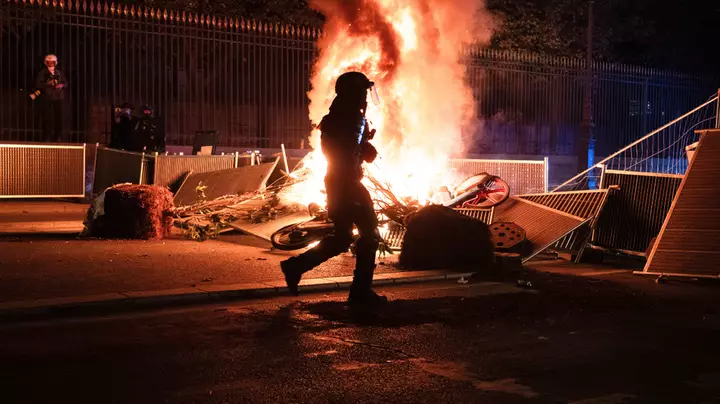
Shops were looted while cars and trash cans were set alight in multiple cities. A city hall built in 1883 in Limoges, around 250 miles south of Paris, was largely destroyed after it was engulfed in flames. Vice President JD Vance shared footage of the 143-year-old burning and blamed "western liberals" for "import[ing] the third world" in a Sunday post on X, telling Americans that this is the "future congressional Democrats seek for your country." Neither Trump nor Vance have offered evidence for linking the protests to immigration.
Many of the crowds on Saturday had responded to calls on social media to revive the "yellow vest" movement, which emerged in 2018 against social injustice and many protesters could be seen wearing the symbolic fluorescent tops. Nuñez is one of several French officials who has blamed "extremely violent, radical far-left groups" for stoking violence in the demonstrations, many of which have started out peacefully. Protests in Albania have escalated after high school and university students joined a broader anti-government movement calling for Socialist Prime Minister Edi Rama’s resignation.
Extract — continue reading at the source.