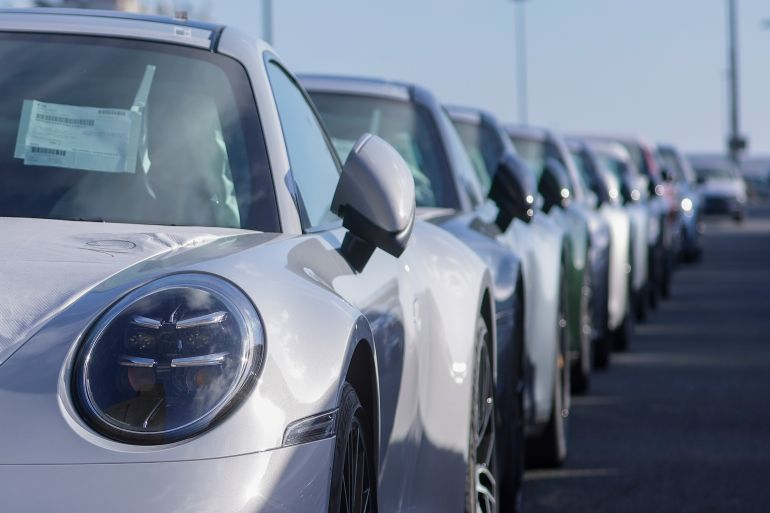
By Qaiser Nawab | AzerNEWS | Guest columnist Brussels has made an unusual request. Ahead of trade discussions with Beijing next month, the European Commission has asked China to voluntarily limit its share of hybrid-car sales in the European Union to around 15 per cent, compared with approximately one-third of the hybrid segment today. The proposal is intended to address growing concerns about deindustrialisation and pressure on European manufacturers.
The anxiety behind the request is real, and it deserves a serious response rather than a slogan. Europe’s automotive industry supports millions of jobs across manufacturing, logistics, engineering and services. It is now facing several pressures at once: the expensive transition to electric vehicles, high production costs, weak demand, factory underutilisation and stronger competition from Chinese manufacturers.
The question is whether an export quota on hybrid vehicles can resolve these structural problems. The evidence so far suggests that restrictions may change the composition of competition without addressing its underlying causes. The EU’s 2024 decision to impose additional duties on battery-electric vehicles imported from China illustrates the difficulty.
Those measures applied to battery-electric vehicles following an anti-subsidy investigation; they did not cover hybrid vehicles. As a result, Chinese manufacturers continued to compete in other segments where the applicable tariff treatment was different. The European Commission has stated that trade-defence measures are limited to the products covered by the relevant investigation.
The lesson is not that European trade concerns should be ignored. It is that a policy aimed at one technology may redirect commercial activity rather than remove competitive pressure altogether. Where the Last Round of Restrictions Led The growth of Chinese hybrid imports reflects both market strategy and consumer demand.
Chinese manufacturers have expanded their European offerings beyond fully electric vehicles, including plug-in hybrids and other electrified models. Their competitive pricing, equipment levels and expanding dealer networks have helped them gain visibility in a market traditionally dominated by European, Japanese and South Korean brands. However, the figures require careful interpretation.
Extract — continue reading at the source.