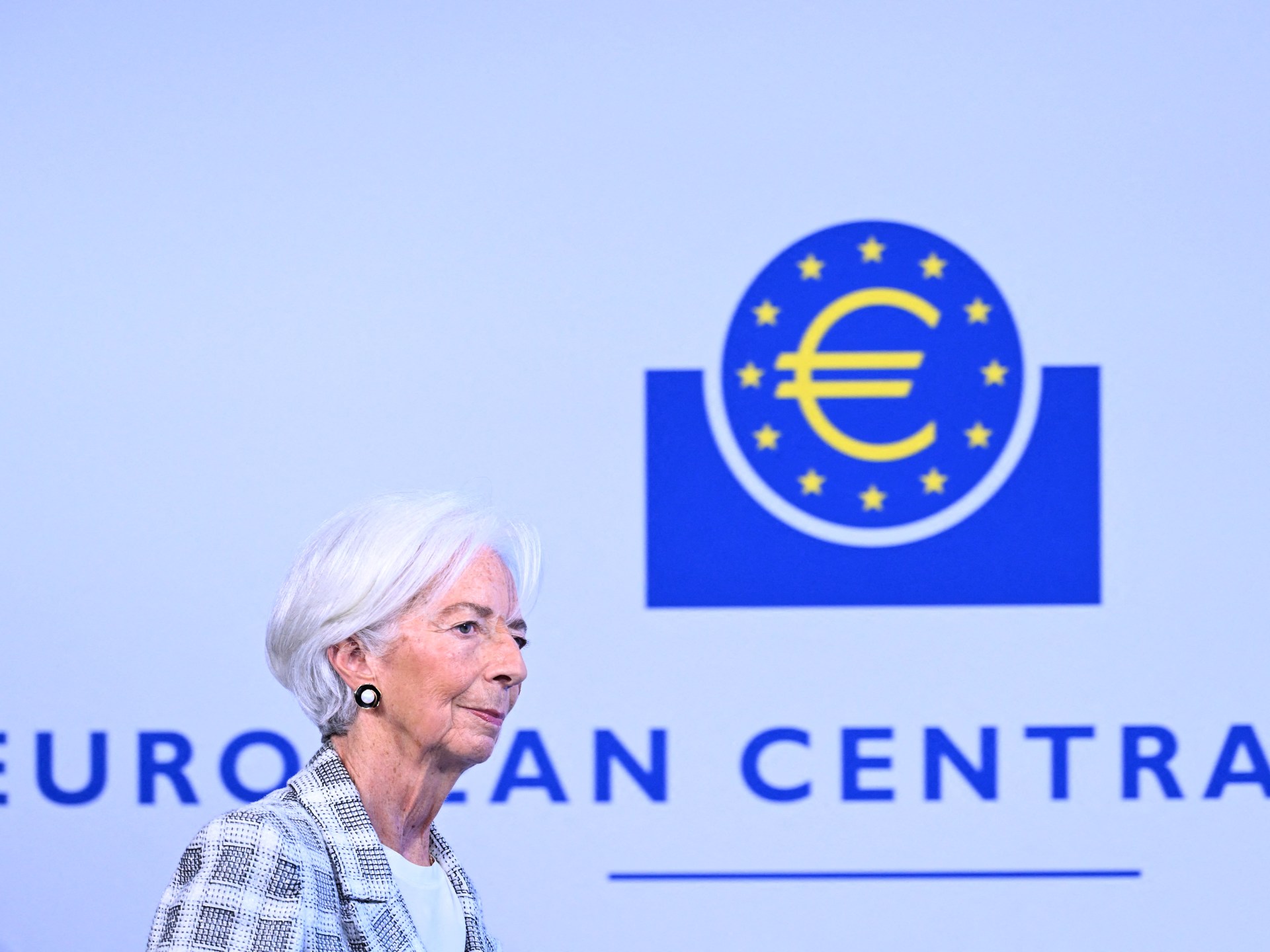
European Central Bank (ECB) President Christine Lagarde will step down months before her term ends, kicking off a race to succeed her against a turbulent backdrop in the eurozone. Lagarde announced on Thursday that she will leave the post on February 7, about nine months before the scheduled end of her eight-year term. She said in a filmed statement posted on X that she was leaving “with a sense of good work done and an ECB that is fit for the future”.
The move gives European Union leaders time to choose her successor before April’s French presidential election, which polls have suggested far-right candidate Marine Le Pen is favoured to win. The timing could allow current European Council members, including French President Emmanuel Macron, to take part in appointing Lagarde’s successor before France’s vote. Macron, who is not allowed to run again, thanked Lagarde in a post on X for “the determined action she led at the head of the European Central Bank” during “a period marked by numerous crises”.
However, Markus Ferber, a German member of the European Parliament, warned: “If the impression arises that such a departure is timed around national elections, it damages trust in an institution that must stand above any domestic political calculation.” German Chancellor Friedrich Merz, leader of the eurozone’s largest economy, said Lagarde had led the bank “with great aplomb during challenging times”, and European Union chief Ursula von der Leyen thanked Lagarde “for everything you have done for Europe and the euro”. French Finance Minister Roland Lescure praised her tenure. As Europe navigated through crises and difficult times, she brilliantly modernised and strengthened the institution,” he posted on social media.
Marcel Fratzscher, president of the German Institute for Economic Research, told the news agency the early exit gives governments “an opportunity to appoint a successor who will safeguard European values and protect the ECB’s independence”. Markets appeared unfazed. Lagarde, appointed in October 2019, steered the bank through the COVID-19 pandemic, Russia’s full-scale invasion of Ukraine and the United States-Israel war on Iran.
The ECB faced criticism for responding too slowly to the 2022 inflation surge, caused by post-pandemic supply chain bottlenecks and the war on Ukraine. Inflation is currently running at almost double the bank’s 2 percent target amid worries over France’s public finances. A former French finance minister and head of the International Monetary Fund, Lagarde arrived in Frankfurt in 2019 as the first ECB chief with no formal economics training or central banking experience, prompting some market participants to warn of a “credibility risk”.
In March 2020 as the pandemic shook sovereign debt markets, she said the bank was not there to narrow the gap between Italian and German borrowing costs. She went on to show that political diplomacy could steer a central bank through historic shocks. Sources told the news agency that leaving early would give Lagarde “greater freedom to express her views”.
Extract — continue reading at the source.