"Bringing the world together through music has always been an incredibly powerful idea and has stood the test of time for 70 years," Eurovision Song Contest director Martin Green told DW on the sidelines of the event's annual European Broadcasting Union (EBU) workshop held in mid-September. "And I think the more difficult the world gets around us, the more important these shows of unity, these shows of togetherness become." While Green is intent on promoting the unity of the international music contest that celebrated its 70th anniversary in May, the 2026 event was also infamously marked by unprecedented backlash. Political boycotts over Israel's inclusion amid the war in Gaza led to a significant low point in participation and viewership, dropping from 166 million viewers in 2025 down to 131 million viewers a year later.
The 2027 song contest is set to remain affected by geopolitics. Of the five countries which boycotted the 2026 event — the Netherlands, Spain, Iceland, Slovenia and Ireland — the latter has already confirmed that it will not participate for the second time in a row. The Netherlands' usual Eurovision broadcaster had also announced it would be snubbing the show again, stating it refused to take part in an event that "can no longer be considered neutral, with a participating country still involved in a large-scale military conflict." Now, Dutch public broadcasting association NPO decided to step in and resume participation in the contest.
The three other countries that pulled out in 2026 have yet to make an official announcement for 2027. Broadcasters have until mid-October 2026 to withdraw their application without facing a financial penalty. In August, the contest organizers announced new rules, according to which "the winning broadcaster will automatically be ineligible to host the contest if an armed conflict, a sensitive geopolitical situation, or any other situation materially affects the security, safety or stability of their state or immediate region," they said in a statement.
The winning country usually earns the right to host the following edition, though the United Kingdom hosted the 2023 event on behalf of Ukraine due to Russia's war on Ukraine. Even though the rule doesn't name the country, it clearly aims to avoid having the show held in Israel, which came close to taking home the trophy in 2025 and 2026. Organizers also plan to introduce changes to reduce politically motivated voting.
The current system allows viewers to vote up to 10 times per payment method for their favorite act, by phone, text message or online. There was a huge uproar in 2025 when the Israeli government encouraged Israelis to register multiple votes for its contestant. The controversy had already led to a change in the voting rules; the maximum number of public votes was halved from 20 to 10.
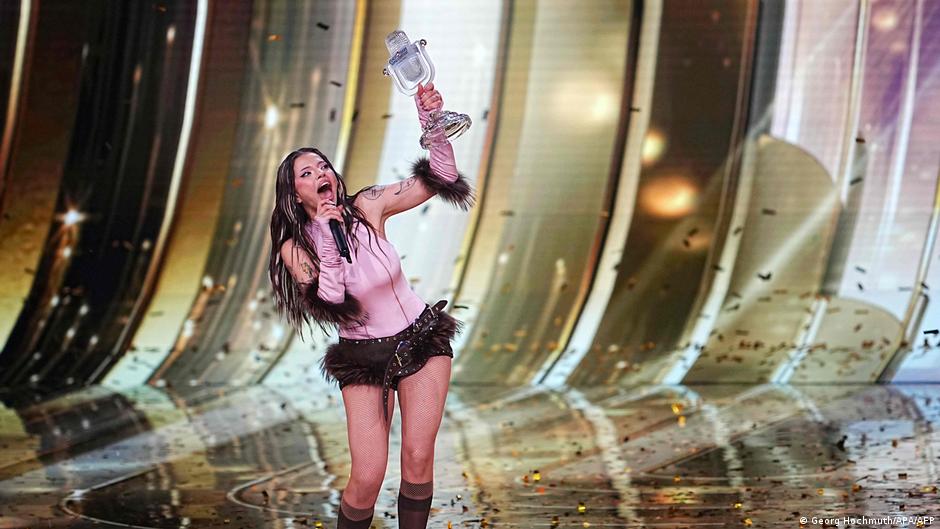
Now the plan is to move the vote entirely online, with a system that would require people to select three acts instead of one. Since Bulgarian singer Dara won in Vienna with her song "Bangaranga," her country will be hosting the event next year. The competition will take place in Burgas, a city on the Black Sea coast.
Extract — continue reading at the source.