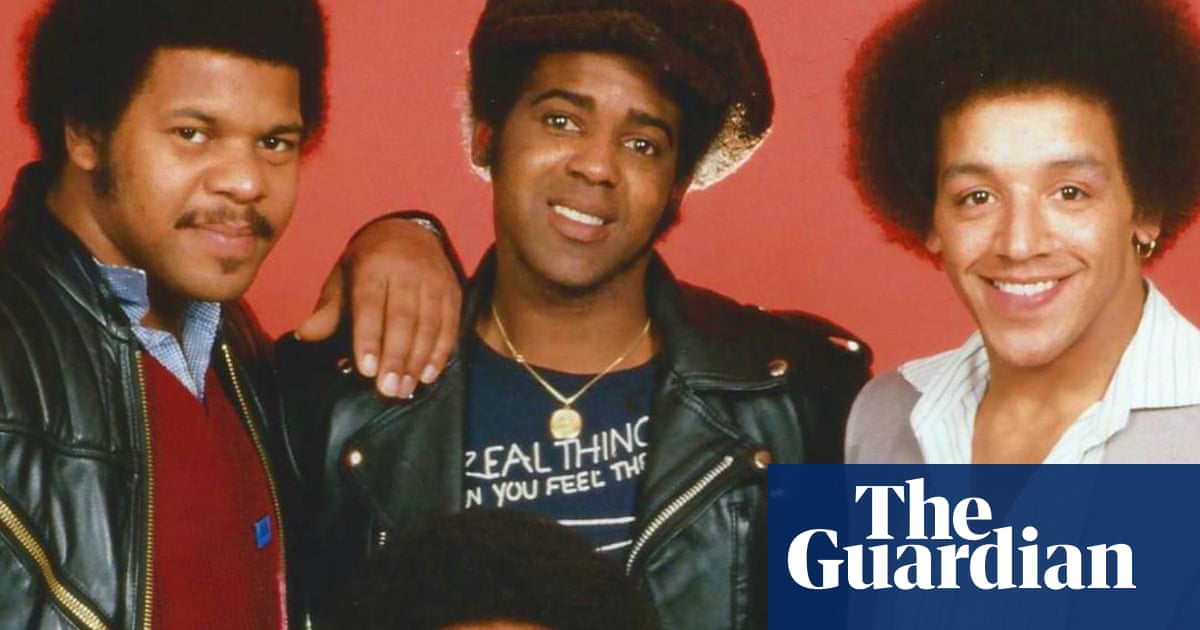
Months before the Real Thing’s You to Me Are Everything became a UK No 1 hit in 1976, lead singer Chris Amoo took the unreleased song to the Timepiece, a nightclub devoted to Black music tucked in between bars on Liverpool’s Fleet Street. His DJ friend Les Spaine stuck it on, and the empty dancefloor “just filled up, and nobody, not one person in that place, had heard the song before”, Amoo says with pride on a call from his home on the outskirts of Liverpool. Fifty years later, Amoo is on tour with his fellow bandmate Dave Smith in celebration of its anniversary.
But the Real Thing were just the most high-profile group from an underground funk and R&B scene which emerged in 1970s Liverpool, upheld by a generation, predominately from the Toxteth area south of the city centre, that embraced Black American culture. They were not inspired by the city’s household names like the Beatles, Amoo says; instead, it was from seeing groups like the Jackson 5 and the Temptations on television that he thought: “They look like us – we can do that!” Likewise Spaine, now considered a godfather of the UK’s funk scene, grew up in a household with a deep love for Black American music: “Nat King Cole, the Drifters, the Ink Spots, Five Blind Boys of Alabama, all them sorts of things that my old man used to play.” Black US soldiers residing in Burtonwood, a nearby airbase, brought the latest records to Toxteth on weekends, leaving them with friends or at clubs, as well as “clothes, those really fantastic baseball boots and the apple hats that they used to wear. We’d learn all the new dances and songs,” Amoo says.
Spaine started DJing with the imported records he amassed, Amoo formed the Real Thing, and as each made a name for themselves in the music business, they became mostly immune to the colour ban that Black people faced. You could have signs saying no this, no that. This was before laws came in prohibiting that.” Located in town among nightclubs that enforced a colour ban, the Timepiece became the club for Toxteth’s Black community to let loose.
People of all races would travel from across the country for their all-nighters. During the transatlantic slave trade, enslaved Africans were brought to work as servants or sold at auctions in the dock area. Following the abolition of slavery, sailors from across the world, many from West Africa, worked on trade ships and contributed to the war effort during the world wars.
Both Spaine and Amoo speak fondly of their experiences growing up in Toxteth in the 1950s and 60s, “this melting pot of poor white people, Chinese people and Black people and we all just got on really well,” Spaine says. Those hardships, along with racial profiling by police, were a driving force for 1981’s Toxteth riots, which lasted nine days and resulted in widespread damage, hundreds of injured officers and the death of a man who was rammed by a police vehicle. But when the Real Thing topped the charts in 1976, their entire community was jubilant.
A Black band from Liverpool had got to No 1 – the first Black British band to do so. Distinction formed in the basement of their local community centre where they had vocal lessons from Vic Christian, whose brother Garry had success with the multi-racial Liverpool band the Christians; Phillips’s father was calypso musician Lord Woodbine, who mentored the Beatles. But I think we were too young to be like anybody, because everybody we looked up to they were proper women, and we were just girls.” The band members – Phillips and her sister Sue, plus Donna Alleyne and Mandy Smith – were still just teenagers when they got a deal with EMI, but, Phillips says, the label “would sign an artist but just sit on them for a year.
Extract — continue reading at the source.